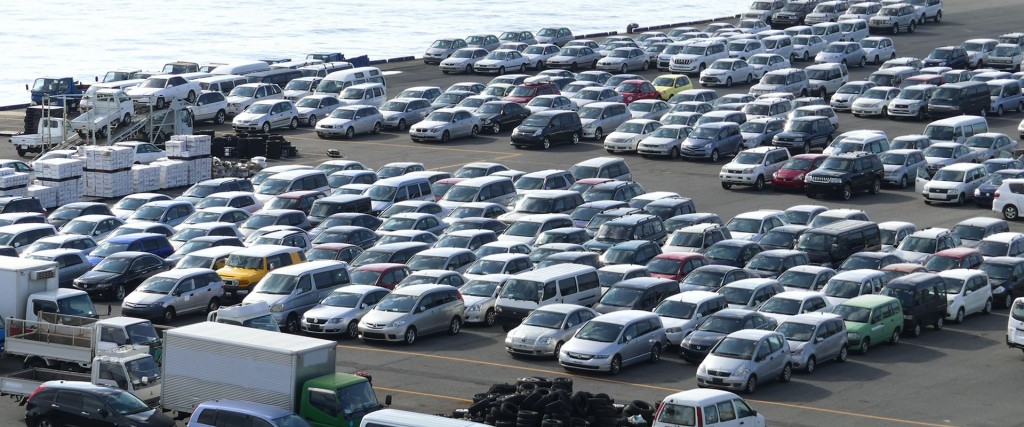
Motorists and car dealers across the country are facing significantly higher costs following the implementation of new taxes on imported vehicles, which have triggered sharp price increases across some of the most commonly used car models in Kenya.
Industry players say the revised tax regime has pushed up import duty and related charges, with the impact already being felt in showrooms, clearing yards, and online listings as vehicle prices continue to rise.
Among the hardest hit are popular budget and mid-range cars widely used by individuals and small businesses.
The cost of importing a Nissan Note has more than doubled in some instances, rising from about KSh 233,000 to as high as KSh 520,000 for older models and KSh 590,000 for newer versions.
The Toyota Probox, a favourite among transport operators and small traders, has also recorded a sharp increase, climbing from KSh 273,000 to KSh 433,000.
Other models have followed the same trend, with the Mazda Demio 1500cc rising from KSh 256,000 to KSh 320,000, while the Toyota Sienta has surged from KSh 274,000 to KSh 500,000.
Hybrid vehicles have not been spared either. The Toyota Fielder Hybrid now costs about KSh 560,000, up from KSh 466,000.
Even entry-level vehicles that were once considered affordable are becoming increasingly expensive. The Suzuki Alto now ranges between KSh 170,000 and KSh 240,000, while the Suzuki Wagon R has risen from KSh 210,000 to KSh 276,000. The Nissan Dayz has also jumped from KSh 152,000 to KSh 252,000.
Higher-end models have equally been affected, with the Audi Q5 rising from KSh 1.5 million to KSh 1.8 million, and the Volkswagen Tiguan increasing from KSh 1.4 million to KSh 1.7 million.
The Toyota Prado (DGJ250) has seen one of the steepest increases, climbing from KSh 4.6 million to KSh 5.2 million.
Car dealers warn that the rising costs could slow down vehicle imports and dampen demand, particularly among middle-income buyers who rely on affordable second-hand units.
“What is worse, the system currently used by KRA lacks uniformity. Initially, the government used the Current Retail Price to determine taxes, but KRA suddenly introduced its own system, which is unfair,” said a clearing and forwarding agent, Felix Somnog.
Somnog added that the lack of clarity is making it difficult for importers to plan. “Since I started this job 10 years ago, tax was based on the model. For example, all Nissan Notes attracted the same tax. Now KRA has broken one model into more than five different tax brackets,” he said.
He further noted that the changes have significantly pushed up costs across popular models. “A Toyota C-HR that previously attracted about KSh 200,000 in taxes now costs KSh 400,014.
Nissan Note taxes have jumped from KSh 233,000 to KSh 460,000, while Mazda Demio has risen from KSh 256,000 to KSh 330,000,” Somnog explained.
There are also concerns over vehicles still awaiting clearance at the port, with stakeholders warning that delays could lead to financial losses or even auctioning of cars if timelines lapse.
“While we are not opposed to taxation, we are calling for consistency, transparency and predictability in how these taxes are applied,” Somnog said.
The government has yet to issue a detailed explanation on the sharp adjustments, even as stakeholders continue to push for clarity and engagement to stabilise the market and cushion buyers.