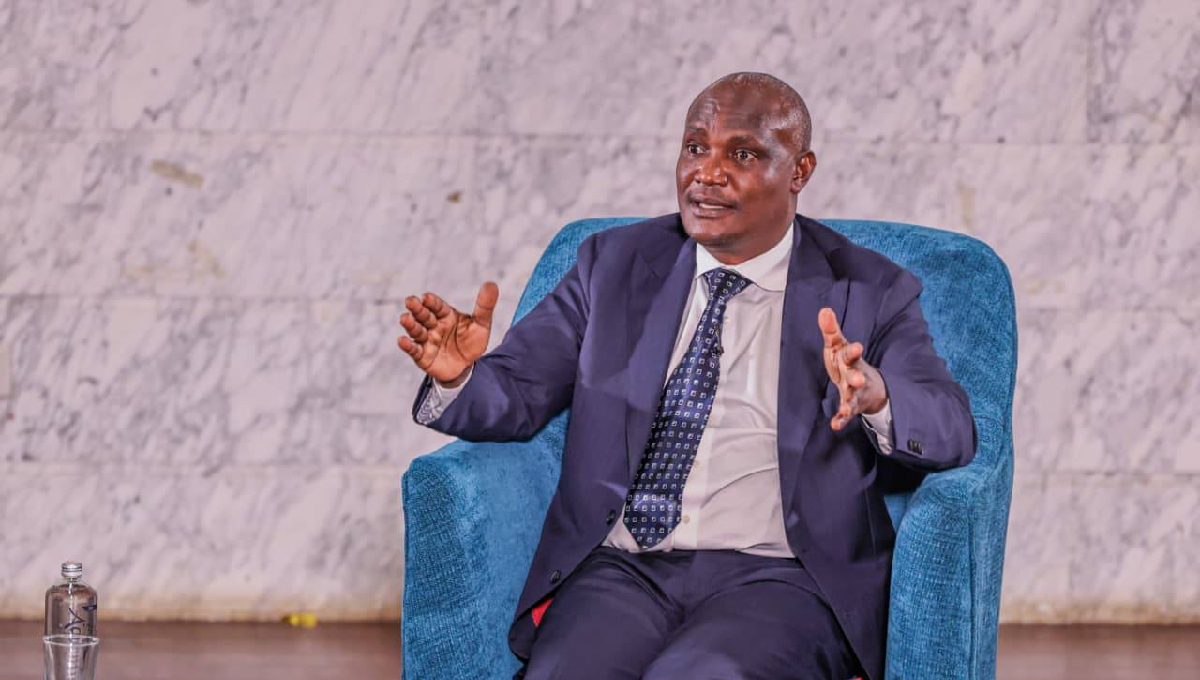
Treasury Cabinet Secretary (CS) John Mbadi has given an explanation on why fuel prices have shot up so sharply in Kenya, pointing directly to the impact of the US-Iran war on global oil markets.
He outlined the steps the government has taken to soften the blow on ordinary Kenyans.
Speaking in an interview with TV47, Mbadi said the problem started on February 28, 2026, when US President Donald Trump announced the beginning of hostilities with Iran.
On that day, the price of diesel on the international market stood at USD 642 per metric ton. Today, it has climbed to USD 1,120 per metric ton, an increase of over 80 percent.
“That is what has hit us hard,” he said, adding that Kenya has been fortunate compared to some countries where the problem is not just the price but the availability of fuel altogether, with some nations advising citizens to work from home just to conserve fuel supplies.
“At least we have availability of fuel. We have guaranteed availability of fuel. The challenge is the price,” he said.
Mbadi explained that the government had two options to deal with rising fuel prices, subsidising the cost or reducing taxes and levies. He said the government has pursued both aggressively.
Before the crisis, the government had built up a stabilisation fund of about Ksh 16.7 billion.
When the new higher prices started hitting Kenya in April, the government deployed Ksh 6.2 billion from that fund to cushion consumers, holding back the rest because of uncertainty about how long the war would last.
At the same time, VAT on fuel was reduced from 16 percent to 8 percent, a move that required an act of Parliament since the law only allowed the Treasury CS to reduce it to a maximum of 12 percent.
When May arrived and international prices rose even higher than anticipated, the government deployed another Ksh 5 billion from the remaining Ksh 11 billion in the fund.
Ksh 4.5 billion was then directed specifically at diesel, which Mbadi described as the most consumed fuel in the Kenyan economy, with Ksh 500 million going to kerosene. Petrol received no subsidy.
Even after all of that, Mbadi admitted the prices still went up because the subsidies were simply not enough to fully absorb the scale of the international price shock.
Following discussions with representatives of the matatu sector and other stakeholders on Monday and Tuesday this week, the government agreed to release a further Ksh 2.7 billion from the remaining Ksh 5 billion in the fund to cushion diesel prices further, which led to the price reduction announced recently.
“The government is doing everything that we can to make sure that the prices of petroleum products or fuel come down to cushion our economy, because rising prices means rising inflation,” he said.