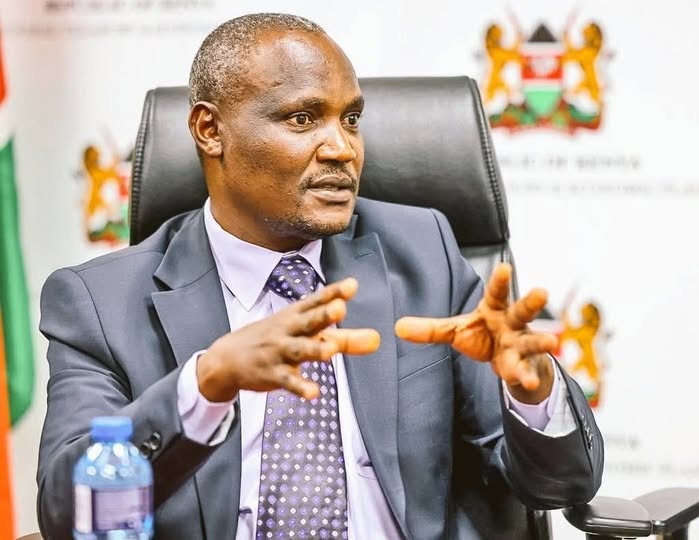
Treasury Cabinet Secretary John Mbadi on Wednesday, May 20 defended the proposed Finance Bill 2026, assuring Kenyans that the government is not planning to introduce new tax rates, amid growing public concerns over the rising cost of living.
Speaking during a special town hall interview on TV47 Kenya, CS Mbadi explained that the government’s main focus is on widening the tax base and improving tax collection efficiency rather than adding more financial burdens to citizens.
He noted that the National Treasury had directed the Kenya Revenue Authority (KRA) to strengthen compliance measures and use digital systems to capture more taxpayers, especially those operating outside the formal economy.
“With the various tax measures in place, we are likely to collect about KSh54 Billion. But there are also other measures like tax amnesty, which is likely to give us additional KSh30 billion… If you look at the structure of our economy, those who are in formal payroll employment compared to those who are making revenue from their businesses and other professional lines, the number is almost 50-50,” CS Mbadi says.
He addded: “But personal income tax from that space is only KSh50 billion. For those who are on the payroll and employed, it is KSh600 billion. That mismatch is caused by your denstist who is not paying tax after taking alot of money from you, the accountasnt who is preparing books and is not paying tax, I am talking about the self-employed people. We are only collecting KSh17 billion rental income tax, yet people have houses and buildings they are taking rent, we are only asking for 7.5%. We want them to pay their fare share of taxes.”
According to Mbadi, the government learnt important lessons from the 2024 Finance Bill, which sparked nationwide protests after several controversial tax proposals were introduced. Mbadi says the President William Ruto administration wants to avoid repeating the same mistakes and instead build public trust through transparency and public participation.
Mbadi said Kenya still faces significant financial pressure due to high public debt and increasing expenditure demands. However, he insisted that economic recovery can only be achieved through improved revenue collection and responsible government spending. He added that digital tax systems, electronic invoicing, and tighter monitoring of business transactions will help the government increase revenue without necessarily raising taxes.
Mbadi also acknowledged the struggles facing ordinary Kenyans, including high food prices, unemployment, and the rising cost of essential services. He assured citizens that the Finance Bill 2026 is designed to support economic growth while protecting vulnerable households from excessive taxation.
The interview attracted widespread public attention, with many Kenyans using the platform to question the government’s taxation policies and demand accountability on how public funds are utilised. The discussion highlighted the growing public interest in fiscal policy ahead of the 2027 General Election.