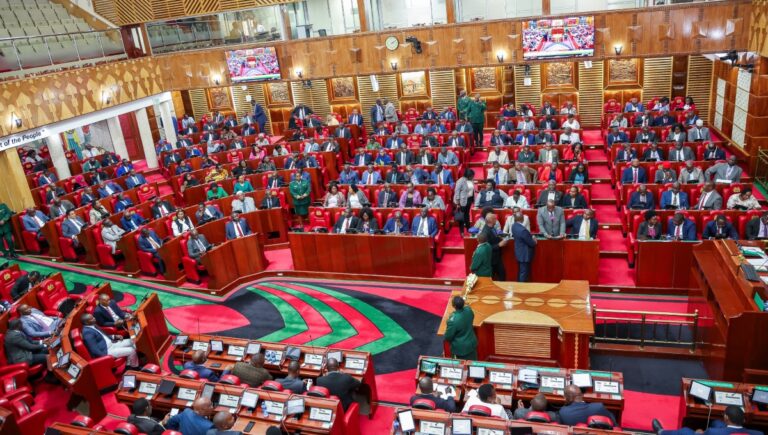
The National Assembly on Thursday evening passed the Finance Bill 2026 after a lengthy and spirited debate, paving the way for the legislation to be forwarded to President William Ruto for assent.
The Bill was approved through an electronic vote, with 122 Members of Parliament voting in favour, 40 voting against and none abstaining.
The House had initially attempted to pass the legislation through voice acclamation, but opposition lawmakers demanded a formal division, prompting Speaker Moses Wetang’ula to order an electronic vote in accordance with parliamentary procedures.
The Finance Bill 2026 contains a raft of amendments to tax laws aimed at boosting government revenue collection ahead of the 2026/27 financial year.
The proposed measures are expected to support a national budget estimated at KSh4.82 trillion, with the government seeking to broaden the tax base, improve compliance and reduce reliance on borrowing.
The legislation introduces changes to several laws, including the Income Tax Act, Value Added Tax Act, Excise Duty Act and the Tax Procedures Act. It also contains provisions affecting digital services, stamp duty and other statutory fees.
Before the Bill reached the floor of the House, the Departmental Committee on Finance and National Planning conducted public participation exercises across the country to gather views from citizens, businesses and other stakeholders.
Following the consultations, lawmakers revised a number of contentious proposals and retained tax relief measures on selected essential goods and services in response to public concerns.
Despite the amendments, opposition MPs maintained their opposition to the Bill, arguing that some of its provisions would increase the cost of living for ordinary Kenyans already struggling with rising food prices, fuel costs and transport expenses.
Opposition legislators also warned that small businesses, mobile money users and low-income households would bear the greatest burden if the proposals are implemented.
However, supporters of the Bill defended the measures, saying they are necessary to strengthen the economy, improve revenue collection and provide adequate funding for key sectors such as healthcare, education, infrastructure and social services.
With parliamentary approval secured, the Finance Bill now awaits presidential assent. Once signed into law, most of the new tax measures are expected to take effect on July 1, coinciding with the start of the 2026/27 financial year.