

The government is rolling out a new industry-led training model that will see export companies establish operations within Technical and Vocational Education and Training (TVET) institutions, in a move aimed at producing graduates with practical skills and direct pathways into employment.
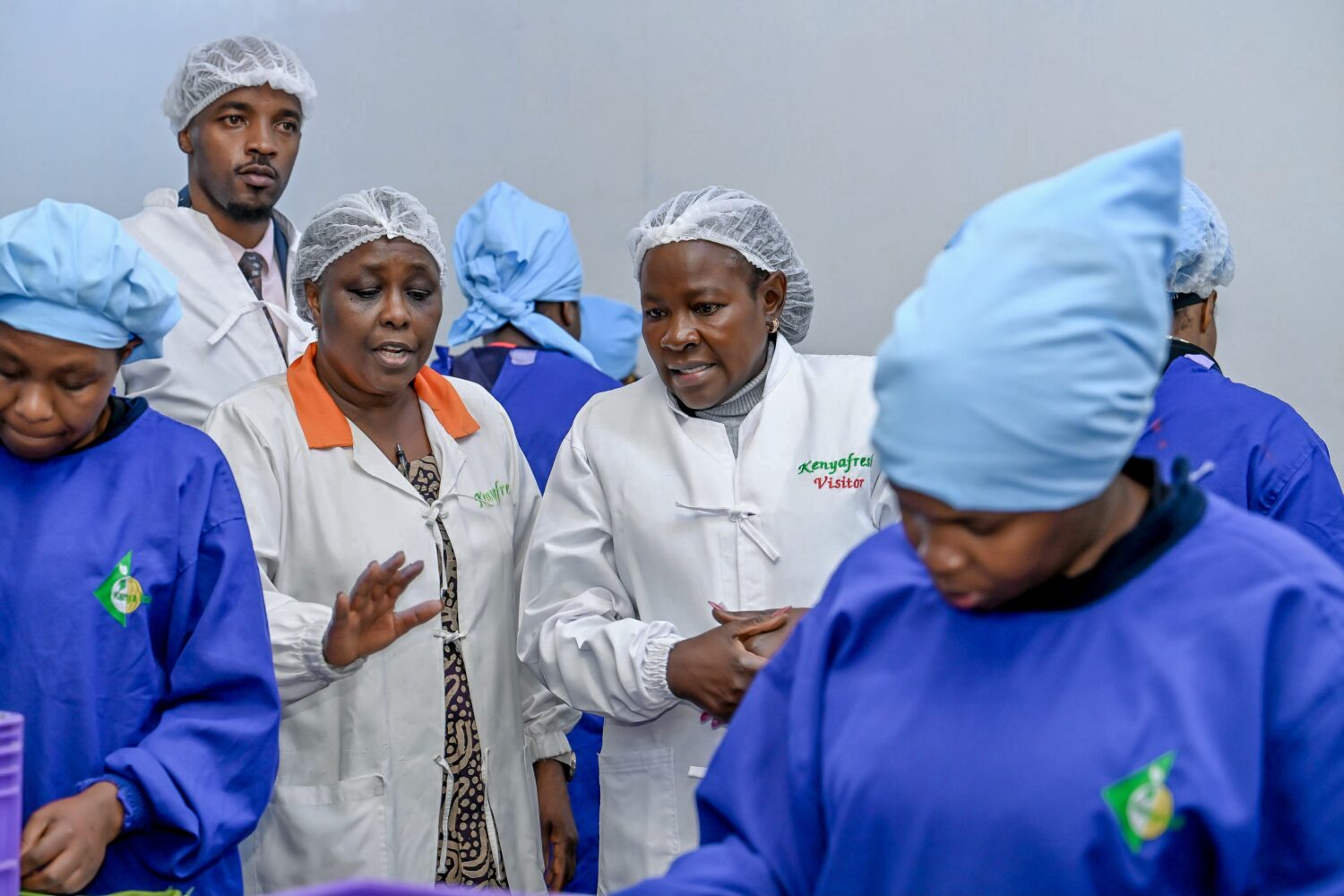
Speaking during a meeting with officials from the Fresh Produce Consortium of Kenya and fresh produce exporters, State Department for TVET Principal Secretary Dr. Esther Muoria said the era of treating industrial attachment as a short academic requirement must come to an end.
Instead, students will spend a significant portion of their training working alongside industry, learning real production processes while earning practical work experience.

“We are not putting students on attachment. We are training them in industry,” she said.
She sets to spearhead an initiative that will pair Technical and Vocational Education and Training (TVET) institutions with fresh produce exporters to co-develop industry-specific training programmes that mirror real workplace demands.
Under the model, exporters will work alongside curriculum developers to define occupational standards, shape practical training and instill the attitudes, discipline and workplace culture expected in the sector.
Students will spend much of their training immersed in industry, allowing them to graduate with hands-on experience, professional work ethics and skills tailored to employer needs.
The approach aims to bridge the long-standing gap between classroom learning and industry expectations, producing graduates who are job-ready from day one rather than requiring extensive retraining after employment.
Using fresh produce exporter Kenya Fresh as an example, she noted that students should become accustomed to the company’s systems, language and operational standards long before graduation.
“They should graduate already feeling that Kenya Fresh is home. They should also be able to start their own businesses immediately after graduating,” she said. “It doesn’t make sense that young people complain there are no jobs, yet employers are complaining there are no adequately skilled job seekers. This is a disconnect we must work together to fix.”
Fresh produce exporter Hassan Nandwa, founder of Fawakih Exporters, told the meeting that employers continue struggling to recruit graduates with practical knowledge despite their academic qualifications.
“We employ based on experience, not qualifications,” he said.
According to Hassan, companies often spend months retraining graduates, terming it as a time consuming and expensive venture.
Kenya Fresh Produce Exporter’s founder, Priscilla King’ang’i stated that existing higher education programmes do not adequately prepare them for export operations.
Hassan on his part argued that students should graduate with actual work experience rather than short-term industrial attachments.
“The first thing I look at is experience. We have many graduates but no experience.”
Under the new model, companies will work directly with TVET curriculum developers to create Occupational Standards (OSS) specific to their industries.
Fresh produce exporters, for instance, will help develop specialised curricula covering the entire value chain, from nursery establishment and crop production to harvesting, grading, packaging and export logistics.
The government said competency-based assessments will replace traditional examinations in many practical programmes, with students being evaluated on demonstrated skills rather than written tests.
Rather than sending students away for attachments, TVET institutions will provide land, water, machinery and trainers while private companies establish commercial production units within college grounds.
The partnership is expected to cover crops including avocados, mangoes, French beans, snow peas, flowers and vegetables destined for export markets.
Officials indicated institutions such as Nyandarua National Polytechnic, Eldoret National Polytechnic and Bureti National Polytechnic could become centres for specialised agricultural production and training.
Exporters also highlighted structural challenges affecting Kenya’s competitiveness, including high freight charges, regulatory bottlenecks and multiple county levies.

Hassan said Kenyan exporters currently pay significantly higher shipping costs than competitors such as Peru despite Kenya being geographically closer to European markets.
He also called for greater government support in resolving logistical and policy challenges affecting the horticulture sector.
The Fresh Produce Consortium (FPC) CEO, Okisegere Ojepat said rebuilding trust between government and private industry would be critical to the success of the programme.
Officials revealed plans for a breakfast meeting bringing together more than 150 agricultural companies to formalise partnerships with TVET institutions and identify areas for collaboration.
The government hopes the initiative will reduce graduate unemployment, address skills shortages and strengthen Kenya’s agricultural export sector by producing workers who are industry-ready from the day they graduate.