Prime Cabinet Secretary Musalia Mudavadi has warned that the ongoing Middle East crisis will impact the country for a relatively extended time.
Mudavdai has urged Kenyans to brace for a slightly prolonged period of economic hardship, noting that the conflict has caused global oil price spikes and inflation.
The Foreign and Diaspora Affairs Cabinet Secretary said the impact of the crisis on the economy cannot be underestimated as some neighbouring countries have already begun feeling the pinch on their fuel reserves.
“Here in Kenya, we are talking of increased prices of fuel but some of our neighbours are already grappling with fuel rationing where some motorists can only be allowed to visit the pumps once a week,” Mudavadi regretted.
“This is a global challenge that is beyond normal circumstances. As an economist, today even if another government came to place, you are not going to lower the prices of fuel overnight. So, let us not cheat one another,” Mudavadi noted.
Mudavadi noted that already the government has spent at least KSh28.9 billion in fuel stabilisation measures and tax relief interventions in an effort to cushion Kenyans from the effects of the ongoing global fuel crisis as announced by President William Ruto on Friday last week.
He said quite a number of other interventions are being explored and called on Kenyans to be reasonable and support the government through this journey.
“If this crisis continues, we have to use more money to subsidize fuel. But if you take everything and put to subsidy, how are we going to pay teachers, how will we meet the cost of wages, how will we pay the police for security, how will we pay the nurses and doctors of this country?” He paused adding that “there must be a balance between what relief you can give and how you will manage other services within the society as government.”
He said the ongoing Middle East conflict is the most impactful war on the fuel crisis terming it as the worst ever to be witnessed in recent times.
Mudavadi told the country that the global oil reserves released recently have worsened the situation as the globe is staring at a more prolonged fuel crisis.
He warned that nations that depend on the Strait of Hormuz for the passage of petroleum and liquefied natural gas, it being the vital global artery for energy transport, are re-strategizing on how to cope up with the situation and Kenya is not an exemption.
“Kenya imports liquified natural gas from Qatar, and it passes through the strait of Hormuz. The more it becomes difficult to transport due to the Middle East crisis, then families might end up resorting to use of charcoal and firewood, which will have a detrimental effect on our campaign on clean and green energy and the efforts towards combating climate change. This will also lead to inflation as the prices of charcoal will definitely go up.” Mudavadi warned.
“That is why I have been reinforcing the need for African states to diversify supply chains and accelerate integration including the full implementation of the African Continental Free Trade Area. For example, we should begin thinking of how to get our gas from Tanzania or Mozambique and this can be a huge relief at times like this when the Middle East Crisis is persisting,” Mudavadi noted.
The Prime CS has also dismissed claims by a section of politicians that in the proposed Finance Bill, 2026 there are provisions to tax or charge annual land rent on freehold land.
He has termed the reports as “purely false, incorrect, and untrue,” assuring Kenyans that land ownership structures remain unaffected by the proposed bill.
“Kueneza uvumi na uwongo ni kitu kibaya sana” Mudavadi regretted.
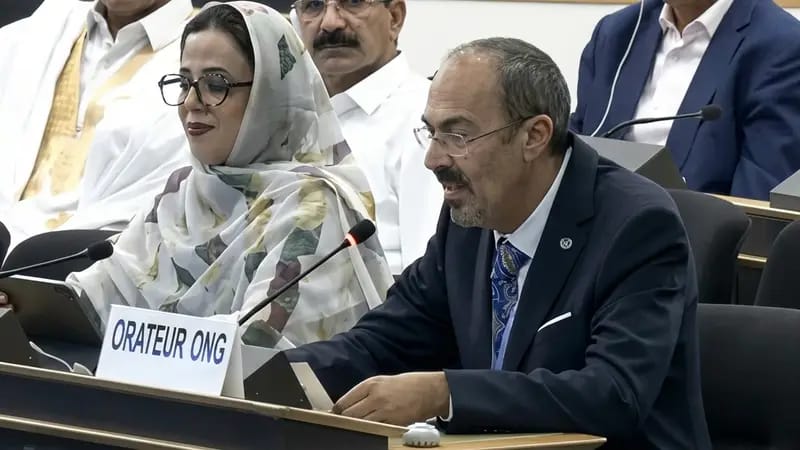
He was speaking in Murang’a County during the unveiling of the Ahadi Kenya Trust Jigger Archive and Community Resource Centre at Mukuyu, Kiharu Constituency.