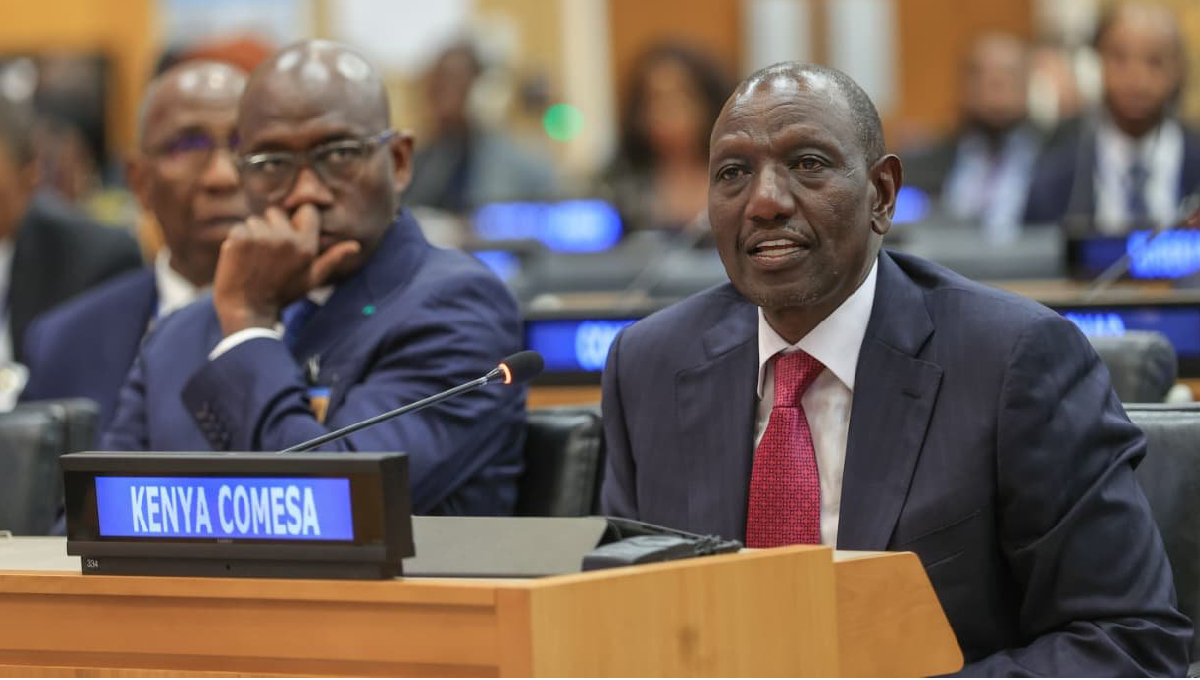

The inaugural GreenWorks 4 Africa Forum opened in Nairobi today, bringing together policymakers, investors, businesses, development institutions, educators, researchers, entrepreneurs and young innovators to examine how Africa can turn its green transition into productive employment, stronger enterprises and broader economic opportunity.
Convened by Jacob’s Ladder Africa (JLA) in partnership with the African Union Commission Department of Education, Science, Technology and Innovation, Kenya’s Ministry of Environment, Climate Change and Forestry, FSD Africa, GIZ Kenya, the Alliance for a Green Revolution in Africa (AGRA), and the Center for Global Development, the two-day Forum is taking a deliberately practical approach to the continent’s green jobs challenge.
Among those participating in the opening were Dr. Rose Mwebaza, Director and Regional Representative for Africa, UNEP; Kevin Munjal, Director of Impact Development, FSD Africa; Hannah Salian, GIZ Kenya Programme Director for Energy, Transport and Climate Change; Nicholas Ouma, representing H.E. Prof. Gaspard Banyankimbona, African Union Commissioner for Education, Science, Technology and Innovation; and H.E. Moses Vilakati, African Union Commissioner for Agriculture, Rural Development, Blue Economy and Sustainable Environment, who delivered a keynote by video.
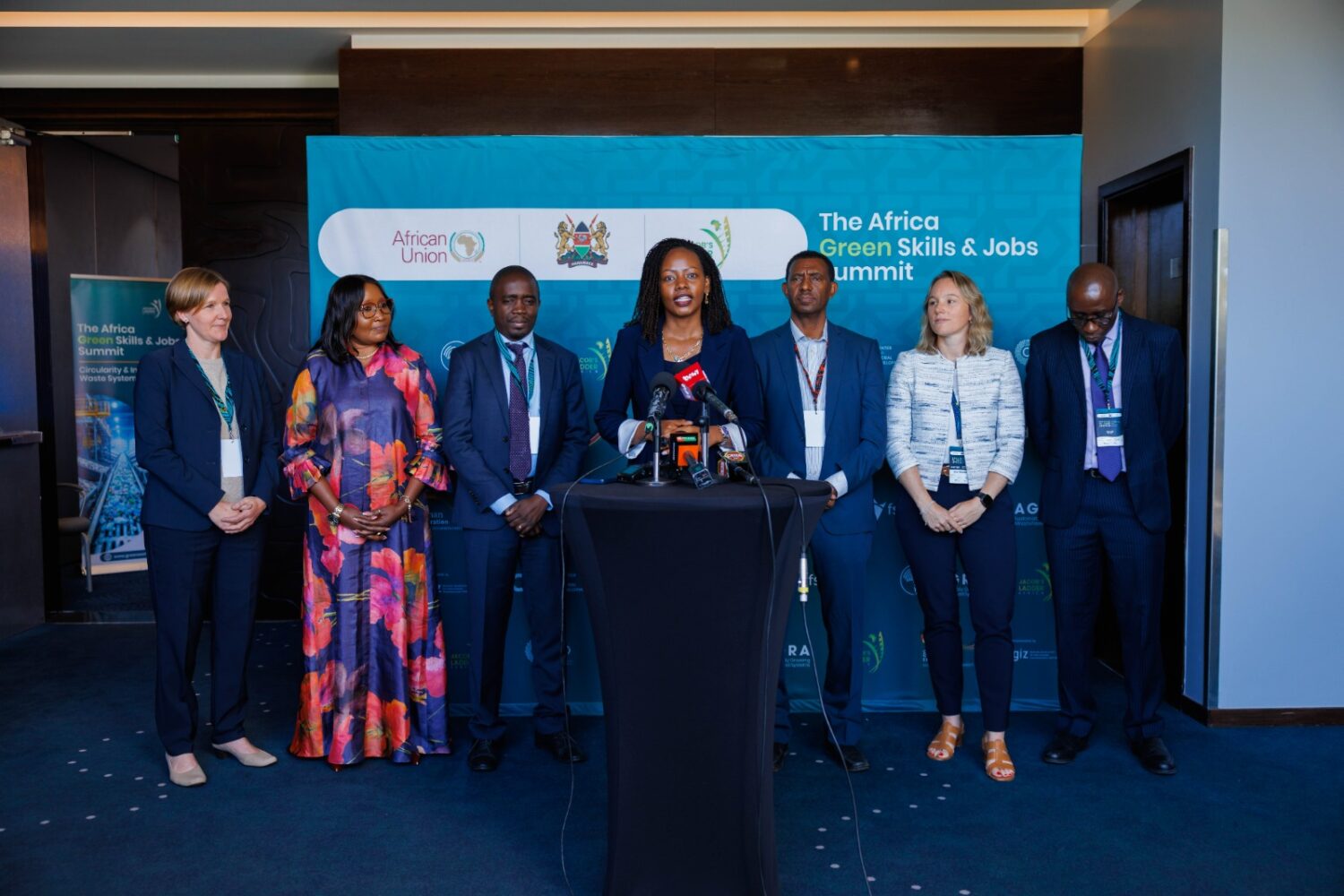
GreenWorks 4 Africa is structured around a simple premise that Africa does not need to start by imagining what a green economy could look like. It needs to examine what is already working, understand why it works, and determine what can be adapted and scaled.
The Forum is therefore using African case studies as the starting point for rigorous exchange, allowing participants to examine the conditions behind success, identify barriers to replication and consider where approaches may need to be redesigned rather than simply copied.
The work is organised across four areas of the emerging green economy:
● Renewable energy and productive use of energy
● Climate-resilient agriculture and smart food systems
● E-mobility, green infrastructure and urbanisation
● Circularity and waste systems
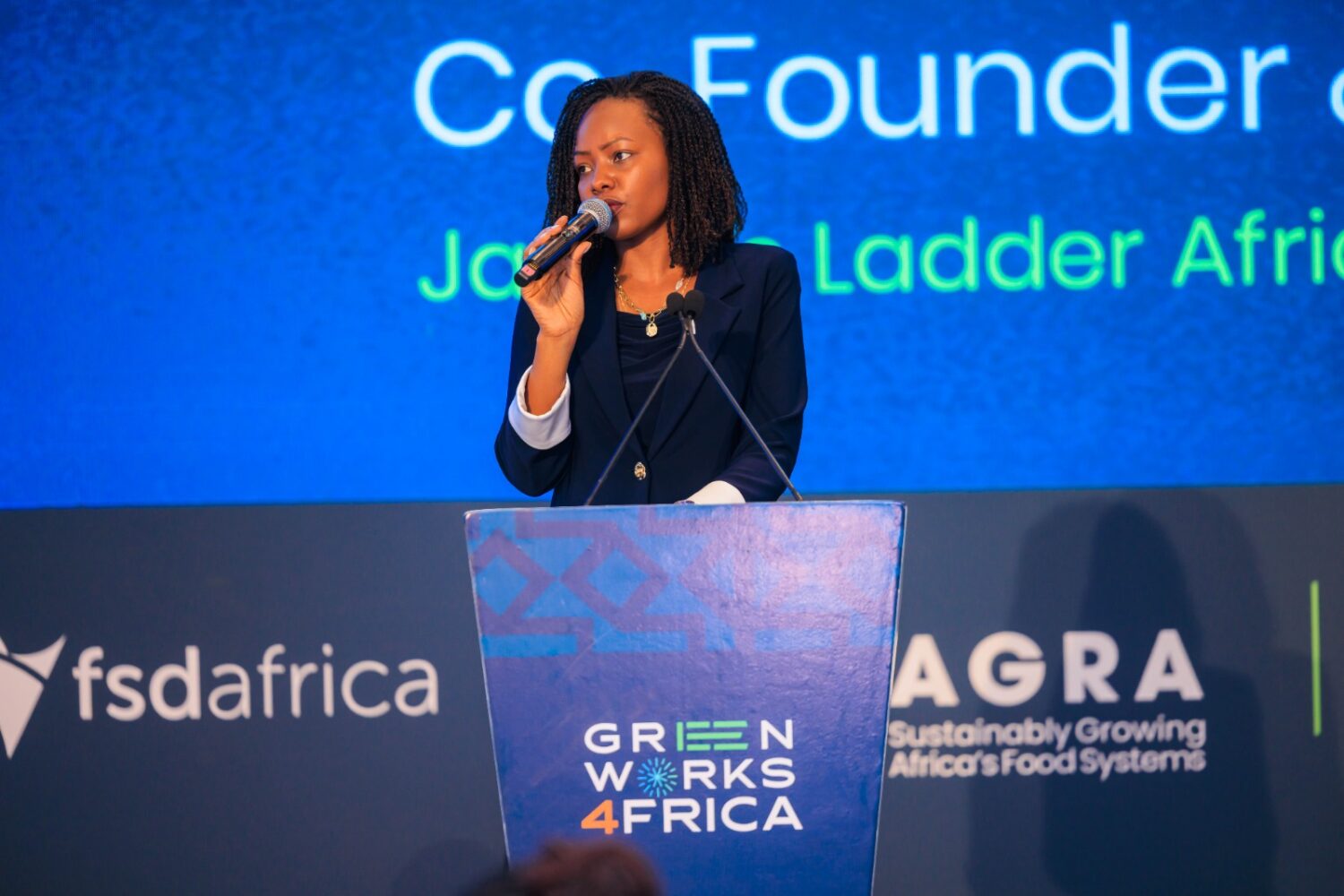
These are examined through three interconnected enabling systems: finance, technology, innovation and markets; social systems; and policy, regulation and governance systems. Speaking at the opening, Sellah Bogonko, Co-Founder and CEO of Jacob’s Ladder Africa, said the Forum was designed to create a more useful form of collaboration around Africa’s green economic transition.
“Our ambition is to begin building something larger than a two-day gathering: an Africa-wide coalition of governments, employers, investors, skills institutions, innovators, intermediaries and young people committed to figuring out, together, how Africa can create green jobs at scale.”
“This is not a summit, conference or another forum. It is a Thinkers Hub and Collaboration Hive designed to leave people more informed, challenged and inspired and, more importantly, better equipped to act,” she added.
The opening discussions underscored the need for stronger coordination between government, employers, investors, education and training institutions and young people as Africa responds simultaneously to its employment challenge, changing labour-market requirements and the economic opportunities emerging from the green transition.
The urgency is underscored by Africa’s labour-market dynamics. The African Development Bank estimates that 10–12 million young people enter the African labour force each year, while only around 3 million formal jobs are created annually.
This makes the employment dimension of the green transition central to Africa’s economic transformation.The question is not simply how much green investment Africa can attract, but whether that investment can generate enterprises, occupations, skills and productive opportunities that African workers and businesses can access.
Recent research by FSD Africa, Shell Foundation and Shortlist, produced by Genesis Analytics, estimates that Africa’s green transition could generate 3.8–7.9 million jobs by 2030 and 65.9–84.5 million by 2050. The research finds that Africa’s employment opportunity will be shaped significantly by decentralised, service-led activities including clean cooking, solar home systems, waste recycling and electric two- and three-wheelers.
The research also highlights a critical workforce challenge: Africa’s renewable-energy workforce currently represents only 2% of the global renewable-energy workforce, while only 5% of African youth have completed formal vocational training and less than 1% of climate finance is directed towards skills development. (FSD Africa)
These findings reinforce the need to connect investment with workforce development, skills with labour-market demand, and green enterprise with access to finance and markets.
Among the practical resources being advanced through the Forum is the African Green Jobs Toolkit, which brings together lessons and practices from across the continent, including investment-ready models and relevant financing approaches. The Toolkit places five practical questions at the centre of green jobs programme design:
Where are the green jobs? Who can access them? What skills are needed? What financing is required? How will progress be tracked?
It calls for youth employment and women’s inclusion to be considered across programme design, financing, procurement and governance, while recognising the significant role of informal workers in Africa’s economies.
The Toolkit also highlights the need to strengthen the connection between education and training systems and actual labour-market demand, including through modular certification, apprenticeships, work-based learning and stronger employer engagement.
The Forum is also presenting the African Green Jobs Taxonomical Standard for Africa, aligned with the African Continental Qualifications Framework (ACQF).