
Katiba Institute has moved to the High Court seeking urgent orders to block the Kenyan government from establishing a quarantine facility for American citizens exposed to Ebola and other highly infectious diseases, arguing that the arrangement could expose Kenyans to grave public health risks.
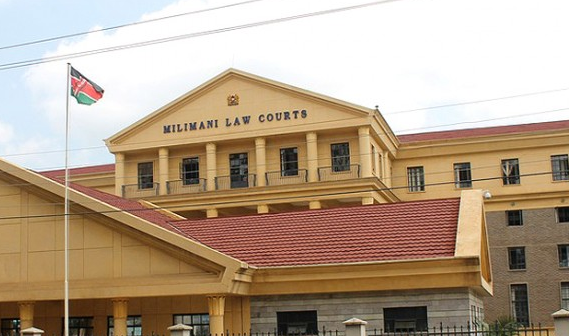
In a petition filed at the High Court in Nairobi on Thursday, the governance and legal advocacy organisation has sued the Attorney-General and the Cabinet Secretary for Health.
Health rights lobby group KELIN Kenya has been listed as an interested party.
According to the petition, reports in international and local media indicate that Kenya and the United States are engaged in advanced discussions to establish Kenya as an “offshore quarantine site” for individuals exposed to Ebola.
The petitioner claims the Kenyan government has already expressed willingness to proceed with the arrangement.
Katiba Institute argues that the proposed deal lacks transparency and has not undergone the constitutional processes required for decisions with significant public health implications.
The petition relies on public statements reportedly made by US Secretary of State Marco Rubio, who is said to have described preventing Ebola from entering the United States as a key foreign policy priority.
The institute through their lawyer Joshua Malidzo Nyasa, argues that Kenya is being positioned as an “alternative containment site,” transferring infectious disease risks to Kenyan territory.
In an affidavit filed alongside the petition, Katiba Institute Executive Director Nora Mbagathi accuses the government of pursuing the arrangement without public participation, parliamentary oversight, or disclosure of critical health, environmental, and security assessments.
“No environmental or health impact assessment has been undertaken, notwithstanding the extreme risks involved,” the affidavit states.
The petitioner further argues that Ebola, classified by the World Health Organisation as a highly severe and often fatal disease, poses a direct threat to the constitutional rights to life and health protected under Article 43 of the Constitution.
Katiba Institute also contends that Kenya lacks the specialised infrastructure required to safely manage Ebola cases.
The petition states that handling the virus requires Biosafety Level 4 (BSL-4) containment facilities, the highest category of laboratory safety yet Kenya only possesses facilities classified between BSL-1 and BSL-3.
According to the court documents, the country has only three BSL-3 laboratories, which are primarily designed to handle diseases such as tuberculosis and HIV, rather than Ebola.
The petition opens with a quotation from Philip Gourevitch’s book on the Rwandan genocide “We wish to inform you that tomorrow we will be killed with our families” which the petitioner says illustrates the consequences of authorities failing to respond to credible threats to life.
Katiba Institute is seeking conservatory orders restraining the government from establishing or operating any Ebola quarantine, isolation, or treatment facility under arrangements with the United States or any other foreign government.
The organisation also wants the court to compel the Health Cabinet Secretary to present a contingency plan within 24 hours and disclose any agreements, environmental and health assessments, parliamentary approvals, and operational protocols connected to the alleged arrangement.
Additionally, the petition seeks declarations that the government violated several constitutional provisions, including Articles 10, 26, 35, 43, 47, and Articles 94 to 96 relating to public participation, the right to life, access to information, the right to health, fair administrative action, and parliamentary authority.
“In these circumstances, the Respondents’ actions amount to a departure from constitutional obligation and a descent into constitutional recklessness, wherein foundational safeguards are subordinated to
executive expediency,” read the court documents.