
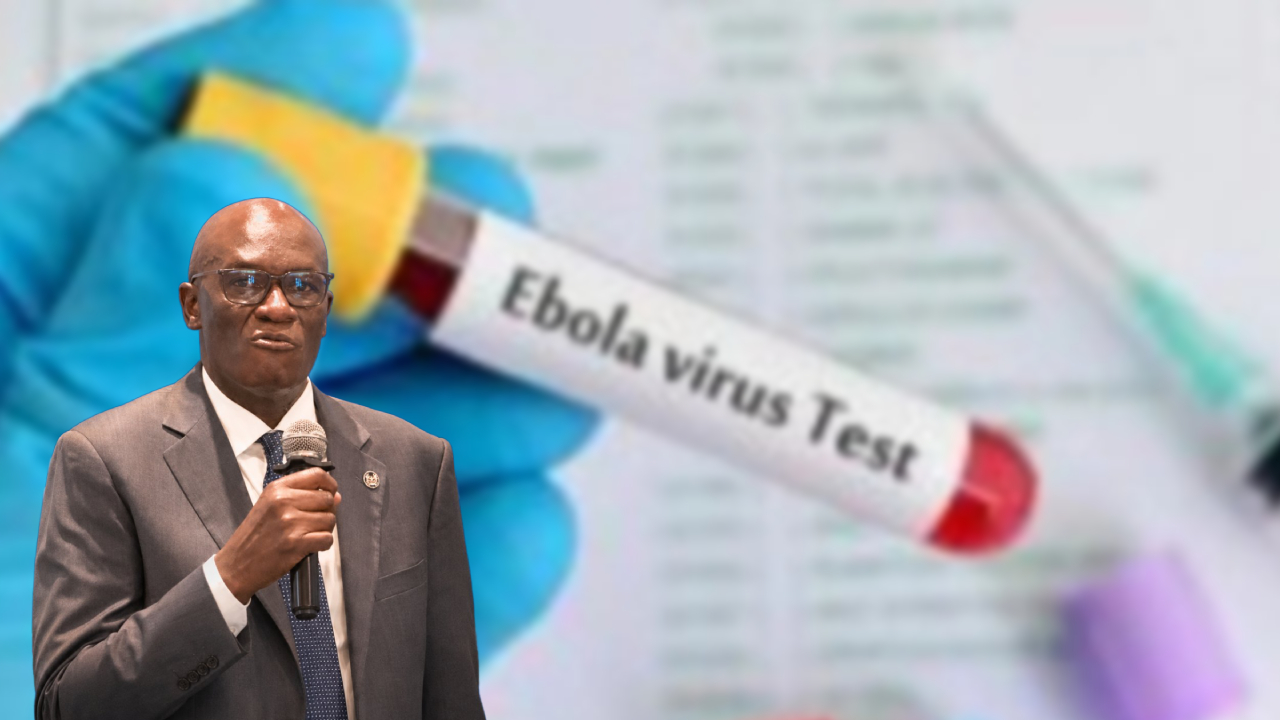
Kenya’s Ebola containment efforts are approaching a key milestone, with the first group of people monitored after exposure to the virus expected to return home on Sunday, October 25, provided they complete the required monitoring period without developing symptoms.
Health Director-General Dr Patrick Amoth said the planned release would mark the completion of 21 days of monitoring for the first group, with the Kenya National Public Health Institute (KNPHI) coordinating the process.
The announcement comes as health authorities continue to trace contacts linked to the confirmed infections. By October 20, officials had traced and placed 134 of the 135 identified contacts under quarantine, according to the Ministry of Health.
Amoth said the confirmed infections remained within a known cluster, with no evidence of transmission in the wider community. He nevertheless urged Kenyans to remain alert as surveillance and containment measures continue.
Kenya recorded its first confirmed case on October 6 after a 40-year-old man who had travelled from the Democratic Republic of Congo tested positive for the Bundibugyo strain of Ebola. He died on October 5.
The country has since recorded nine confirmed cases, including the initial patient. Health Cabinet Secretary Aden Duale said on Wednesday that the eight surviving patients were responding well to treatment and remained stable.
The government has also established a dedicated laboratory at the Kenyatta National Hospital Infectious Disease Unit to conduct routine tests for patients receiving Ebola care. The facility is intended to help maintain testing capacity while limiting disruption to other laboratory services.
Addressing a briefing involving government representatives and health partners, Amoth called for continued cooperation with response teams and cautioned against unnecessary alarm.
He said Kenya could begin the process of being declared Ebola-free if no further infections emerge and all the conditions set by health authorities are satisfied.
The World Health Organization requires 42 consecutive days without a new confirmed or probable case before an Ebola outbreak can be declared over. The period is twice the virus’s maximum incubation period of 21 days.
The countdown generally begins after the last confirmed patient tests negative twice, with the tests conducted at least 48 hours apart. Where a patient dies, it begins after a safe and dignified burial, in line with WHO guidance.
Surveillance must continue even after an outbreak is declared over. The WHO recommends at least six months of continued surveillance, alongside ongoing medical care and support for survivors.
The Bundibugyo strain has no approved vaccine or specific treatment. Medical care therefore focuses on supportive measures, including rehydration, managing symptoms and treating secondary infections, while vaccine candidates remain under investigation.
The Democratic Republic of Congo, which confirmed its current outbreak on May 15, has recorded more than 9,500 confirmed cases and over 4,600 deaths, according to the figures provided.