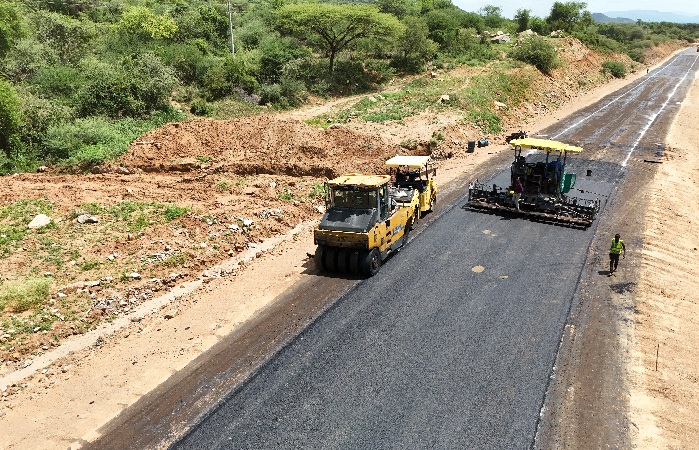
A major road infrastructure project cutting through parts of the Kerio Valley in Elgeyo Marakwet County is poised to redefine regional trade and economic activity, offering new hope to communities long constrained by poor connectivity and insecurity.
The ongoing construction of the Tot-Kilangata road is already being hailed as a game-changer, particularly for farmers and livestock keepers who have struggled for decades to access reliable markets.
For years, the region’s vast mango plantations have been underutilised due to transport challenges. Farmers could only reach limited markets such as Eldoret, leaving much of their produce to go to waste.
However, with the improved road network, transport times are expected to shrink significantly, enabling fresh produce to reach key urban centres like Nairobi, Kisumu and even cross-border markets in Tanzania within hours.
Amos Limo, a local from the Endo location, recounts how their mangoes and other produce used to go bad while on the way to trade centres.
“Previously, these mangoes could not reach Nairobi and were limited to nearby towns. Now, within three hours, they can be in Eldoret or Kisumu, and some even make it to Tanzania,” noted Limo.
The impact is not limited to crop farming. Livestock farmers are also set to benefit, as improved accessibility will allow them to transport cattle to major slaughterhouses in Nairobi and other urban centres in Kenya, like Kikuyu town.
In the past, insecurity and poor roads made it nearly impossible to commercialise livestock, leaving many animals underutilised.
“In many cases, cattle here were not even sold for meat because there was no way to transport them. With this road, farmers can now easily access markets and earn from their livestock,” the site engineer Solomon Njeru added.
The road project, which spans key sections across Elgeyo Marakwet and West Pokot counties, has faced significant delays since its commencement.
Insecurity in the region severely disrupted construction, forcing contractors to abandon the site for nearly a year between September 2024 and September 2025.
During that period, the area was deemed unsafe and largely uninhabitable, halting progress. However, the restoration of security has since enabled works to resume at an accelerated pace.
According to project data, overall progress has improved following increased funding and enhanced security measures, with key activities such as earthworks, culvert installation, and subgrade preparation advancing steadily.
Beyond infrastructure, the road is expected to play a critical role in stabilising the region by supporting economic activity, reducing isolation, and enhancing access to essential services.