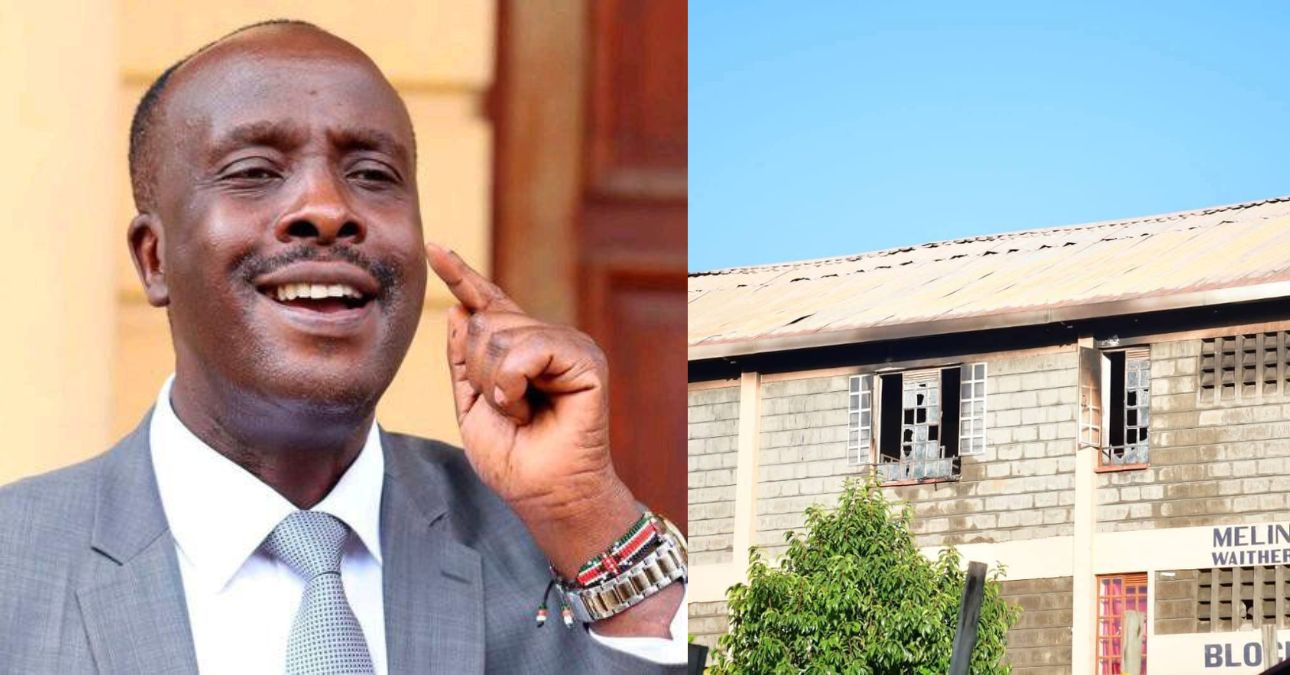
High Court advocate Danstan Omari has urged Kenyans to remember that the seven students charged over the Utumishi Girls Academy fire are minors and are entitled to constitutional protections despite the public outrage surrounding the tragedy.
“Yes, people hate them. People want them jailed. People think they should not even waste time being arraigned in court and witnesses called. They should be summarily jailed. We understand the pain,” Omari acknowledged.
However, he emphasized that public emotions, no matter how understandable, cannot take precedence over the law.
Drawing on Articles 53, 49, and 50, Omari laid out exactly what the state, the police, the courts, and even the public must understand about how these children are to be handled from this point forward.
Under Article 53, which speaks directly to children’s rights, Omari said the students cannot be subjected to any form of violence, abuse, or inhuman treatment at any stage of the process.
“Those seven students should not be exposed to any form of violence. If they were beaten when they were in police cells, that is a ground for a serious challenge. If the DCI used force on those children, the DCI will face the law,” he said.
He added that the students must be held in Child Protection Units, not in ordinary police cells alongside adult detainees.
“At Gilgil Police Station, where the kids have been kept, they are supposed to be kept in what is called the CPU, the Child Protection Units. They are not supposed to be kept in a police cell with other women who have been arrested. If they were mixed together, the Constitution, Article 53, does not allow that,” he noted.
Omari emphasized that detention must be used only as a last resort and for the shortest appropriate period of time.
If remanded, the children cannot be sent to a prison like Langata, they must go to children’s remand centres managed by the Director of Children Services, not prison officers.
On Article 49, covering the rights of arrested persons, Omari said the students must have been informed of the reasons for their arrest in a language they understand, have the right to remain silent regardless of what evidence is shown to them, and cannot under any circumstances be compelled to confess.
“Those children cannot be forced to confess. And if they are going to confess, it must be before a magistrate or before a police officer above the rank of a chief inspector,” he said.
Under Article 50, which governs fair trial rights, Omari said the students are entitled to be presumed innocent until a court of law, and only a court of law, determines otherwise.
“Only one person has the power to decide and that is the judiciary. The police, the prosecutor, the public, the Minister for Interior, cannot say those children are guilty. Even you. All those are allegations,” he stated.
On the question of how long the trial will take, Omari had a message for those expecting swift justice.
“The earliest that trial will take is four to five years, or it will go to eight years. They must be given time to prepare their defence,” he said.
“Those children are children in conflict with the law. Any violation of these provisions by the police, by the prosecutor, by the courts, the defence will be there,” Omari concluded, while also passing his condolences to the families of the 16 students who lost their lives in the tragedy.