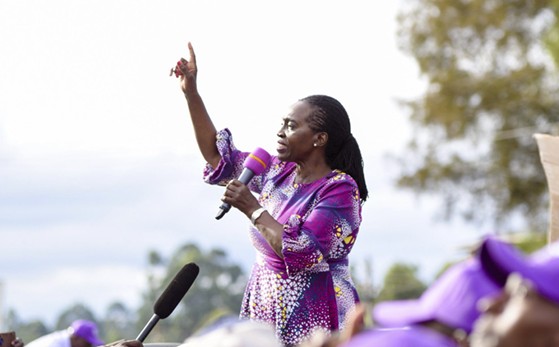
2022 Azimio la Umoja-One Kenya Coalition party running mate Martha Karua is facing mounting criticism across digital platforms following her recent remarks on rising fuel prices and the country’s economic situation on her official social media accounts.
A section of Kenyans are accusing her of advancing a selective political narrative that risks reviving divisive tribal politics. Popularly known as Kenya’s “Iron Lady,” Karua has in recent months intensified her public engagements and media appearances, consistently voicing concerns over governance, constitutionalism and democratic accountability under the current administration.
The latest controversy emerged after a social media post in which Karua compared fuel prices during the administration of Kenya’s 2nd President, Daniel arap Moi, in 1997 with the current prices under President William Ruto.
In the post, Karua argued that despite nearly three decades passing, Kenyans were still grappling with high fuel prices, a rising cost of living and governance challenges. Her remarks quickly ignited debate across social media platforms, with her supporters praising her for speaking out on the rising cost of living, while critics accused her of pushing a selective comparison by focusing only on the Moi and Ruto administrations while leaving out the eras of Kenya’s 1st, 3rd and 4th presidents.
Several users on Facebook and X questioned the comparison, arguing that economic conditions, taxation policies, inflation and global oil market dynamics have changed significantly over the years.
Some Kenyans warned Karua against politics that could divide the country along tribal and regional lines, urging leaders instead to focus on issue based politics centred on economic recovery, governance and practical solutions affecting ordinary citizens.
Others argued that isolating only two padminstrations in a nearly three-decade comparison risked creating unnecessary political polarisation while ignoring the broader historical and economic context.
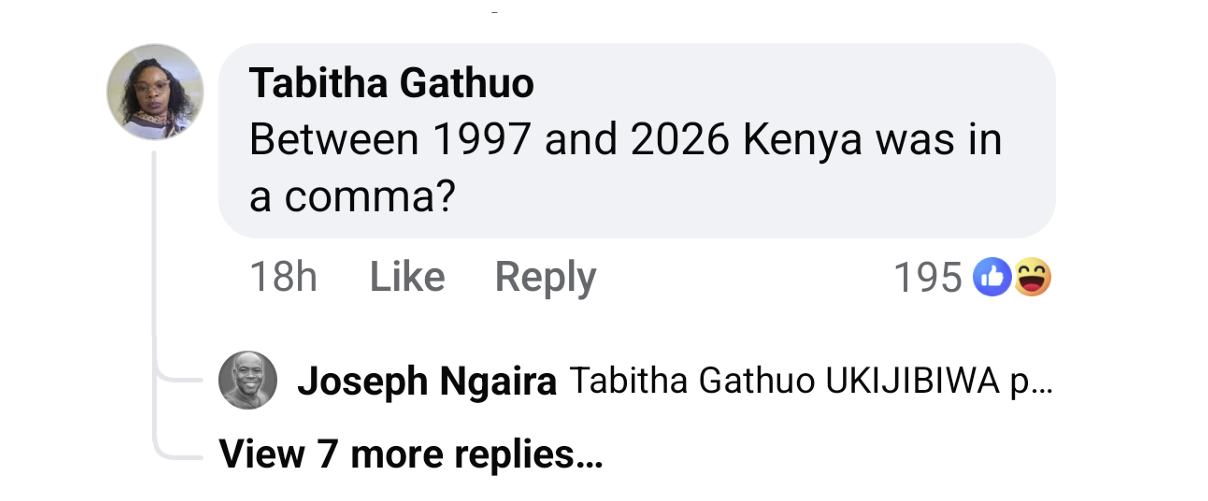
Facebook user Tabutha Gathuo asked “Between 1997 and 2026 Kenya was in a comma?”
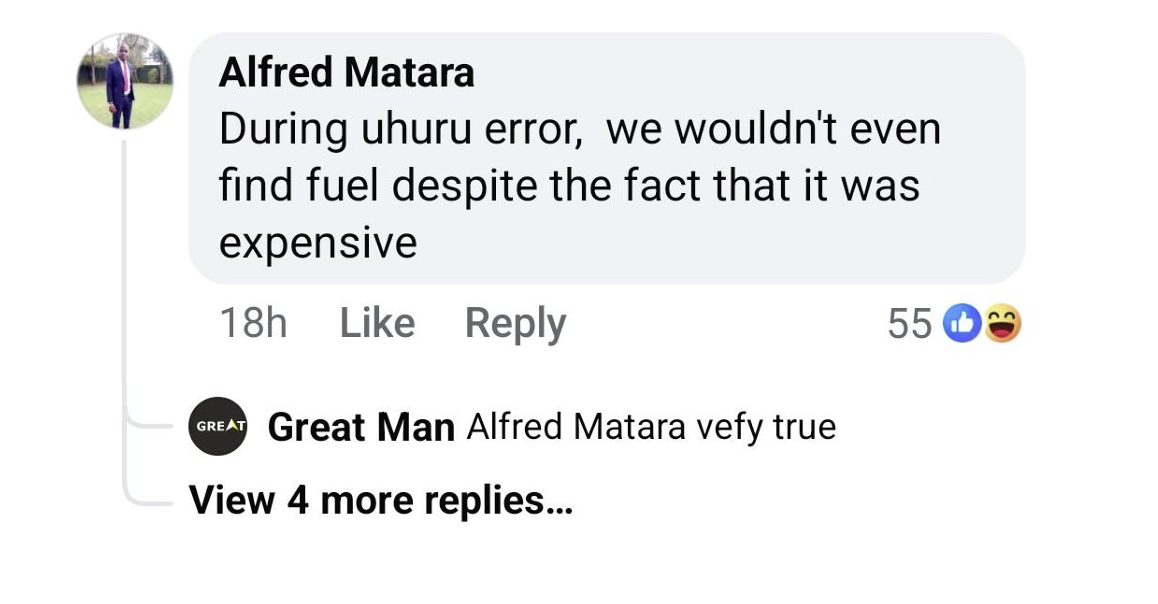
In rejoinder, Alfren Matara said “during Uhuru error, we couldn’t even find fuel despite the fact that it was expensive.”
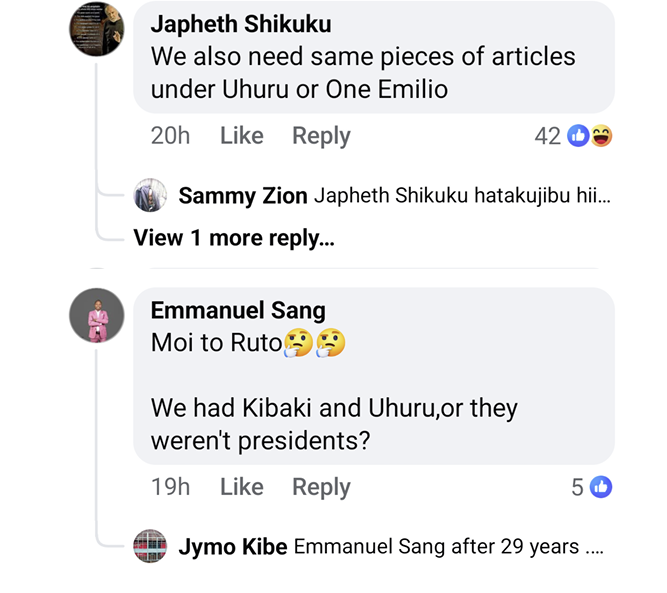
Japheth Sikuku called for a similar comparison covering other administrations, including the tenures of former Presidents Mwai Kibaki and Uhuru Kenyatta, the debate shifted drawing attention to changes in commodity prices before President Ruto’s tenure.
The debate comes amid growing public concern over the latest fuel price increases announced by the Energy and Petroleum Regulatory Authority (EPRA).
In its latest fuel review statement, EPRA noted that the government would cushion consumers through the Petroleum Development Levy (PDL) Fund by utilising approximately KSh5 billion to subsidise diesel and kerosene prices.
EPRA further stated that the average landed cost of imported Super Petrol increased by 10 per cent from US$823.27 per cubic metre in March 2026 to US$906.23 per cubic metre in April 2026. Diesel prices rose by 20.32 per cent from US$1,073.82 to US$1,291.98 per cubic metre, while Kerosene increased by 1.59 per cent from US$1,311.93 to US$1,332.73 per cubic metre over the same period.
Analysts have linked the rising fuel prices partly to global geopolitical tensions involving Iran and the United States, which have disrupted shipping routes through the Strait of Hormuz, one of the world’s most critical oil transit corridors.
Despite the criticism, Karua’s supporters have defended her stance, arguing that as a veteran opposition figure and human rights advocate, she has a constitutional responsibility to hold the government accountable and raise concerns affecting ordinary Kenyans.
The debate reflects the growing political divergence in the country, with the rising cost of living, governance and economic reforms continuing to dominate public discourse ahead of the next electoral cycle.