The brutal death of Rachel Wandeto Muthoni has once again exposed a troubling reality in Kenya’s political and social landscape, a growing culture of intolerance, fear and selective outrage.
Wandeto, a gospel artist and supporter of the ruling United Democratic Alliance (UDA) party, was allegedly attacked in Mwiki, Kasarani Sub-County, after unknown individuals reportedly doused her with petrol and set her ablaze.
Reports surrounding the incident indicate that she had a tattoo of President William Ruto and was openly aligned to the UDA Party, factors that have intensified concerns that the attack may have been politically motivated.
She later succumbed to her injuries after fighting for her life at Kenyatta National Hospital.
Her death has triggered grief, anger and difficult questions about the country’s silence whenever violence appears tied to political beliefs or public expression.
While leaders and institutions condemned the attack, many Kenyans online questioned why the outrage appeared muted compared to other high-profile cases of violence against women.
KEWOPA condemns attack
The Kenya Women Parliamentary Association (KEWOPA), through its Chairperson, Leah Sankaire, condemned the attack, terming it a direct assault on constitutional freedoms.
“KEWOPA unequivocally condemns this act of violence, which constitutes a grave violation of the rights and freedoms guaranteed under the Constitution of Kenya, 2010, including the right to life, equality, human dignity, and security of the person under Articles 26, 27, 28, and 29,” said Sankaire.
“No woman should have to live in fear, and no family should have to endure the pain of losing a loved one through violence. Such acts have no place in a constitutional democracy founded on justice, human rights, and the rule of law.”
The association further warned that the country was witnessing a dangerous rise in intolerance and targeted violence.
“KEWOPA further expresses concern over the emerging pattern of targeted violence and growing intolerance in public life, which threatens democratic participation and weakens public trust in state protection mechanisms,” the statement added.
Interior Cabinet Secretary Onesimus Kipchumba Murkomen also condemned the attack, warning against divisive rhetoric and hate.
“Our vibrant democracy, backed by a robust Constitution, allows for free expression of political opinion that cannot be taken away by anybody,” Murkomen said on Sunday.
“We will therefore take all measures to rein in divisive and incendiary political rhetoric, which is spreading hate and radicalisation.”
The CS added: “Whatever the motive, no Kenyan should go through such an ordeal because of her beliefs.”
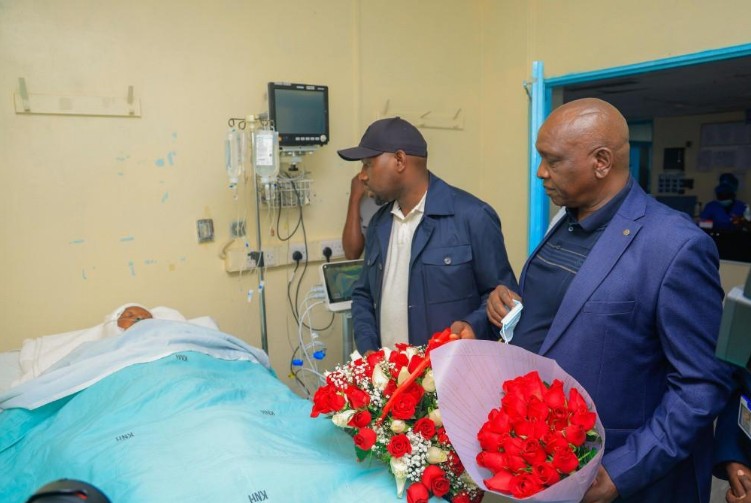
Inspector General of Police Douglas Kanja, who visited Wandeto at KNH alongside Murkomen before her death, assured the public that investigations had commenced.
“The Inspector General equally condemned the attack, stating that such criminal acts have no place in society. He assured Muthoni that thorough investigations had commenced and that those responsible would face the full force of the law,” a post on the official National Police Service page on Facebook read.
But beyond the official statements lies a deeper national concern, the normalisation of hostility against people because of their political opinions, affiliations or beliefs.
Over recent years, Kenya has increasingly witnessed online harassment, public intimidation, and politically charged hostility spilling into real life. Critics say the selective nature of public outrage has made matters worse, with some victims receiving widespread solidarity while others are met with silence depending on perceived political alignment.
Jacqueline Ingutiah, Commissioner at the Judicial Service Commission, described Wandeto’s death as heartbreaking and unacceptable.
“This is painful!” she said.
“We must all strongly condemn all forms of violence in our society and demand swift investigations and accountability for those responsible. Human life is sacred and differences in opinion, belief or political affiliation should NEVER result in hatred attacks and loss of life.”
As the hashtag #RachelWandeto continues circulating online, many Kenyans are now asking whether the country is slowly becoming desensitised to violence, especially when the victim does not fit a preferred narrative.
Wandeto’s death for others is not just about one woman. It is about the dangerous silence surrounding political intolerance and the growing fear that expressing one’s beliefs in Kenya may increasingly come at a deadly cost.