Ethiopia’s losses narrow sharply as customer base hits 15.4 million, while Kenya unit’s half-year operating profit crosses Sh100bn for the first time
Safaricom has reported a 36 per cent rise in half-year net income to Sh58.2 billion. It also said that more than half of all M-PESA transactions were free of charge during the period.
The telco said 53 per cent of all M-PESA transactions in the six months to September 30, 2026 were free or zero-rated. That included about 81 per cent of Lipa na M-PESA and Pochi la Biashara merchant transactions and 63 per cent of consumer transactions. Safaricom said this keeps financial services accessible and affordable for millions of Kenyans.
The deck presented to investors shows the picture is shifting. M-PESA handled 27.4 billion transactions in the half-year, up 25.2 per cent. Non-chargeable transactions grew 10.1 per cent to 14.5 billion, but chargeable transactions grew 48.2 per cent to 12.9 billion. As a result, the free share of volumes fell from 60.3 per cent a year earlier to 53 per cent. Safaricom also said it implemented targeted pricing changes on Lipa na M-PESA and Pochi during the period.
M-PESA revenue for the Group grew 13.6 per cent to Sh100.1 billion, crossing Sh100 billion in a half-year for the first time. Safaricom said 42.3 million customers used M-PESA in the past month, up 11.6 per cent. The merchant base has nearly doubled, up 90.3 per cent to about 4.5 million merchants, driven by Pochi la Biashara and Lipa na M-PESA.
Strong results across the Group
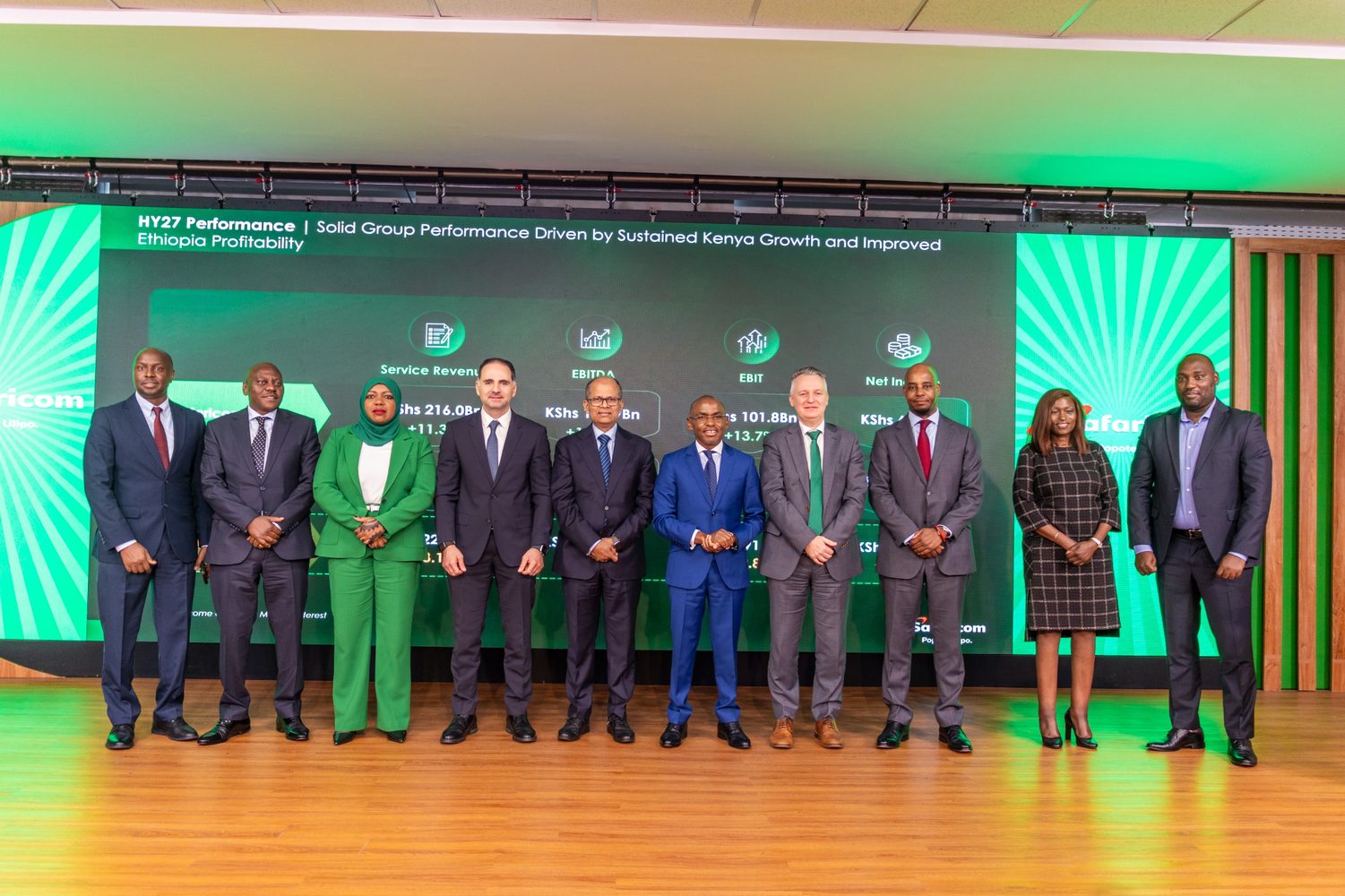
Group service revenue rose 13.1 per cent to Sh226.1 billion. Earnings before interest, tax, depreciation and amortisation (EBITDA) grew 27.5 per cent to Sh129.2 billion. Group earnings before interest and tax (EBIT) rose 39.8 per cent to Sh91.1 billion. The Group net income figure excludes minority interest.
In Kenya, service revenue grew 11.3 per cent to Sh216 billion. EBIT rose 13.7 per cent to Sh101.8 billion, the first time the Kenya business has passed Sh100 billion in a six-month period. Kenya’s net income rose 13.8 per cent to Sh66.3 billion.
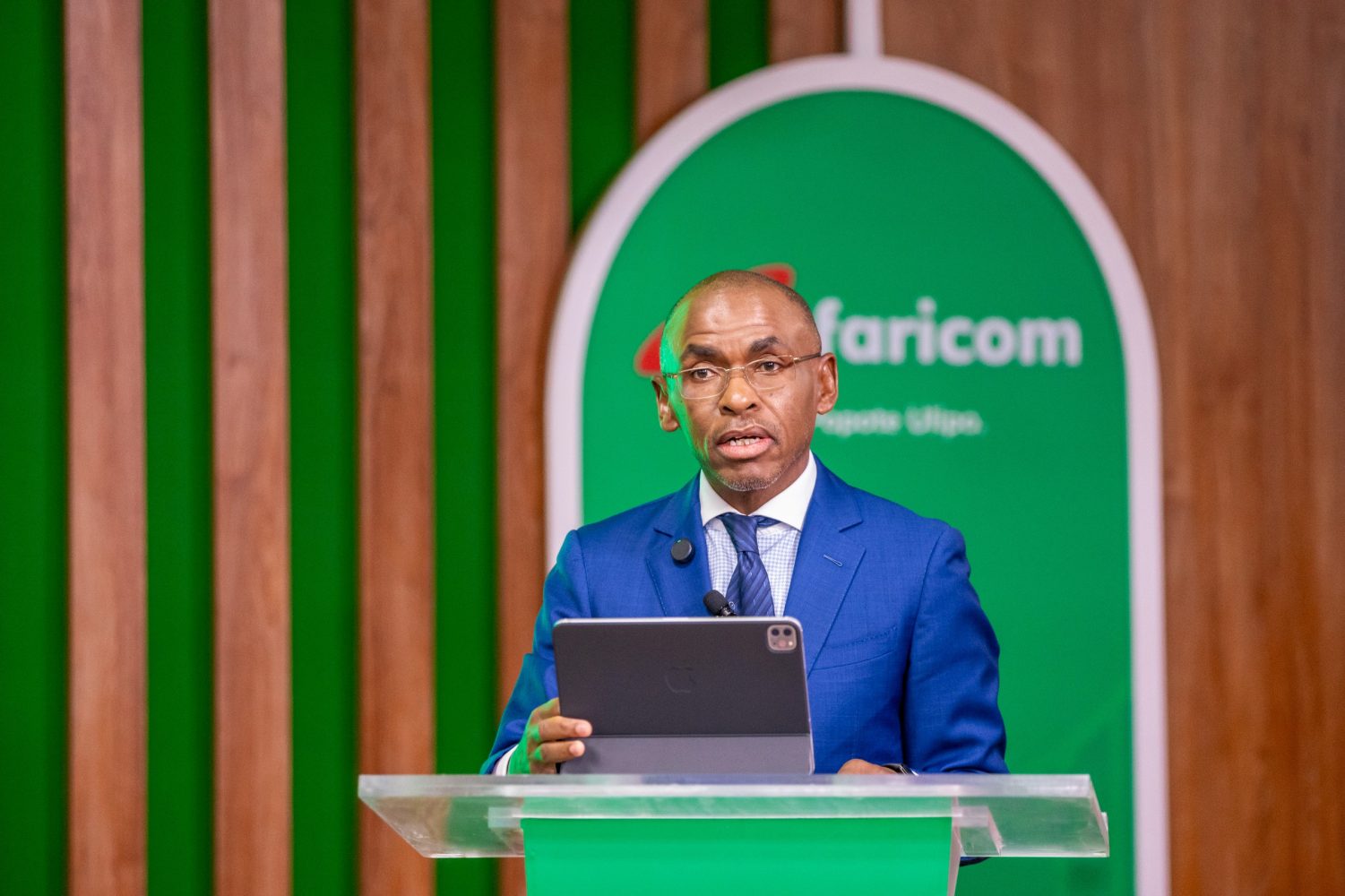
Group chief executive Peter Ndegwa said the results reflect strong execution of the company’s Vision 2030 ambition to become Africa’s leading purpose-led technology company. Chairman Adil Khawaja said the growth remains anchored in transforming lives and in the value created for customers, shareholders and communities.
Ethiopia nears break-even
Safaricom’s Ethiopian business, still in its start-up phase, continued to narrow its losses. Service revenue rose 71.6 per cent to Sh10.6 billion, and the business now serves 15.4 million three-month active customers, up 38.4 per cent. Ethiopia contributed 17 per cent of Group service revenue growth.
The Ethiopian operation’s EBITDA loss narrowed by 96.5 per cent to Sh434.4 million, from Sh12.6 billion a year earlier. Mr Ndegwa said the company is closer to its target of EBITDA break-even in Ethiopia by the end of this financial year. The business still posted an EBIT loss of Sh11.4 billion and a net loss of Sh8.8 billion, though both were smaller than last year.
M-PESA is also growing in Ethiopia, with 5.2 million three-month active users, up 54.6 per cent. Safaricom reports 101,000 active merchants there. The company flagged risks, however. Inflation in Ethiopia was 14.9 per cent in September, and the Birr continues to depreciate against the dollar. Regulatory issues, including M-PESA interoperability and cost-based retail pricing, remain unresolved. Safaricom also cited renewed conflict in Tigray and localised tensions in Amhara and Oromia.
Impact on communities
Safaricom said more than 1.5 million lives were impacted in the half-year through the Safaricom and M-PESA Foundations’ education, health and economic empowerment programmes. These include Uzazi Salama, which targets the health of mothers and newborns, and the M-PESA Foundation’s Citizens of the Future programme.
The company also said 60,000 young players have taken part so far in the fifth season of the Safaricom Chapa Dimba football tournament.
Outlook
Safaricom retained its guidance for the full financial year. It expects Kenya EBIT of Sh195 billion to Sh199 billion, Ethiopia EBIT losses of Sh12 billion to Sh15 billion, and Group EBIT of Sh180 billion to Sh187 billion. Group capital expenditure is guided at Sh64 billion to Sh70 billion. The company will hold an investor forum in February 2027 and release full-year results in May 2027.