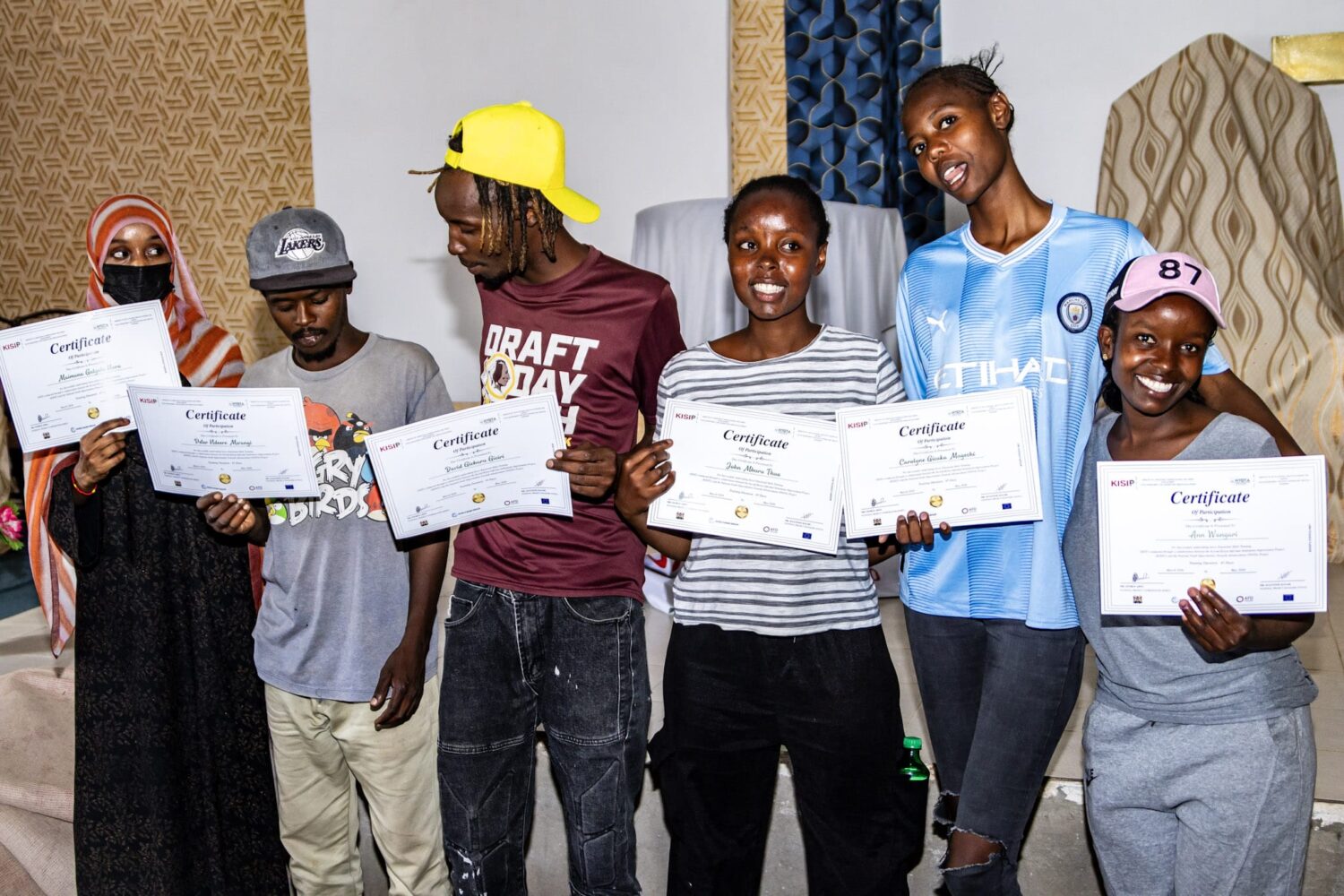
At least 47 youth have successfully completed a 45-day Socio-Emotional Skills Training (SEST) through the support of the Kenya Informal Settlements Improvement Project Phase 2 (KISIP 2) and National Youth Opportunities Towards Advancement (NYOTA).
The ceremony held early this week was attended by officials from the World Bank, the National Project Coordination Team (NPCT) from the Second Kenya Informal Settlements Improvement Project, National Youth Opportunities Towards Advancement (NYOTA), Nairobi City County, and the Settlement Executive and Grievance Redress Committees.
The SEST, conducted under Component 2 at KISIP2, has been rolled out across informal settlements in several counties to help young people navigate the everyday social and emotional challenges they face.
The program focuses on building confidence, financial discipline, communication skills, and resilience among vulnerable youth.
Speaking during the certificate awarding ceremony at Nairobi’s Kayole informal settlement, Social Development Specialist at the World Bank Annette Omolo lauded the trainees for successfully completing the program.
“You have already taken the first step toward changing your future. Take these lessons seriously and believe in yourselves,” Ms. Omolo said.
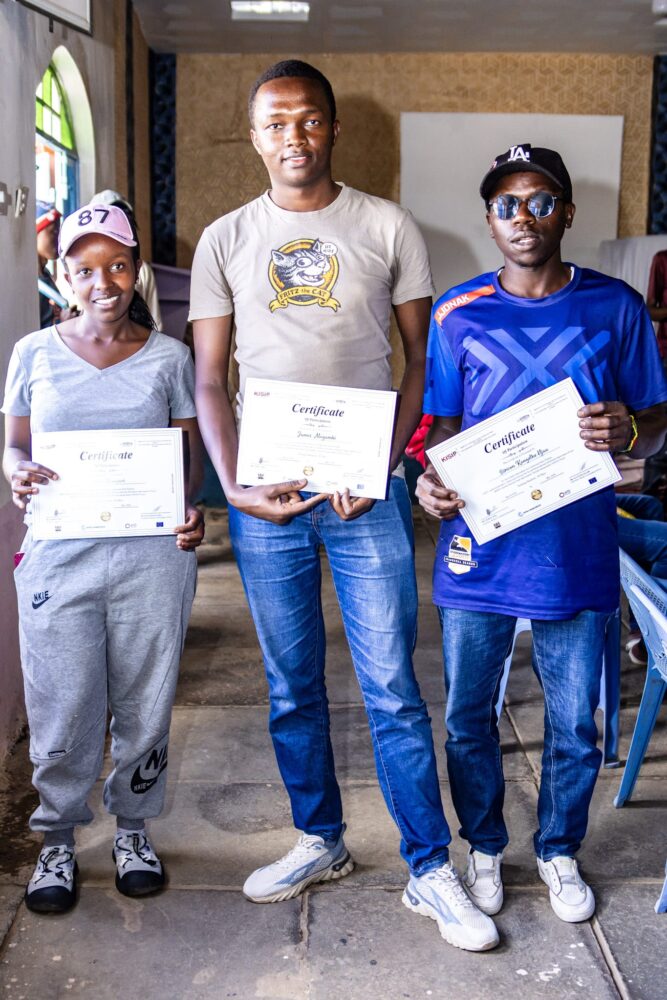
She encouraged the trainees to use the savings they had accumulated during the training to start small businesses and improve their livelihoods.
The NPCT representative Thomas Nyamwaro noted the training will create a lasting change beyond the certificates that had been awarded to the trainees.
KISIP 2 is a $165 million World Bank-funded initiative designed to improve living conditions, tenure security, and basic infrastructure for residents in urban informal settlements across all 47 Kenyan counties.

The initiative responds to the challenges of millions of residents in informal settlements who lack access to clean water, sanitation, reliable electricity, and secure land tenure.
The NYOTA representative Darius Olayo, who was also in attendance, urged the trainees to initiate sustainable ventures that can advance their future endeavors.
The graduates affirmed they had already saved enough money to kick-start small-scale businesses and expressed optimism about becoming financially independent.
They also appealed for continued mentorship and support from the trainers as they transition into business and employment opportunities.
One of the trainees, Daniel Ouma, said the training had assisted many participants to overcome drug abuse, fear, hopelessness, and depression brought about by unemployment and difficult living conditions.
“Before this program, many of us had lost hope. Now we have learned how to save, manage our emotions, and believe that we can build a better future for ourselves,” Ouma said.
The NYOTA and KISIP 2 programs promote development through practical, ground-level action that responds to Kenyans’ needs.
Both initiatives require sustained, continuous investment in people and places, which is part of Kenya’s longer-term priorities.
Each year, more than 800,000 young Kenyans enter the labor market, yet fewer than 100,000 formal jobs are created.
Many youths remain trapped in low-productivity work with limited income security despite Kenya making significant progress in the expansion of infrastructure and improved human capital.
However, as the country advances digital transformation, expands value addition in agriculture and pursues green growth in renewable energy and climate-smart production, demand for skilled workers and functional urban spaces will only increase, with government programmes such as NYOTA and KISIP 2 laying the groundwork for that future