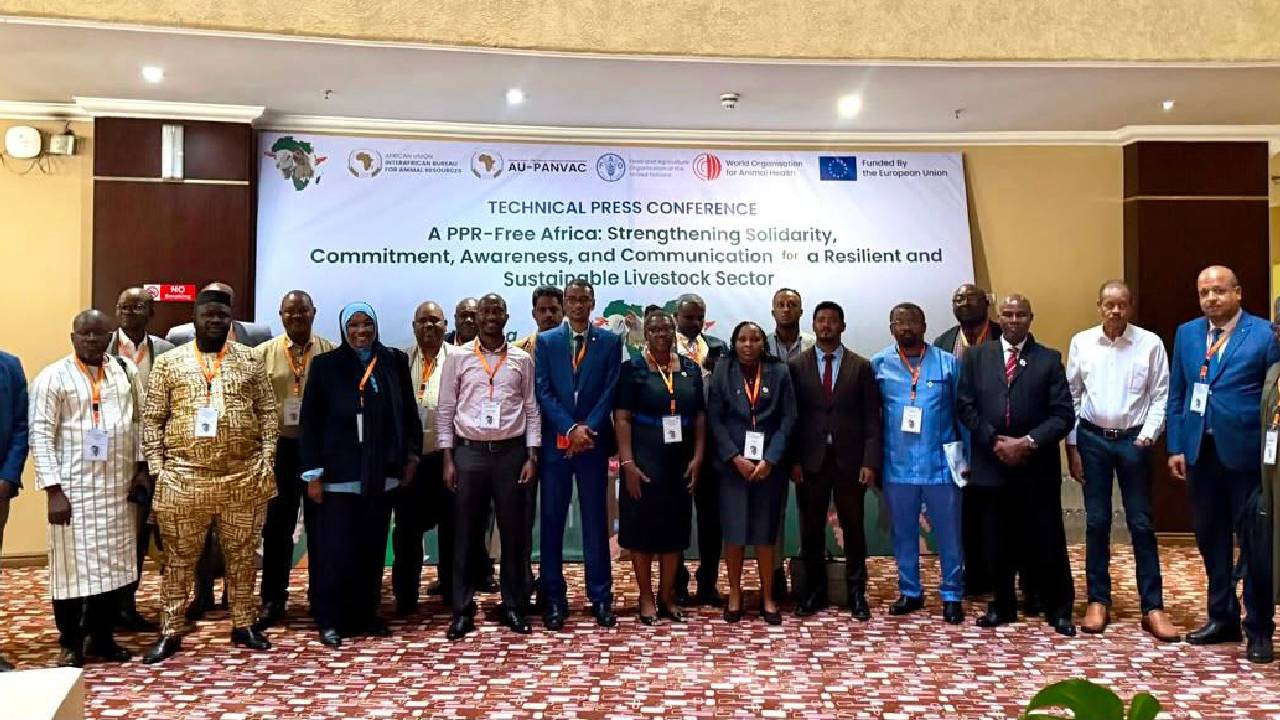
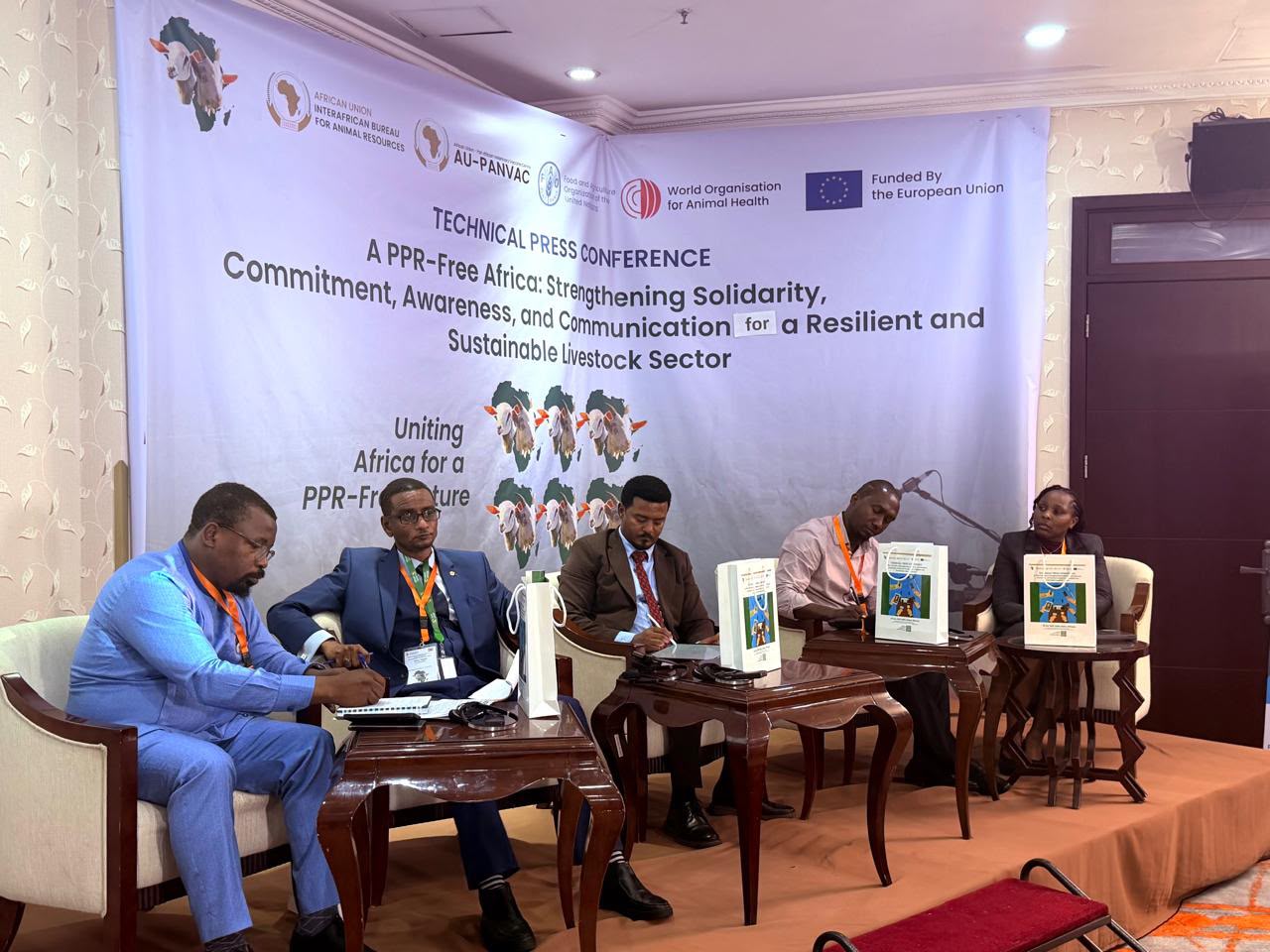
Addis Ababa: Ethiopia- African countries have made significant progress in the fight against Peste des Petits Ruminants (PPR), a highly contagious disease affecting sheep and goats, but experts say stronger political commitment and increased funding are needed to achieve its eradication across the continent.
The update was presented on Tuesday by the Pan-African PPR Secretariat (PAPS) during a mid-term review of the Pan-African Programme for the Eradication of PPR, 18 months after its launch.
The programme, hosted by the African Union Interafrican Bureau for Animal Resources (AU-IBAR), is funded by the European Union with €8 million and is being implemented in partnership with African Union member states, Regional Economic Communities (RECs), the Food and Agriculture Organization (FAO), the World Organisation for Animal Health (WOAH) and the African Union Pan-African Veterinary Vaccine Centre (AU-PANVAC).
PPR, often referred to as “goat plague”, is one of the most economically damaging livestock diseases in Africa. It affects sheep and goats, threatening the livelihoods of millions of pastoralists and smallholder farmers while undermining food security and regional livestock trade.
PAPS said the programme has strengthened the continent’s preparedness to prevent, detect and respond to the disease since its launch in February 2025.
Achievements highlighted during the briefing include updated national eradication strategies, regional roadmaps, stronger veterinary services, expanded disease surveillance, improved laboratory diagnostic capacity and closer coordination between African countries.
Officials said the progress has laid the foundation for more resilient livestock production systems while supporting safer trade in animals and animal products.
However, speakers at the briefing warned that important challenges remain.
The Food and Agriculture Organization said mobilising additional resources would be essential if countries are to implement their national eradication plans.
“One of the major challenges we face today is advocacy. This is where much of our effort must be focused. We need to strengthen advocacy at all levels to secure increased funding and mobilise additional resources,” an FAO representative said.
The organisation added that greater investment would enable countries to implement their programmes more effectively and accelerate progress towards eradication.
The World Organisation for Animal Health stressed the importance of aligning regional efforts with international standards.
It said countries should continue following the agreed stepwise pathway towards official recognition of their disease status while ensuring veterinary services are equipped to meet global requirements.
AU-PANVAC said producing high-quality vaccines and improving access to reliable diagnostic tests remain critical to controlling outbreaks.
It noted that stronger surveillance systems and early detection would help countries respond more quickly and limit the spread of the disease.
AU-IBAR described the Pan-African PPR Secretariat as the framework enabling African countries to coordinate their efforts under a single continental strategy.
Officials said eliminating PPR would protect livestock assets that millions of African households depend on for food security, income and resilience.
The European Union said its financial support was intended to catalyse eradication efforts but stressed that lasting success would depend on African governments increasing domestic investment.
“Lasting success cannot depend on external support alone. It requires sustained domestic commitment, national ownership and continued investment by African countries,” an EU representative said.
The Government of Ethiopia also called for stronger collaboration between member states, regional organisations and development partners, saying cross-border cooperation would be essential to tackling a disease that does not respect national boundaries.
It urged governments to increase budget allocations for veterinary services while appealing to additional international donors to complement existing support.
Looking ahead, PAPS said the next phase of the programme will focus on implementing national strategic plans, strengthening surveillance in border regions, improving laboratory capacity and sustaining political commitment.
The Secretariat said the progress achieved over the past 18 months demonstrates that coordinated continental action can bring Africa closer to the goal of eradicating PPR and protecting the livelihoods of millions of livestock keepers.