
Farmers in Busia County are embracing value addition by turning pumpkins and other locally grown crops into nutritious porridge flour and oil products, in a move aimed at promoting healthy eating, reducing post-harvest losses and creating new income opportunities for small-scale farmers.
The farmers showcased their Agroecological products at Syamakhanga demonstration farm in Matayos during this year’s World Food Day celebrations, which brought together agricultural stakeholders and farmers from Kenya and Uganda to exchange knowledge on traditional foods, indigenous seeds and sustainable food production.
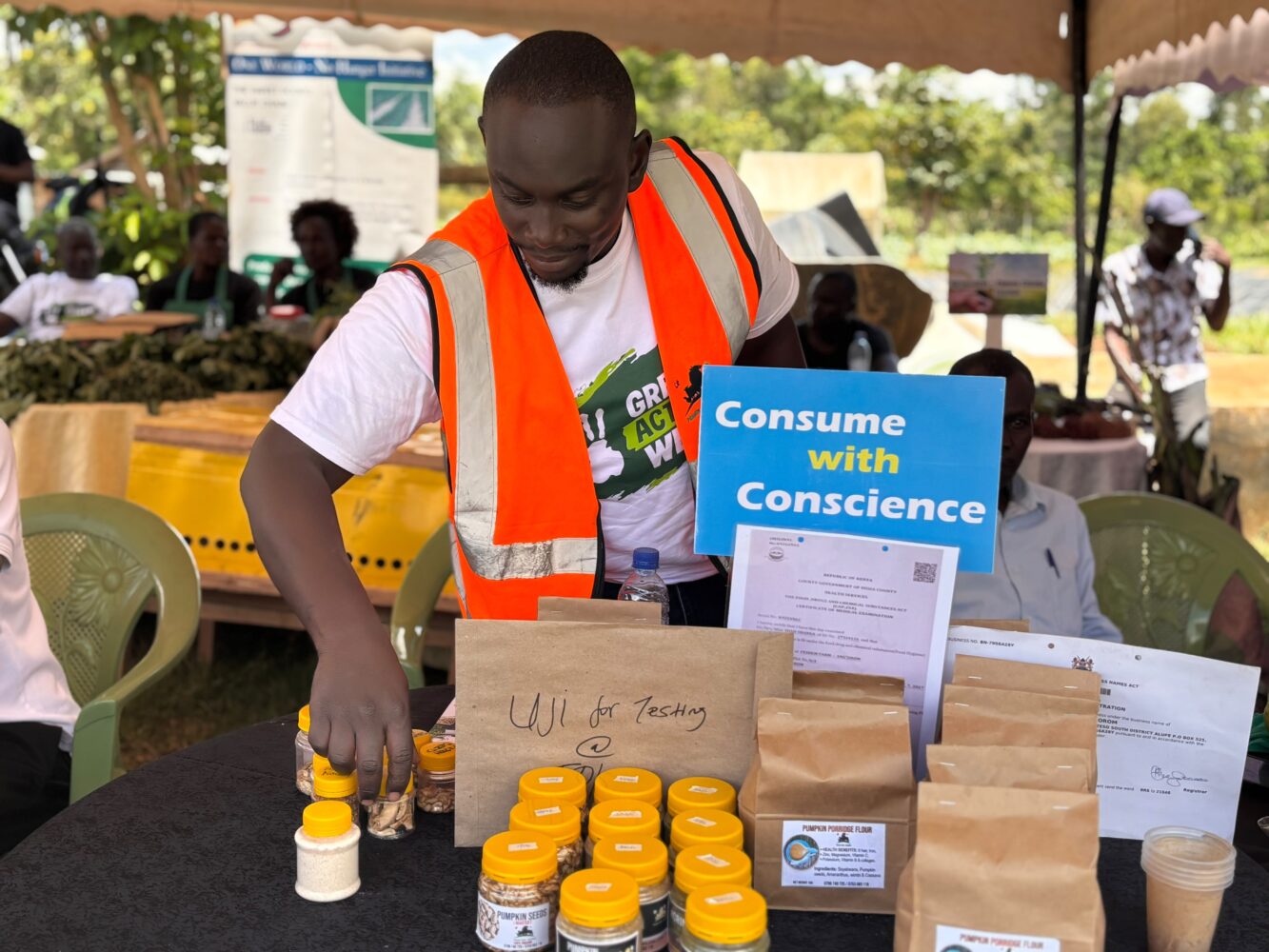
Isaiah Odanga, a farmer at Peshen Farm, said they had ventured into processing pumpkins into porridge flour by blending different agricultural products to develop a nutritious food product for households’ consumption.
Speaking during the event, Odanga said the World Food Day celebrations provided an important platform for farmers practicing Agroecology to exhibit their products, exchange ideas and establish networks that could help them expand their farming enterprises.
“World Food Day is very important because it has given us an opportunity to come and showcase our organic products here at Syamakhanga demonstration farm. Through this, we are also able to network, exchange seeds and learn,” Odanga said.
He explained that Peshen Farm produces pumpkin-based porridge flour by combining several ingredients, including cassava, wheat, pumpkin seeds and amaranth seeds, to develop blended flour with different nutritional components.
Odanga noted that the initiative seeks to demonstrate how farmers can transform locally available crops into value-added products instead of selling raw produce, enabling them to explore new markets while increasing the economic value of their harvests.
The farm also produces roasted pumpkin seeds, which Odanga said were valued for their nutritional benefits. He noted that the seeds contain minerals such as zinc, magnesium and iron, which play important roles in maintaining human health.
Odanga also associated the roasted seeds with men’s sexual health and bone development in children.
The farmer said processing agricultural produce into different products was helping demonstrate the potential of Agroecological farming to support both household nutrition and rural livelihoods.
Eliud Oteng’e, another farmer, said Peshen Farm had diversified its production to include cooking oil from sim sim seeds, as well as oil derived from oyster nuts.
Oteng’e said the products had different potential uses, including cooking and skincare describing the oyster nut oil as a product that farmers hoped could find a market among consumers interested in health and wellness.
He claimed that the oil could benefit people with heart conditions and help treat an enlarged heart.
Oteng’e said the farm’s approach was centred on producing agricultural products organically, with the aim of reducing reliance on synthetic agricultural chemicals and promoting environmentally sustainable farming practices.
Sarah Wambui, an officer with the Participatory Ecological Land Use Management (PELUM) network, said the organization had brought farmers together in Busia to create opportunities for learning, knowledge exchange and the promotion of sustainable food systems.
Wambui said the World Food Day event was also being used to highlight Green Action Week, a global campaign that promotes sustainable consumption and environmentally responsible practices.
“Apart from World Food Day, we are also celebrating Green Action Week. This is a global annual campaign that usually takes place in the first week of October, but this year we are doing it together with World Food Day to highlight the importance and connection between sustainable food systems, environmental preservation and the well-being of the community,” Wambui said.
She further explained that PELUM works through a network of civil society organisations supporting smallholder farmers to adopt Agroecological practices that promote sustainable food production, conserve natural resources and strengthen community resilience.
Wambui said the participation of farmers from both Kenya and Uganda was particularly significant because it provided an opportunity to share indigenous knowledge and skills on traditional foods, seeds and farming practices across national borders.
She noted that farmers could benefit from learning about different approaches to seed preservation, crop production, food preparation and value addition, while strengthening cooperation among communities that share agricultural and cultural traditions.
This year’s World Food Day theme, “Sharing Food, Sharing Culture, Sharing Nature across Borders,” underscored the importance of collaboration in building sustainable food systems and preserving traditional knowledge, she said.