A landmark legal battle has been launched by the Akamba community against the Government of the United Kingdom, seeking restitution, land restitution, and a formal apology for colonial injustices that left millions impoverished and politically marginalized.
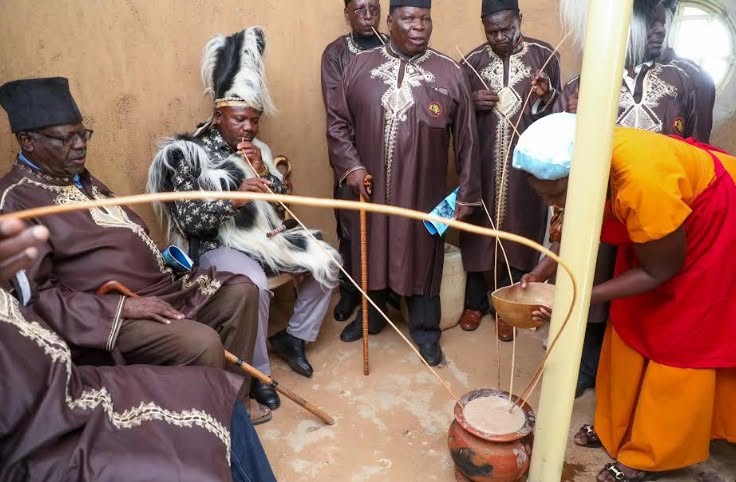
The case, spearheaded by Dr. Augustus Kyalo Muli, National Patron of the Anzauni Clan and the party Leader of the National Liberal Party, alleges that British colonial authorities dispossessed the Akamba of their fertile lands, seized their cattle, outlawed cultural practices such as the brewing of kaluvu, and confined them to semi-arid regions with inadequate rainfall.
According to the claim, these actions destroyed traditional livelihoods, forcing the Akamba into servitude as soldiers and laborers under conditions described as “subjection by starvation.”
Today, the Akamba population of approximately five million continues to suffer the economic and political consequences of colonial policies.

Many elders in Makueni reportedly still live in shacks by the railway line, decades after eviction from ancestral lands.
Muli has assembled a formidable legal team, combining the expertise of Leigh Day Solicitors of London, Bosek & Co. Advocates of Kenya, and the Kenya Human Rights Commission.
Leigh Day previously secured compensation and an apology for Mau Mau survivors in 2013, while Bosek & Co. are currently pursuing a case for the Kipsigis and Talai communities at the European Court of Human Rights.
The Kenya Human Rights Commission has a track record of documenting colonial abuses and advocating for reparations.
The evidence presented includes District Commissioner reports, Hansard records from 1938 acknowledging cattle seizures, recent court findings confirming ongoing dispossession in Makueni, and petitions highlighting continued cultural suppression.
The claim cites international conventions and precedents, including the ILO Forced Labour Convention of 1930, the right to development under international law, and the African Court’s ruling in Ogiek v Kenya (2022), which ordered land restitution and reparations for indigenous communities.
The Akamba community seeks a formal apology from the UK Parliament, a compensation fund for five million Akamba people, restitution of alienated Crown Lands beginning with 5,048 acres in Makueni, cultural restoration including legalization of kaluvu and repatriation of artifacts, and a development fund for schools, hospitals, water, and industries.
Muli has urged all 22 Akamba clans to unite behind the claim, provide witnesses, and preserve family records and burial sites as evidence.
He emphasized that while the legal process may take years, precedent shows that persistence leads to victory.
“This is not misfortune. This is a historical crime,” Muli declared, vowing that the Akamba will reclaim their dignity, economic strength, and political voice through the courts.