
Stakeholders behind one of Kenya’s most successful ecosystem restoration programmes have renewed their commitment to safeguarding the Kaptagat Forest as the initiative enters its second decade.
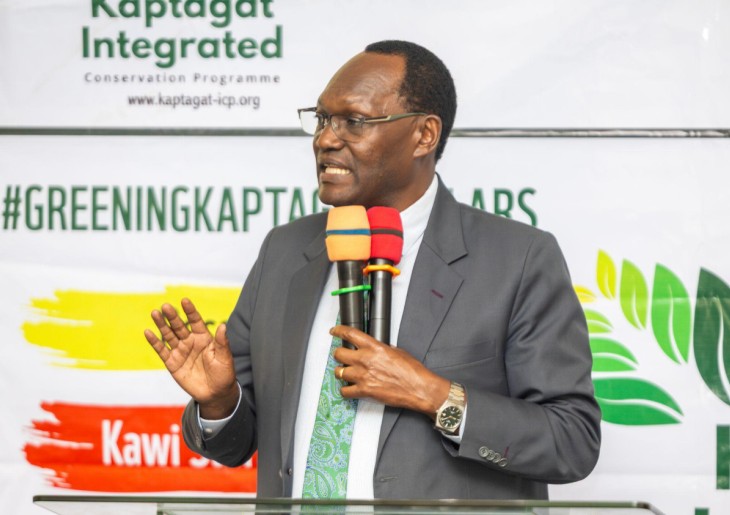
Professionals and partners involved in the Kaptagat Integrated Conservation Programme (KICP) met in Nairobi this week under the leadership of programme patron and National Treasury Principal Secretary Dr. Chris Kiptoo to align priorities ahead of the 10th Edition scheduled for July 11.
The meeting reaffirmed a collective commitment to environmental conservation, ecosystem restoration and the sustainable management of one of Kenya’s most important water towers.
The Kaptagat ecosystem stretches across parts of Elgeyo Marakwet and Uasin Gishu counties and plays a critical role in supporting biodiversity, regulating water flows and sustaining livelihoods.
Its forest blocks, including Pombo, Sabor, Benson, Kipkabus and Kessup, feed rivers such as Ndoroti and Sosiani, which eventually drain into Lake Victoria and supply a significant share of the water consumed in Eldoret City.
The programme’s 10th anniversary comes under the theme “10 to 20: Restore. Sustain. Transform,” signalling a renewed commitment to environmental restoration and community development over the next decade.
Founded in 2017 by Dr. Kiptoo, the initiative emerged in response to growing concerns over deforestation, climate change and ecosystem degradation.
What began as a restoration effort covering just 50 hectares has evolved into a major annual conservation movement that mobilizes communities, government institutions and private-sector partners.
At the heart of the programme are four pillars that guide its interventions: Mazingira Safi (Clean Environment), Kawi Safi Nyumbani (Clean Energy at Home), Maji Nyumbani (Water at Home) and Pesa Mfukoni (Money in the Pocket).
Through these pillars, KICP seeks to restore degraded landscapes, promote clean energy solutions, improve access to water and create sustainable livelihood opportunities for communities living around the forest.
The programme is particularly focused on preventing environmental degradation along the escarpment and the hanging valley, where forest loss has increased vulnerability to landslides and wildfires.
By promoting sustainable land use and alternative livelihoods, KICP seeks to reduce pressure on forest resources while restoring ecological resilience.
Beyond tree planting, the initiative supports income-generating activities through the distribution of high-value crops such as tea, coffee, avocado and macadamia.
It also promotes dairy farming, beekeeping and other community-based enterprises aimed at improving household incomes while strengthening conservation efforts.
Last year’s activities saw 988 hectares covered through conservation interventions and large-scale tree planting efforts.
The programme also distributed 100,000 mixed tree seedlings alongside thousands of tea, coffee and avocado seedlings that encourage sustainable land management and economic empowerment.
Organisers say the upcoming edition will not only celebrate a decade of achievements but also contribute to Kenya’s national goal of planting 15 billion trees.
President William Ruto is expected to lead a tree-planting exercise during the July event, underscoring the growing national significance of the initiative.
As KICP embarks on its next decade, stakeholders say the programme continues to demonstrate how environmental restoration, access to water, clean energy and sustainable livelihoods can work together to transform communities while protecting critical ecosystems for future generations.