

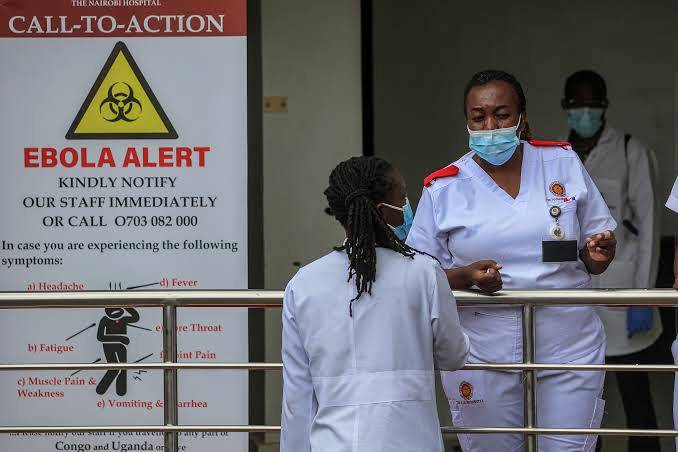
Today marks Day 17 since Kenya confirmed its first imported case of Ebola (Bundibugyo Virus Disease) on 6th October 2026, with the Ministry of Health upbeat that the country’s response continues to make steady progress.
According to data from the Ministry, all the 14 samples collected and tested from various alerts in different parts of the country over the last 24 hours were negative for Ebola.
This means that the total number of confirmed cases in the country remains nine (9), including the index case, who died on 5th October, 2026. All the cases, the Ministry insists, belong to a single cluster, with no evidence of community spread.
“Our patients are stable and progressing well. The eight patients undergoing treatment in our designated isolation facilities, four family members and four health workers who cared for the first case, are stable and responding well to treatment from our infectious disease specialists,” Health Director-General Dr. Patrick Amoth says. “We look forward to each of them completing treatment, recovering fully, and being discharged home to their families.”
According to Dr. Amoth, every contact has been traced, at home and abroad.
“All the 135 contacts associated with the first case have been traced (100%), both within Kenya and internationally, and the relevant health authorities of the countries concerned have been formally informed in line with the International Health Regulations (2005).
“We thank our national and county contact-tracing teams, families, communities and our development partners for this significant achievement.”
‘What we know so far’ – Dr. Amoth
Dr. Amoth says that Kenyan epidemiologists have mapped the exposure dates, quarantine dates, and symptom onset of every case.
Each patient was in close contact with the first case between 3rd and 5th October, before entering quarantine, and each fell ill within the known incubation period of Ebola (2-21 days).
This pattern, Dr. Amoth says, is consistent with infection from the first case. It also shows that no infection has been traced to transmission within our quarantine facilities, where infection prevention and control measures have been strengthened further.
Each contact’s 21-day monitoring period is counted from their own last exposure, and anyone exposed to a later confirmed case is monitored from that date thereof.
Enhanced surveillance continues in health facilities and communities across all counties. At points of entry, 709,093 travellers have been screened, including 3,107 in the last 24 hours. A total of 461 samples have been tested since the start of the outbreak in May 2026.
First batch leave quarantine facilities
Dr. Amoth also announced that from Sunday, 25 October, the first batch of contacts to complete 21 days of monitoring, and who will be in good health, will be released from quarantine and reunited with their families.
“Their sacrifice has helped keep Kenya safe, and the nation is grateful to them and to those who stood by them. As they return, we ask neighbours, workplaces and communities to receive them warmly. They have passed the full monitoring period without falling ill and cannot pass the infection to anybody.”