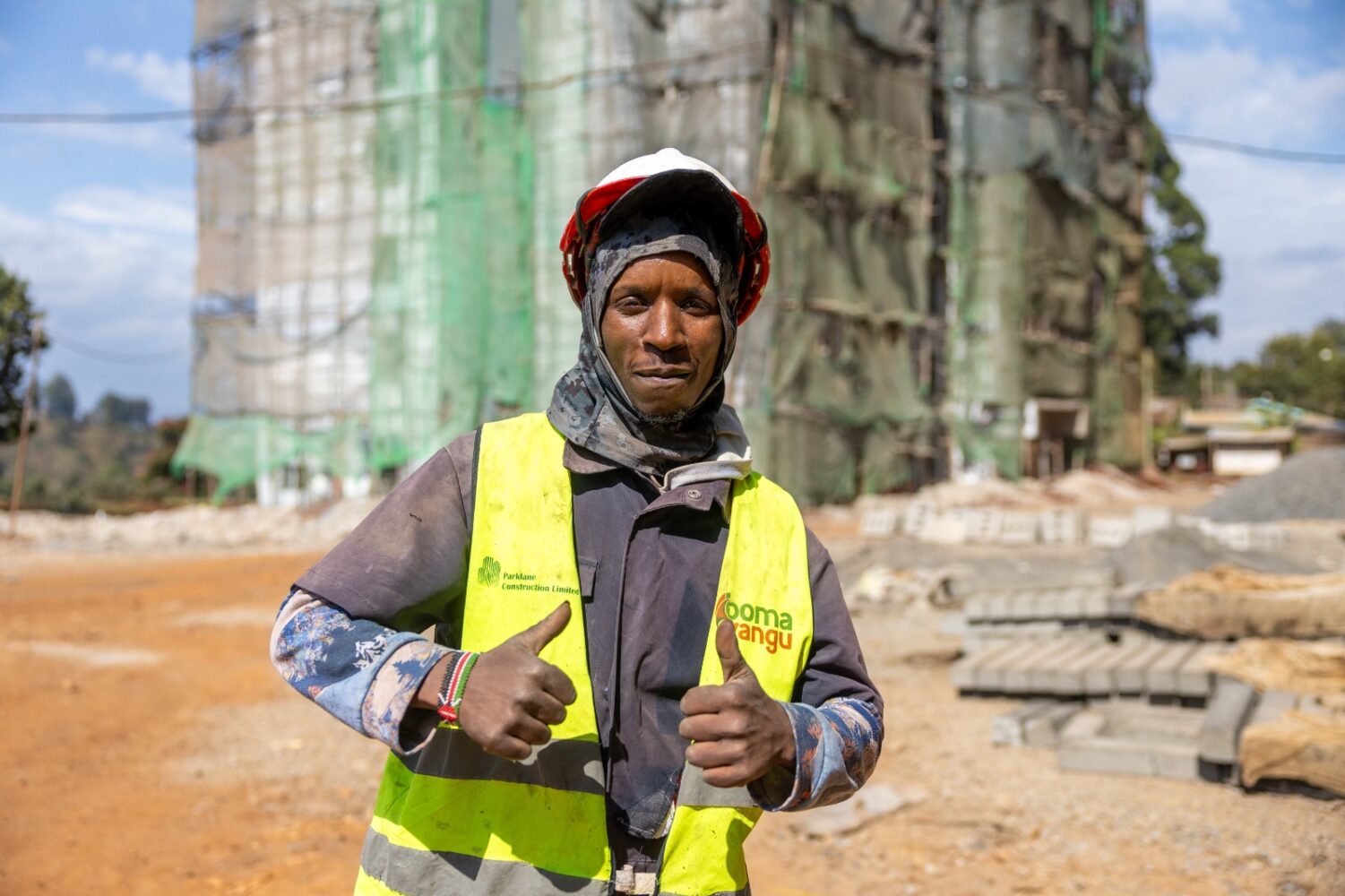
When Cyrus Wambugu arrived at the Blue Valley Affordable Housing Project in Nyeri, he was a general labourer. Today, he is a trained carpenter working on one of the largest construction projects he has seen in the area.
Wambugu, who comes from Kamakwa in Nyeri’s uptown area, says he has grown with the project from its early stages, acquiring skills that have changed both his work and his life.
“I started as a labourer. Now I am a carpenter,” he says.
His progression has not stopped there. Through his time at the site, Wambugu says he has also learnt masonry and gained experience working with precast materials.
The skills have provided him with a more dependable source of income than the casual jobs he relied on before joining the project.
He recalls taking on short-term jobs that involved helping people move household goods, work that could earn him about Sh1,000 but offered no guarantee of another job the following week.
“You could work for a whole week and still not know whether you would get another person to move,” he says.
The Blue Valley project, he says, has provided a more consistent opportunity to work, learn and improve his prospects.
Beyond the workplace, Wambugu says the stability has also enabled him to establish a family. When he joined the project, he did not have a family. He now has a child and says he continues to look forward to gaining more skills.
The development has also given local workers exposure to a construction undertaking on a scale they had not previously encountered.
Wambugu says residents who have worked on other construction projects in the area have never seen one of similar size.
“We have built other projects, but we have never built something this big. This is the first one we are seeing,” he says.
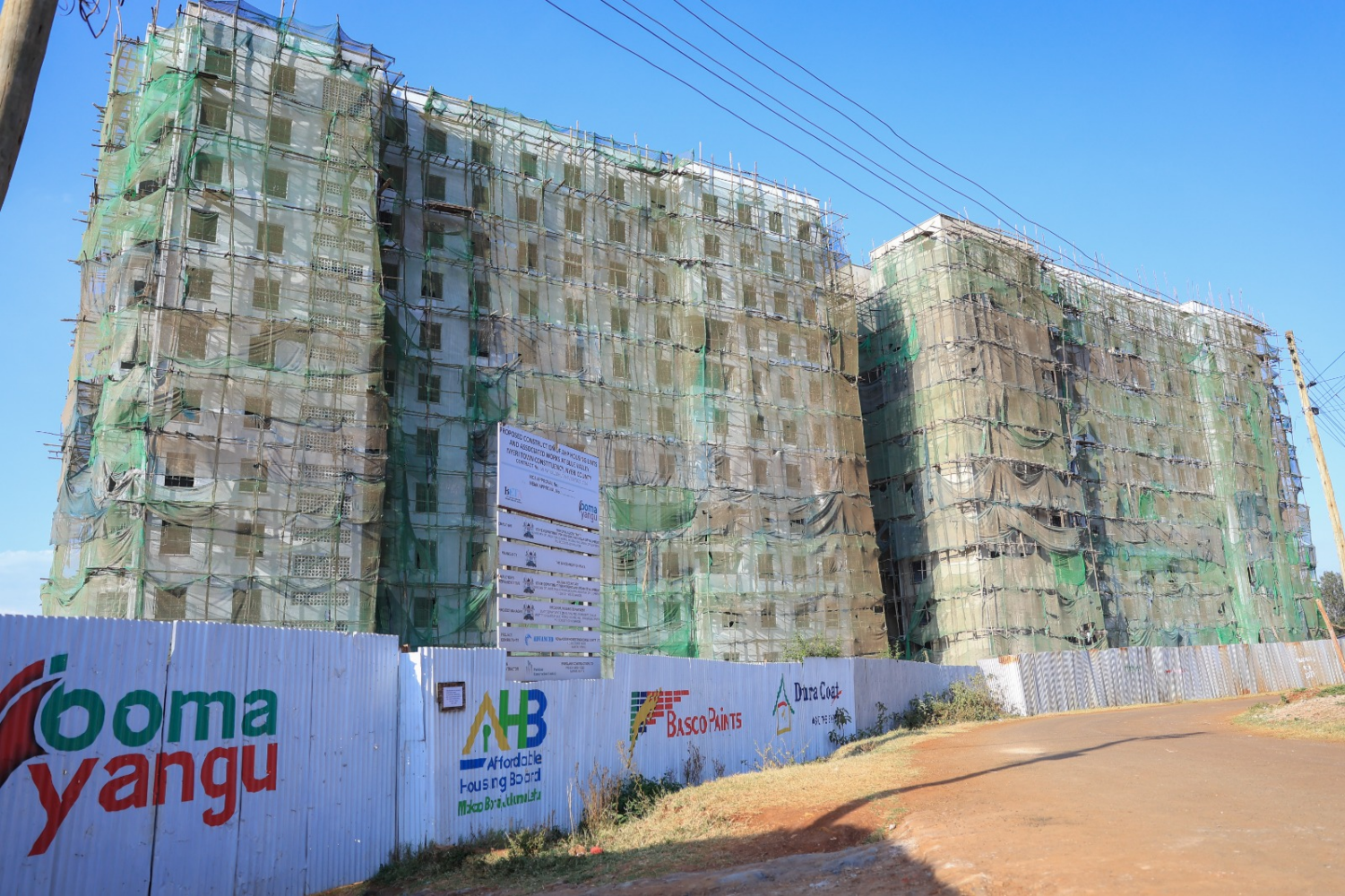
The Blue Valley Affordable Housing Project, located in Nyeri Town Constituency, has recorded 88.2 per cent physical progress. Construction commenced on 15 July 2024, with the expected completion date listed as 15 January 2026.
Work is progressing across the three main residential blocks, A, B and D, which have reached the roof stage. The 11th-floor beams, reinforcement and casting works have been completed, while roof slabs have also been cast.
Finishing works are continuing at different levels, including plastering, skimming, screeding, tiling, terrazzo works, window glazing, door installation, electrical wiring and painting.
The commercial component is also advancing, with foundation excavation and columns, walling, first-floor slab casting and roofing completed. Tiling of Blocks 1 and 2 is complete.
Supporting infrastructure includes completed borehole drilling, while two underground water tanks are under construction, with major structural works, including the bottom and top slabs, completed.
Wambugu now says the value of the project is closely tied to the opportunity to work and acquire skills.
“It has really helped me,” he says, adding that he hopes the work will continue into the project’s subsequent phases.