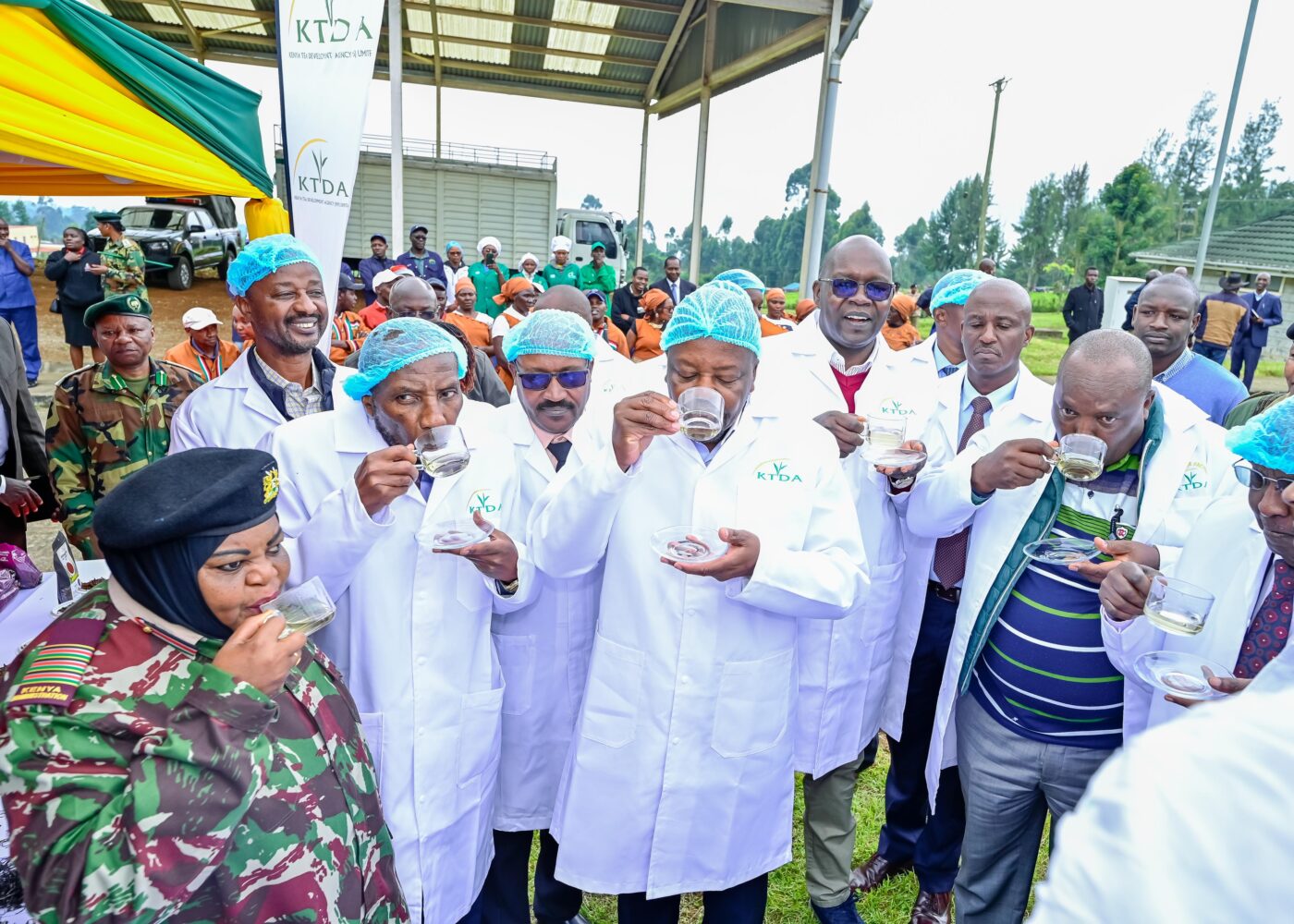
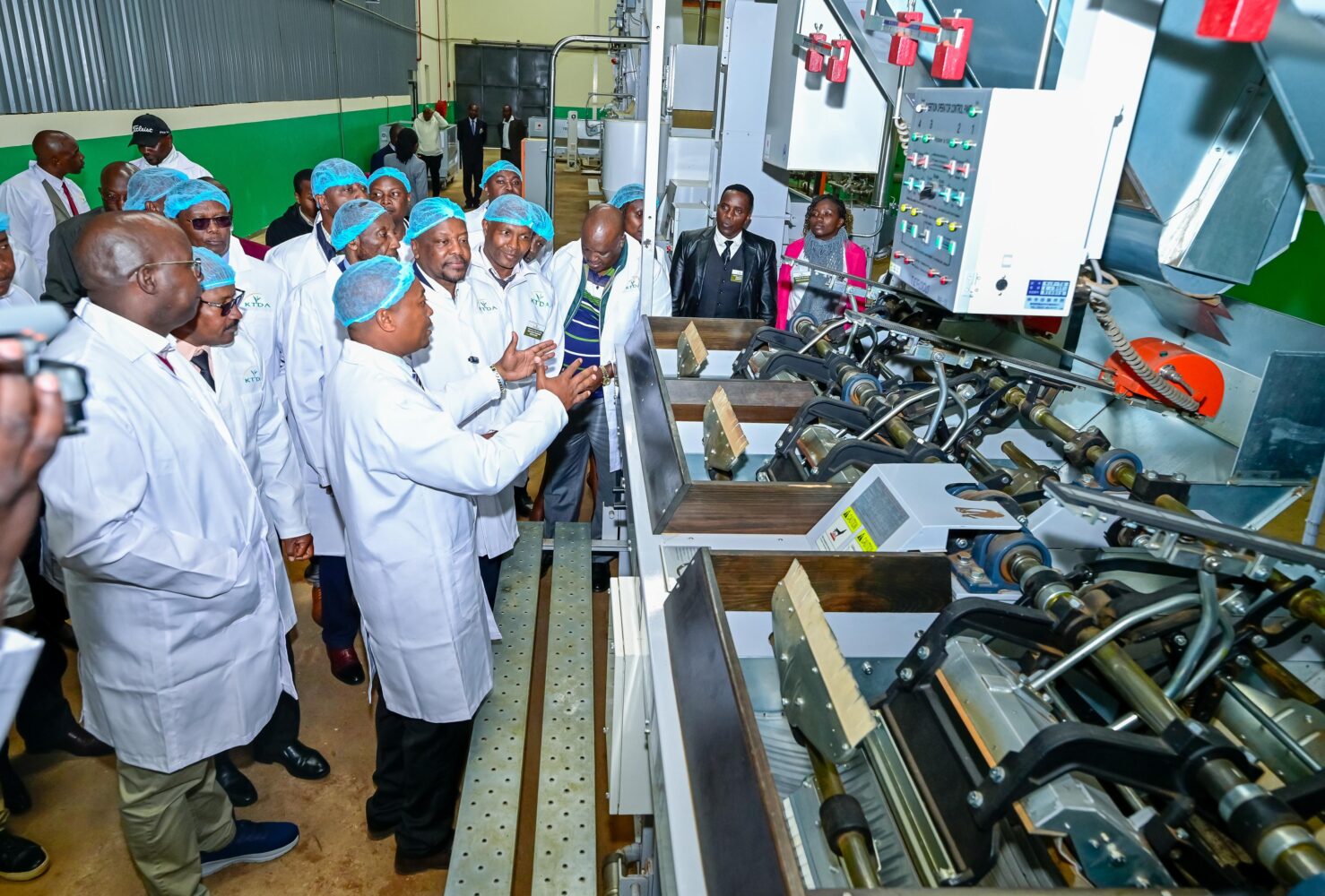
Tea farmers in Kirinyaga have gotten a major boost after receiving equipment for the construction of a green tea processing factory to tap on the growing global demand for premium specialty tea.
The steamed Green Tea Factory project is being developed through the support of Kenya Tea Development Authority (KTDA) and Japan International Cooperation Agency (JICA) at a cost of Sh.360 million.
The factory is being developed as Kenya’s centre of excellence for training in green and specialty tea processing. The facility which is the first of its kind in the region will help farmers to tap on rising demand for Kenyan specialty tea in the international market.
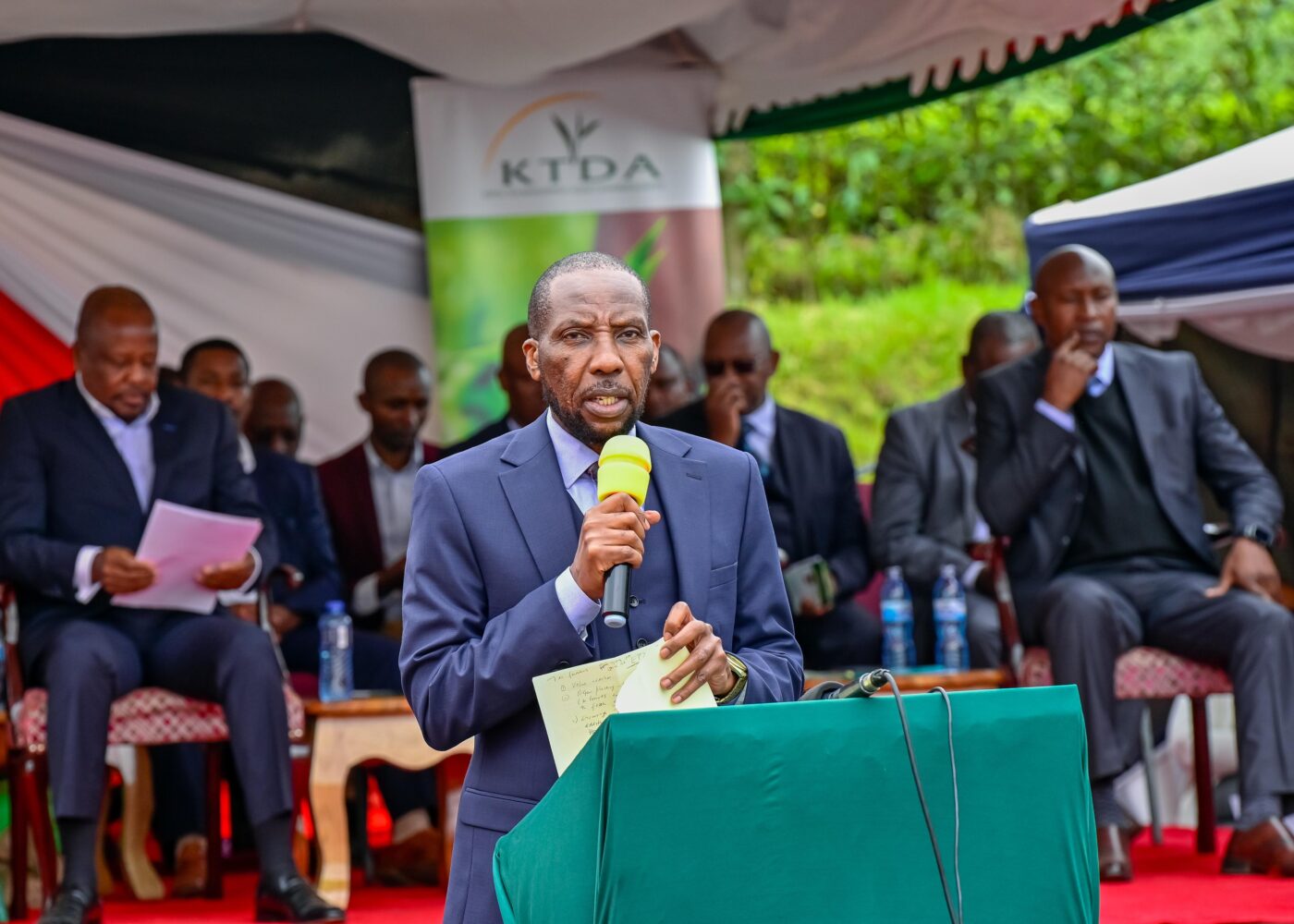
Speaking during the handing over of the equipment at Kangaita tea factory, Agriculture and Livestock Development Cabinet Secretary Mutahi Kagwe highlighted the government’s commitment to boosting tea processing efficiency and enhancing returns for local smallholder farmers.
Kagwe said construction of the facility which started in 2019 has stalled but is now set for completions following the support from the Government of Japan.
“On behalf of tea farmers and the Government of Kenya, we say thank you very much to the Government of Japan. We thank JICA, the taxpayers of Japan. Every Japanese citizen should know that the money that came to Kangaita will be put to proper use,” he added.
The CS noted that global demand for Kenyan specialty tea has surged significantly in recent years thus the country must help farmers tap into the market.
He also clarified benefits of the newly introduced 1% tea levy, reassuring tea growers that the funds collected are meant to directly support them.
At Thumaita tea factory, Kagwe disbursed Sh.28.7million government grant for the modernization of the factory as he engaged farmers and stakeholders on Government interventions to strengthen the sector.
Kirinyaga Deputy Governor David Githanda who represented Governor Anne Waiguru, emphasized on the critical importance of value addition, modernizing processing equipment and diversifying farmer income streams to cushion against international price swings.
“By upgrading factory machinery and expanding dedicated processing lines, including specialty tea lines alongside standard black CTC processing, Thumaita will cut processing costs, improve leaf extraction ratios, and maximize dividend payouts,” he added.
Githanda reiterated the transformative potential of transitioning to specialty tea processing.
“While Kirinyaga has traditionally relied on black CTC tea, market returns on traditional teas face fluctuations due to international market supplies and currency swings. However, the global demand and market for green, purple, and specialty teas offer significantly higher price points and premium returns for our farmers.”
Expanding further on the path to economic empowerment, Githanda stressed that maximizing earnings from specialty tea requires absolute dedication to quality right from the farm level. He urged farmers to adhere strictly to recommended plucking standards to ensure that only the finest green leaf reaches the processing lines.
“To thrive in specialty tea farming and command top prices globally, our farmers must take charge of quality control by adopting strict green tea plucking standards, such as harvesting the right two leaves and a bud,” Githanda noted, emphasizing that proper crop husbandry combined with value addition is the surest way to safeguard household incomes.
Addressing regulatory and financial frameworks in the sector, Tea Board of Kenya Chief Executive Officer Willy Mutai said the newly introduced 1% tea levy will be charged on buyers and not the farmers.
“We agreed that the levy would be set at 1%, it is the buyer who purchases your tea,” Mutai explained, adding that 50% of the levy will go directly to the farmers.
Mutai further outlined that 20% of the levy would be allocated to research and development, 15% to county governments for rural tea road infrastructure, and 15% to the Tea Board for regulation.
Kangaita Tea Factory Chairman David Githinji praised the upgrade, pointing out the factory’s historical role as a pioneer in Kenya’s specialty tea segment.
“Upgrading our manufacturing facilities will significantly improve efficiency, reduce production costs, enhance product quality, and ultimately translate into better returns for our tea farmers. In 2002, this factory made a bold decision and became the first tea factory in Kenya to commence the commercial production of orthodox tea. That milestone laid the foundation for Kenya’s specialty tea industry as we know it today,” Githinji remarked.
Local smallholder farmers also expressed appreciation for the ongoing support and educational opportunities sponsored through the tea ecosystem.
Tea remains Kirinyaga’s second-largest cash crop, generating over KSh 7.6 billion from 103.5 million kilograms of green leaf produced by more than 53,000 smallholder farmers in the 2024/2025 financial year.