Residents of Bungoma County are increasingly embracing Sato modern pan toilets as part of a growing campaign to improve sanitation, curb the spread of neglected tropical diseases (NTDs) and promote healthier living conditions in rural communities.
The innovative sanitation technology is designed to minimize human contact with waste, eliminate foul smell and prevent flies and other disease-carrying insects from accessing human waste and is proving to be a game changer in the fight against sanitation-related illnesses.
Health experts say improved sanitation remains one of the most effective interventions in preventing diseases such as soil-transmitted worms, schistosomiasis (bilharzia), diarrhoea and other infections that continue to affect thousands of households, particularly children and other vulnerable groups.
Speaking to TV 47 digital, Edward Juma, a resident of Kakamwe Village in Tongaren Constituency, recalled how his community struggled with frequent outbreaks of worm infestations and diarrhoea diseases before adopting the modern toilets.
“There was a time when almost every household had someone suffering from worms or diarrhoea. The situation became so serious that we sought help from public health officers at Tongaren Health Centre,” he said.
Juma reported that the public health officers visited the village, assessed sanitation conditions and established that poor hygiene practices and the use of traditional pit latrines were major contributors to the persistent illnesses.
“When the cases became overwhelming, public health officers inspected our homes and discovered that poor sanitation, particularly the condition of our traditional pit latrines, was the common challenge. They educated us on better hygiene practices and introduced us to Sato pan modern toilets as a practical solution,” he explained.
Following the sensitization campaign, many households embraced the new toilet technology, a move Juma says has significantly reduced disease outbreaks in the village.
“Since we installed these toilets, the number of people falling sick has gone down remarkably. Our homes are cleaner, there are fewer flies and the unpleasant smell that used to come from our pit latrines has disappeared,” he said.
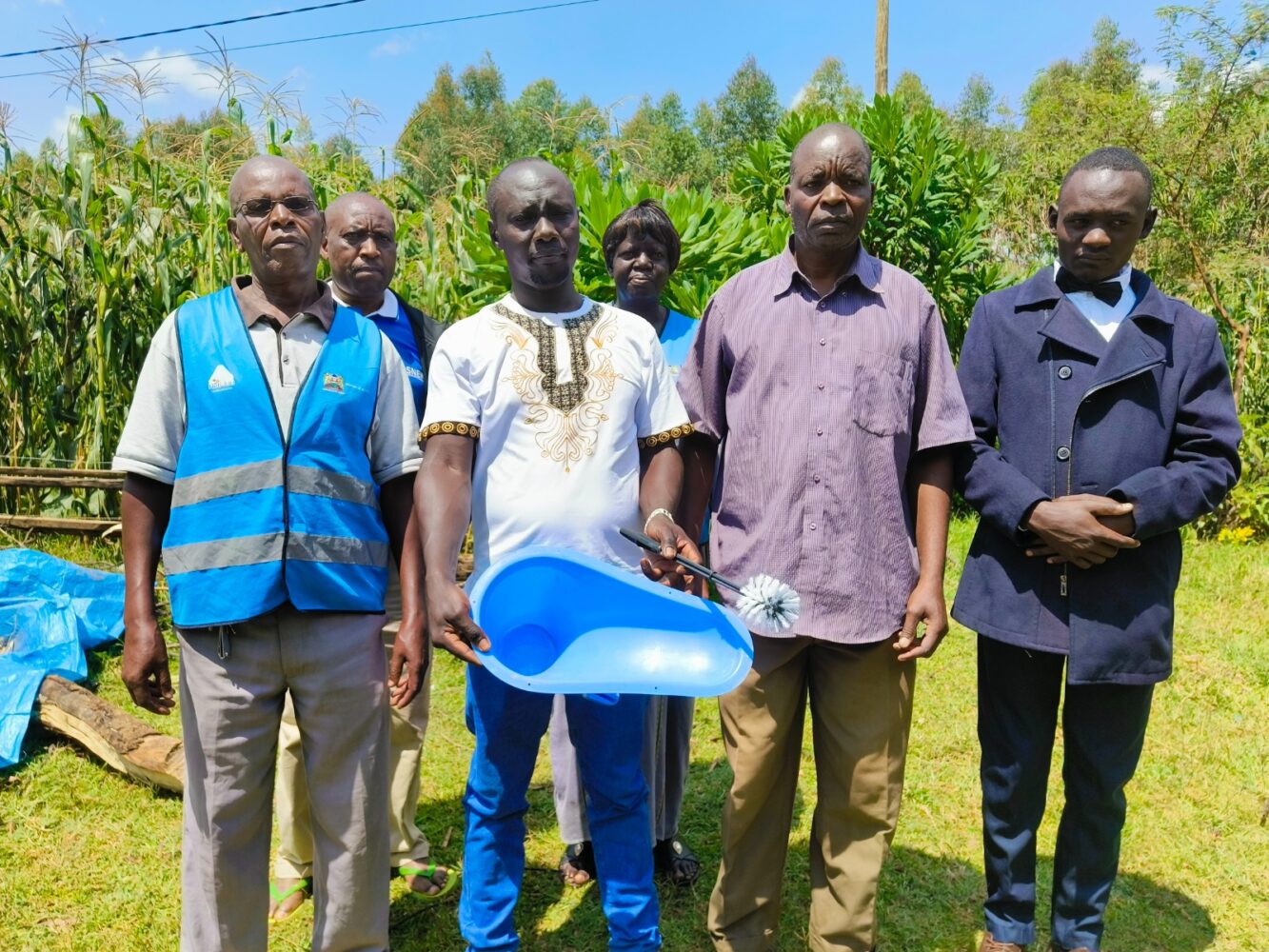
He explained that the Sato toilet is fitted with a self-closing trap lid that automatically seals after use, preventing bad smell and insects from escaping from the pit.
“Unlike ordinary pit latrines, this toilet has a lid that closes immediately after use. It blocks bad smells and prevents flies from breeding and spreading germs around the compound,” he added.
Juma commended the Ministry of Health and its partners, African Institute for Health Development (AIHD) for introducing the innovation, describing it as affordable, easy to install and capable of transforming sanitation standards in rural homes.
“If we are serious about eliminating neglected tropical diseases such as worms, bilharzia and even reducing the spread of jiggers, then maintaining clean homes and using improved sanitation facilities should be our priority,” he said.
He further demonstrated how the toilet operates, explaining that before use, a small amount of water is poured into the pan to create a water seal that prevents waste from sticking to the surface.
“After using the toilet, additional water is poured into the pan to flush the waste through the trap. The water seal keeps the pan clean while preventing bad smells and insects from entering the toilet. It uses very little water compared to conventional flush toilets, making it suitable for rural households where water is scarce,” he noted.
Elsewhere in Sirisia Constituency, Pastor Geoffrey Simiyu of Kikai area said poor sanitation has continued to expose residents to diseases such as worm infestations, diarrhoea and bilharzia.
He said the recurring illnesses prompted him to use his church as a platform to educate congregants and members of the community on proper hygiene and sanitation practices.
“The church has become an important avenue for educating families on regular hand washing with soap, proper toilet use and safe water handling. These simple practices can greatly reduce the spread of preventable diseases,” the pastor said.
He added that he works closely with Community Health Promoters (CHPs) to ensure households comply with Ministry of Health guidelines on preventing neglected tropical diseases (NTDs).
“Through continuous community sensitization and household visits by community health promoters, we have witnessed a significant reduction in disease cases. People are becoming more conscious about hygiene and sanitation,” he said.
Tongaren Constituency Public Health Officer Duncan Wafula applauded the African Institute of Health Development (AIHD), in partnership with the Ministry of Health, for spearheading initiatives aimed at eliminating neglected tropical diseases across the Western counties.
He said the organization has supported communities by promoting the adoption of three types of Sato sanitation technologies.
“These sanitation products have greatly contributed to reducing the spread of neglected tropical diseases by improving hygiene at the household level. We are also seeing schools, churches and other public institutions embracing the technology,” Wafula said.
He encouraged residents who are yet to adopt the improved toilets to visit their nearest public health offices for guidance and access to the sanitation products.
“These modern toilets are readily available through our public health offices and we encourage residents to take advantage of them because prevention remains the most effective way of fighting these diseases,” he said.
Currently, the African Institute of Health Development is implementing a regional project in Bungoma, Trans Nzoia, Kakamega and Busia counties aimed at promoting social behaviour change through continuous health education and community awareness campaigns.
The initiative seeks to accelerate the control and eventual elimination of schistosomiasis and soil-transmitted helminths by encouraging improved sanitation, better hygiene practices and increased community participation in disease prevention.