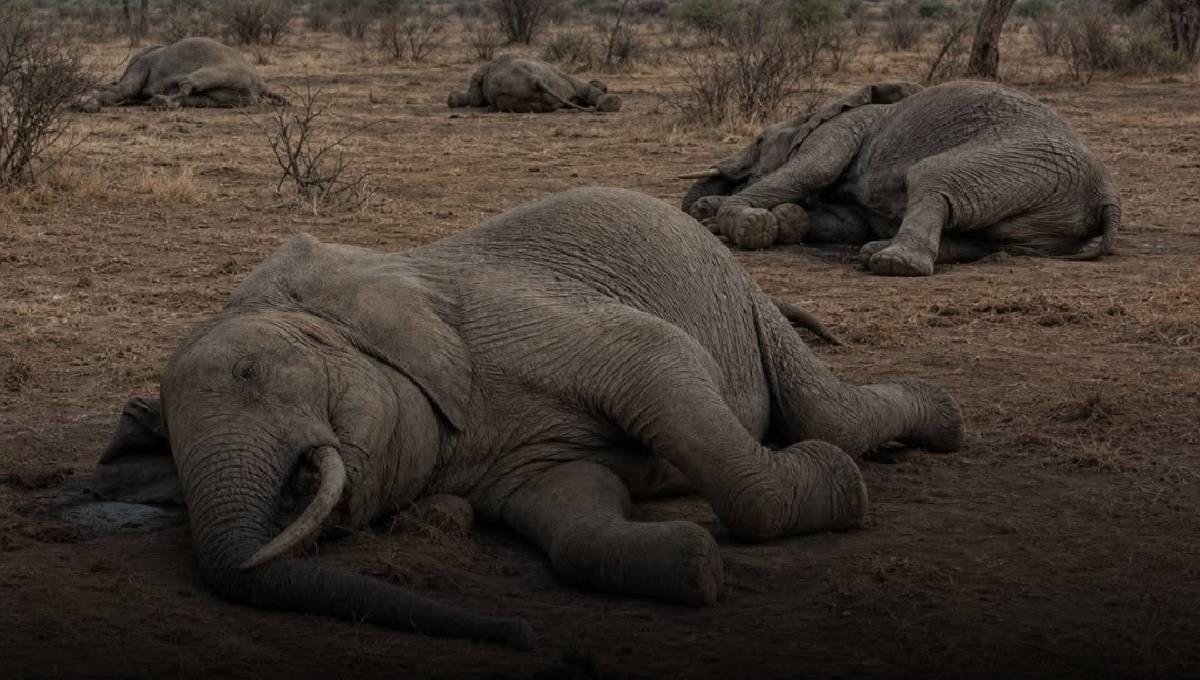
Kenya Wildlife Service (KWS) has directed the Pest Control Products Board (PCPB) to lead a multi-agency investigation into whether pesticides or other agricultural chemicals may have contaminated the Amboseli ecosystem, following the deaths of 16 elephants between June 24 and July 31, 2026.
In a statement issued on August 7, 2026, KWS said the board has been tasked with establishing and leading a technical team to examine whether crop-protection chemicals were improperly used, stored, or disposed of in Kimana, Kuku, Kitenden, and the wider Amboseli-Kimana-Kitenden ecosystem.
The team will also investigate whether water, soil, or forage in the area may have been contaminated as a result.
The directive follows preliminary laboratory analysis by the University of Nairobi indicating cyanide poisoning as the probable cause of death in the examined cases.
The dead elephants mainly comprised adult females and calves that showed weakness and partial paralysis in their limbs before dying.
KWS is also examining whether giant star grass, known scientifically as Cynodon plectostachyus, a cyanogenic species, could have contributed to the animals’ exposure, alongside the ongoing toxicological, microbiological, and water sampling analysis being conducted with the Government Chemist and the University of Nairobi.
KWS Director General Erastus Kanga assured the public that the Service remains committed to getting to the bottom of the deaths.
“The Kenya Wildlife Service is committed to establishing the facts and keeping the public informed every step of the way,” he stated.
He concluded by assuring the public that Amboseli National Park remains open and fully operational, with no indication of an infectious or transmissible disease.