

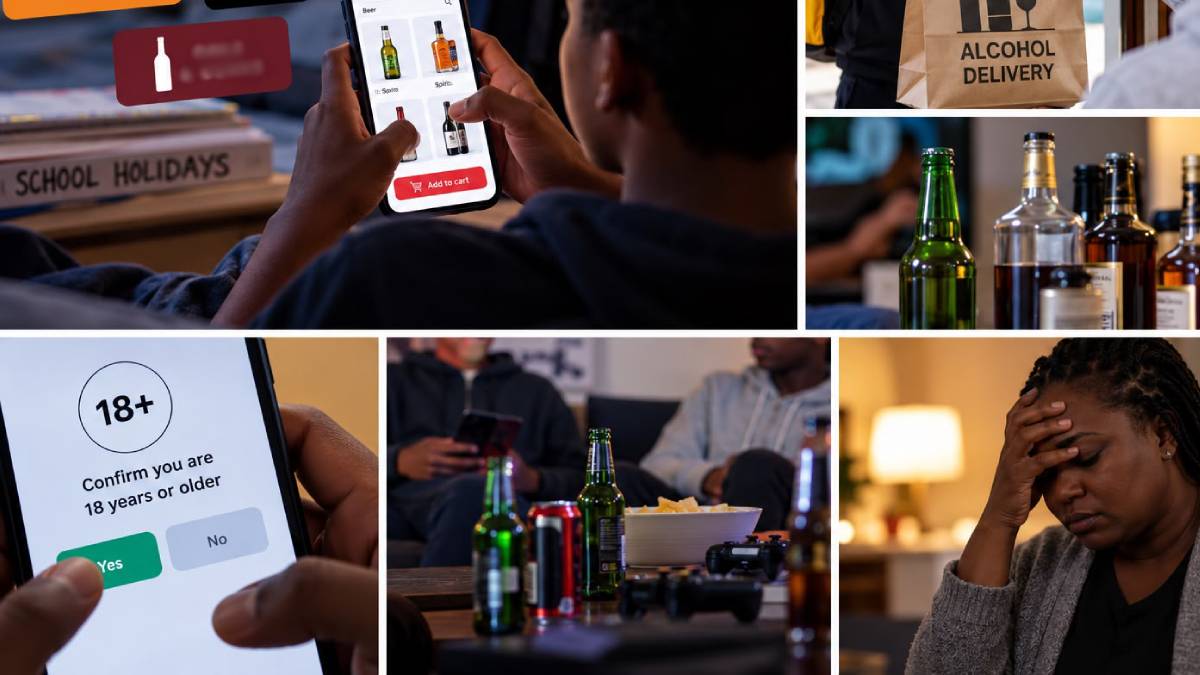
- A Nairobi parent’s frightening experience raises urgent questions about age verification, product safety and accountability as teenagers head into the holidays with smartphones at their fingertips.
As schools across the country close for the holidays, parents are preparing for the familiar challenge of keeping their children safe during weeks of increased freedom and reduced supervision. But a new concern is emerging in the digital age: how easy is it for teenagers to access alcohol through online platforms, sometimes without their parents’ knowledge?
A concerned Nairobi parent is asking precisely that question after returning home from a Kesha to discover that her teenage children had purchased alcohol while she was away.
What should have been an ordinary religious outing turned into a frightening parenting experience, leaving her grateful that she returned to find her children safe, but deeply troubled by the ease with which they had accessed alcohol.
“I thank God that I came back to find my children safe. I was away attending a Kesha, believing they were safe at home, only to discover that they had bought alcohol. As a parent, you can only imagine what could have happened. What if the alcohol was counterfeit or contaminated? What if they had suffered serious consequences? I thank God I did not come home to find them blind or worse,” she said.
Her experience raises a question that deserves serious public attention: If teenagers can use smartphones to order alcohol for delivery to their homes, how effective are the safeguards designed to keep alcohol out of the hands of minors?
For today’s teenagers, smartphones are no longer simply communication devices. They are shopping outlets, entertainment centres and gateways to a wide range of products and services.
With a few taps, a customer can browse products, make a payment and arrange delivery without visiting a physical shop. Platforms and services associated with online shopping and alcohol delivery, including Uber Eats, Glovo, Jumia and specialist alcohol retailers such as The Bar Kenya and Ork’s & Corks, form part of a rapidly evolving digital marketplace.
The convenience is undeniable for adults making legitimate purchases. But convenience also raises difficult questions when age-restricted products are involved.
As schools close, millions of young people will have more time at home, access to their phones and opportunities to make decisions without the immediate supervision of teachers. Parents cannot reasonably be expected to monitor every digital interaction their children have. That is precisely why effective safeguards must exist at the point of sale and delivery.
A platform that sells or facilitates the delivery of alcohol must be able to demonstrate how it prevents underage purchases. A simple declaration that a customer is over 18 may not be sufficient if the system does not reliably verify that claim.
The question is not whether technology should be blamed for every instance of underage drinking. It is whether the businesses benefiting from digital convenience are doing enough to prevent foreseeable harm.
In a traditional liquor outlet, staff can be required to check identification and refuse a sale when a customer appears underage or cannot establish their age. Online transactions introduce another layer of complexity.
Who is placing the order? Is the account holder the actual buyer? Is the person receiving the delivery the same person whose age was verified? Can a teenager use an adult’s account, payment details or phone to obtain alcohol?
These are not hypothetical concerns that regulators can afford to ignore. They are questions that demand clear answers from sellers, platforms and delivery providers.
Effective age verification should extend beyond a tick-box confirmation on a website or application. There should be appropriate checks when an order is placed and when alcohol is handed over, with clear procedures for refusing delivery where the recipient cannot establish that they are legally entitled to receive it.
The public also deserves clarity on which party bears responsibility when those safeguards fail. Is it the retailer, the online marketplace, the delivery company or some combination of the three?
Without clear responsibilities and meaningful enforcement, accountability risks becoming a chain in which every participant points to someone else.
The parent’s concerns extend beyond the age of the buyer to the safety and authenticity of the alcohol being sold.
Alcohol purchased through a digital platform is not automatically unsafe or counterfeit. Licensed, reputable businesses can use online channels to serve adult customers responsibly. However, consumers should be able to establish that products originate from legitimate suppliers and comply with applicable standards.
Product traceability, appropriate storage, licensed sourcing and reliable complaints procedures are therefore essential components of responsible online alcohol sales.
If a consumer receives a suspicious or potentially adulterated product, there must be a clear route for reporting it and identifying the responsible seller. Regulators must also be able to investigate complaints and take action against businesses that violate the law.
For parents, the concern is particularly serious. An underage purchase is already a failure of protection; a product of uncertain origin could compound the risk.
The appropriate response is not to assume that every online seller is operating illegally, but to demand evidence that the systems in place are working.
The timing of these concerns is significant. School holidays create a period when young people may spend longer at home, visit friends and socialise with less structured supervision.
Parents have an important role to play. They should speak openly with their children about alcohol, understand the applications and payment methods they use, and establish clear expectations around responsible behaviour.
It would be unreasonable to place the entire burden on families while businesses continue to profit from transactions involving age-restricted products. Technology companies, alcohol retailers, delivery providers and public authorities each have a role in ensuring that the law is respected.
The relevant questions for regulators are straightforward: Are online sellers properly licensed where required? Are age-verification systems independently tested? Are delivery personnel trained to refuse suspicious or unlawful transactions? Are violations investigated, and are penalties enforced consistently?
The public also needs clarity on how existing alcohol-control laws apply to digital sales, including the obligations of platforms that connect consumers to licensed retailers.
These are matters that call for transparent regulation and evidence-based enforcement, not assumptions or blanket accusations against legitimate businesses.
At the same time, disagreements over licensing costs must not distract from the fundamental question of consumer protection. Whether a sale takes place in a physical shop or through a digital application, age restrictions and other applicable legal safeguards must remain effective.
County and national authorities should clarify their respective responsibilities, publish the requirements applicable to online alcohol sales and establish practical mechanisms for monitoring compliance. Platforms and retailers should disclose the safeguards they use to prevent underage transactions and explain how complaints are handled.
Where the law is unclear or does not adequately address digital transactions, policymakers should consider whether further guidance or legislative reform is necessary.
The objective should be a system that protects children, safeguards consumers and allows legitimate businesses to operate within clear rules.
The Nairobi parent’s experience is a reminder that the risks facing children are changing alongside the technology they use every day.
A teenager no longer necessarily needs to walk into a liquor store to attempt to obtain alcohol. A smartphone, access to a payment method and a delivery address may be enough to initiate a transaction if the safeguards are inadequate.
As schools close, parents should not have to wonder whether age restrictions are being enforced only in physical shops while online transactions escape meaningful scrutiny. Nor should legitimate online businesses have to operate in an environment where the responsibilities of sellers, platforms and delivery providers remain uncertain.
The answer lies in stronger age verification, traceable products, accountable delivery procedures, effective enforcement and informed parenting.
Ultimately, the debate is about more than online shopping, licensing fees or commercial convenience. It is about whether society is keeping pace with a marketplace that increasingly fits into the hands of children.
As teenagers head into the holidays with smartphones within reach, one question demands a clear answer from regulators and online alcohol sellers alike: What practical safeguards are in place to ensure that alcohol ordered online does not end up in the hands of minors?
Nairobi County’s engagement with RETRAK reflects this shared responsibility: building a better Nairobi through cooperation with businesses while ensuring that online alcohol sales meet their legal obligations.