
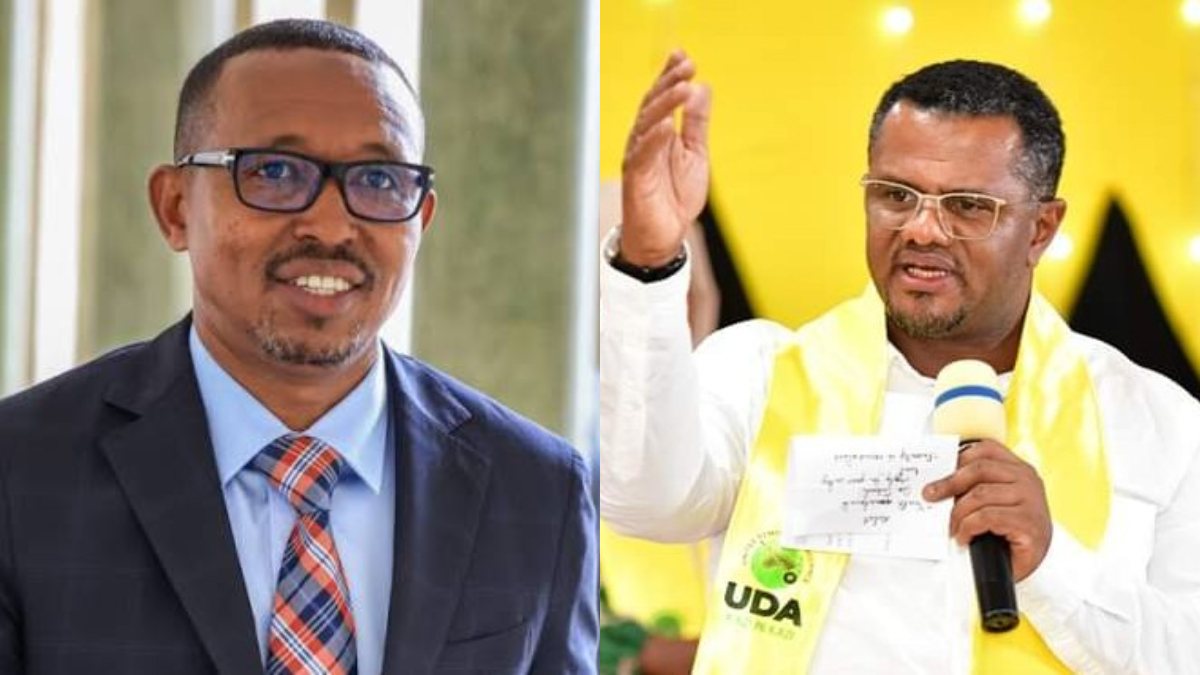
The battle for political supremacy in Mombasa is beginning to expose cracks within the political ranks, with UDA Secretary General Hassan Omar Hassan and Nyali MP Mohamed Ali emerging at the centre of an increasingly sharp exchange of political sentiments as the race for the county’s top seat gathers momentum.
With both leaders commanding political influence in different circles, their latest public engagements and hard-hitting remarks are putting the Mombasa gubernatorial contest firmly in the spotlight.
The political temperature has been further raised by Nyali MP Mohamed Ali, who has openly declared war on the ruling party he once helped establish in Mombasa. In a hard-hitting political declaration, Ali vowed to dismantle UDA’s influence in the county, accusing the party of betraying residents after campaigning on promises of economic empowerment. “Just as I participated in building UDA here, I promise I will also be the one to bury it,” declared Ali, adding that he was ready for a political showdown “bumper to bumper.” The Wiper Patriotic Front Deputy Party Leader has also accused President William Ruto’s administration of abandoning the bottom-up economic model that sold the party to voters in 2022.
But Hassan Omar is equally unwilling to give political ground. The UDA Secretary General has intensified grassroots mobilisation, urging residents to acquire national identity cards and register as voters in preparation for the 2027 elections, while rallying support for President Ruto’s re-election.
During his latest engagement with Likoni residents, village elders and Nyumba Kumi leaders, Hassan defended the government’s development record at the Coast, pointing to projects such as the Dongo Kundu Special Economic Zone and transport infrastructure.
He has also challenged the opposition, arguing that its criticism of Ruto stems from the President’s decision to bring leaders from different political and regional backgrounds into government.
The contest is also exposing the wider political dilemma surrounding the proposed UDA-ODM cooperation, with Hassan previously rejecting zoning arrangements that could deny aspirants an opportunity to contest. “We cannot be dictated to by anyone. We will make our own decisions,” he has maintained.
With incumbent Governor Abdulswamad Nassir seeking another term, and EALA legislator Suleiman Shahbal also positioning himself for the seat, Mombasa’s 2027 gubernatorial race is increasingly becoming a contest of political loyalties, party influence and competing leadership ambitions.
The emerging question is whether UDA can consolidate its influence in a county traditionally dominated by ODM, or whether its former grassroots mobilisers will become its fiercest political opponents.
For now, the battle lines are being drawn, the political rhetoric is getting sharper, and Mombasa voters are watching as the race for ‘white house’ takes an increasingly confrontational turn.