
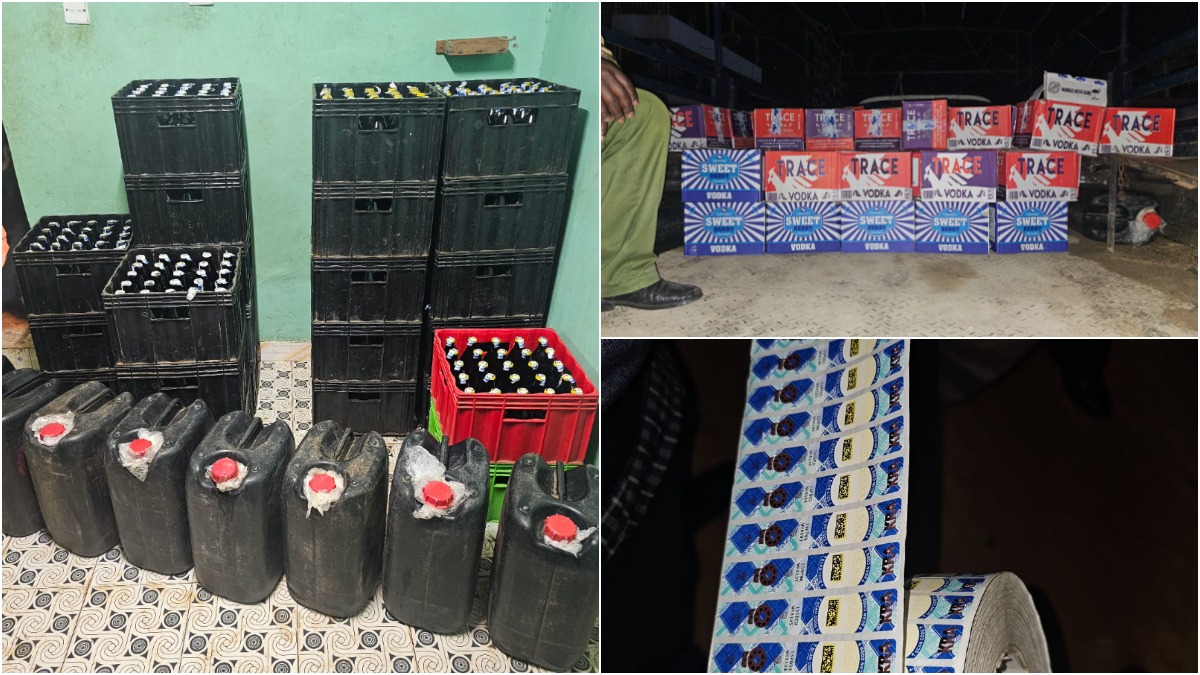
The Government has reported nine successful operations targeting ethanol and 116 other operations against illicit traditional brews as it intensifies a coordinated campaign against harmful alcoholic drinks and drug abuse.
Deputy President Kithure Kindiki disclosed the figures during a follow-up review meeting at the Official Residence in Karen, Nairobi, on Wednesday, October 21, 2026.
The operations form part of a wider enforcement strategy that places illicit alcohol among the country’s major national security threats and seeks to dismantle the networks involved in its manufacture and distribution.
Kindiki said ethanol was a major input in illicit spirits and alcoholic drinks responsible for significant harm to the public.
“The ongoing intelligence-led operations should continue and can even be escalated,” he said, directing law enforcement agencies to support NACADA in sustaining enforcement and improving the success rate of operations.
The Government has classified the manufacture, distribution, sale and consumption of illicit alcohol as organised crime, placing it alongside terrorism and banditry in its national security response.
Kindiki said the campaign would be sustained rather than limited to isolated interventions following incidents involving harmful drinks.
“We have had incidents in the past, but this time round, we will not wait until the next incident happens. This exercise will continue uninterrupted and permanently,” he said.
To coordinate the campaign, the Government has established a permanent secretariat on the sixth floor of Harambee House Annex.
The multi-agency structure includes the National Police Service, Kenya Bureau of Standards, NACADA, Anti-Counterfeit Authority, alcohol manufacturers association, National Intelligence Service, Directorate of Criminal Investigations, Ethics and Anti-Corruption Commission, Ministry of Trade, Ministry of Health and Kenya Revenue Authority.
The Government has also committed to strengthening the capacity of key agencies, particularly anti-counterfeit bodies, KEBS and the Anti-Narcotics Unit of the Kenya National Police Service.
Kindiki said public updates would be issued after successful completion of enforcement operations, rather than while they were ongoing.
He explained that the approach was intended to protect intelligence and prevent suspects from disappearing or disabling infrastructure that could provide evidence.
The Deputy President also clarified that the Government’s campaign does not prohibit traditional alcoholic drinks that comply with the law.
Under the Alcoholic Drinks Control Act of 2010, traditional brews are permitted provided they meet standards set by KEBS.
“We are calling upon anyone operating in this sector to seek and comply with the required standards,” he said.
The Government is also reviewing legislation to introduce tougher penalties for those involved in illicit alcohol supply chains.
In addition, the campaign is intended to involve religious, community, business and political leaders, as well as scholars and professionals.
Kindiki said the enforcement process would remain apolitical, with security agencies managing operations through intelligence-led structures.
The Government says the continued operations, agency coordination and proposed legal changes are intended to disrupt the illicit alcohol trade and protect the public from harmful products.