The government has begun putting in place a coordinated crisis communication framework to prepare Kenyans for the anticipated heavy rains and other impacts of the 2026 El Niño weather phenomenon.
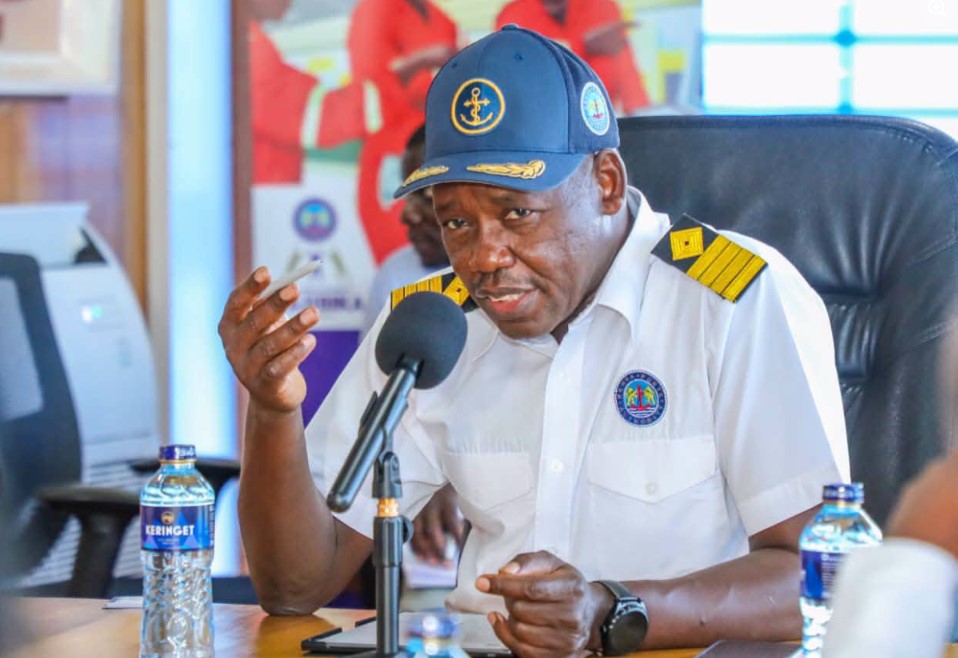
The inaugural National Crisis Communication Standing Committee meeting chaired by Principal Secretary for Broadcasting and Telecommunications Stephen Isaboke and attended by Government Spokesperson Charles Owino, alongside officials from various State Departments and agencies, identified last-mile communication as a major gap in the country’s disaster preparedness system.
PS Isaboke said the government is moving beyond simply issuing forecasts to ensuring the information results in timely action.
“An accurate and timely forecast does not save lives, but the action does,” he said.

He said the crisis communication mechanism should be capable of responding to both anticipated and sudden emergencies, with a core committee bringing in additional technical departments depending on the nature of a crisis.
The approach is designed to work on a “plug-and-play” basis, allowing relevant institutions to join a response without having to create a new structure each time an emergency occurs.
The meeting agreed that the framework should clearly define how incidents are classified, when a situation is escalated, who activates the response, and how information flows from technical agencies to government communicators and ultimately to the public.
Christine Maswi, principal meteorologist at the Kenya Meteorological Department, said Kenya is expected to receive above-normal rainfall during the October-November-December season, with most parts of the country likely to record significantly more rain than usual. “Prevailing El Niño conditions are already classified as very strong, with the El Niño index reaching about 2.7 in August. The influence of the positive Indian Ocean Dipole, combined with a strong El Niño, can intensify rainfall over Kenya,” she said.

The weather outlook has implications for agriculture, health, transport, roads, water, energy, disaster management, and security.
A key concern was getting technical weather information to farmers and communities at the grassroots in time and in a form they can understand and act upon.
Maswi said county directors of meteorology disseminate national forecasts to the county and, where possible, the ward level but acknowledged that the information does not always reach households effectively.
PS Isaboke described this as one of the “elephants in the room” and called for greater use of existing local structures, including chiefs, public barazas, schools, agricultural extension networks, and community leaders, to spread early warnings.
“I was wondering what a terminology such as ‘OND’ means in meteorology. Today I have learned that it’s simply October, November, or December. We must come down to the level of common mwannchi. We should translate information into plain, actionable information: what the forecast means, where and when it will happen, and what people should do,” said PS Isaboke.
Concerns were also raised over agricultural areas already experiencing below-normal rainfall and high temperatures and what exactly was being communicated.
“Farmers who suffered crop failure during the dry period could face further losses without timely guidance on planting dates, crop varieties, and expected rainfall,” said Patricia Ondeng’, Secretary, Public Communication.
“We have already shared this information with the relevant ministries, for example, Agriculture and Livestock, so they can interpret climate forecasts and develop sector-specific advice. Agriculture officials are expected to use the information to advise farmers on appropriate crop varieties and farming practices,” Maswi said.
The Meteorological Department provides a range of forecasts ranging from 24-hour to monthly outlooks, alongside advisories and warnings when necessary. These are complemented by monitoring systems, citing river gauges along the Tana River, which can trigger alerts when water levels reach specified thresholds, allowing downstream communities to be warned and, where necessary, evacuated.
The government now plans to develop a practical crisis communication playbook defining roles, escalation triggers, verification processes, and national and local communication procedures, alongside media engagement, resourcing, monitoring, and feedback.
A prototype is expected within a week, followed by further consultation and review meetings. The current El Niño situation will serve as the first practical test of the system.
The initiative comes a few weeks after the Cabinet approved the National Communication Policy, intended to guide how the government communicates with the public across all ministries, departments, and agencies.
“This is not a coincidence. The policy gives us the framework; El Niño gives us the first real test of whether that framework works. We would rather build this system now, while we still have a few weeks to prepare, than after the rains have already caught us off guard,” he said.
He added that the coming weeks would test the government’s ability to translate the new framework into coordinated action.
“Cabinet has given us the policy. What we owe Kenyans now is the follow-through-clear warnings, clear instructions, and a government that speaks with one voice,” Isaboke said.