Holy Family Basilica explains locking out anti-Finance Bill protesters

News
Holy Family Basilica explains locking out anti-Finance Bill protesters

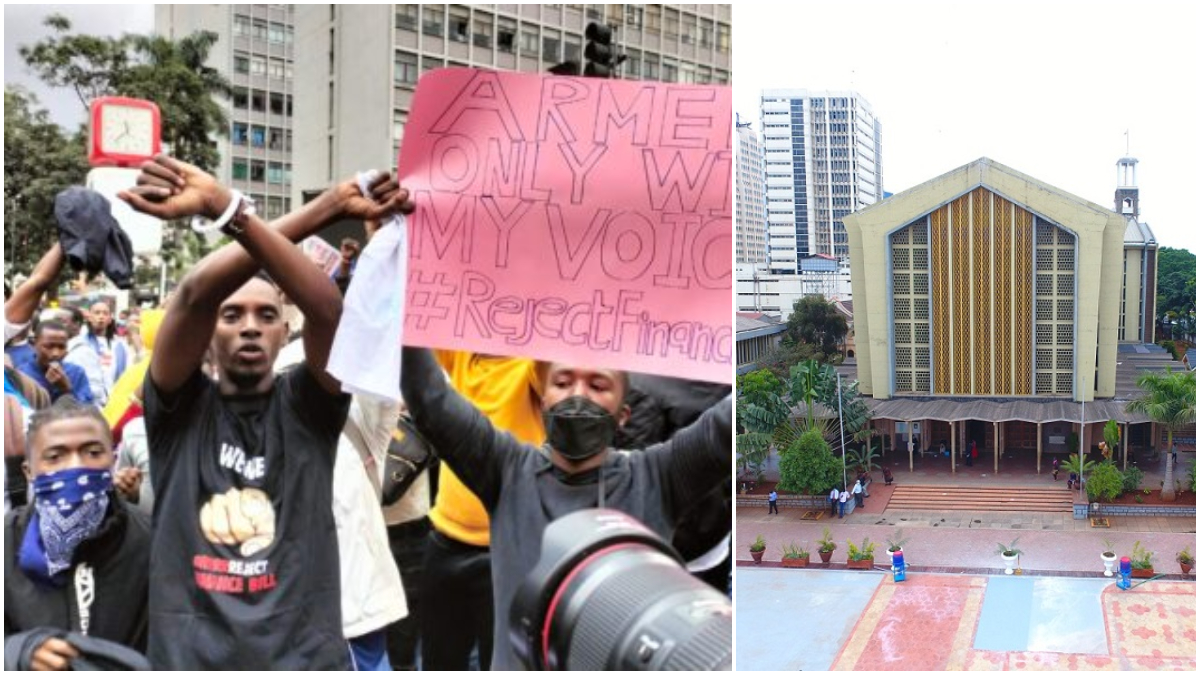
The Holy Family Basilica in Nairobi has faced criticism for reportedly denying entry to protesters seeking refuge from the police during the anti-Finance Bill demonstrations.

The church issued a statement clarifying its decision, citing the safety and welfare of its students attending the Holy Family Minor Basilica Catholic Parochial School within the compound.

The Basilica emphasized that its primary concern is the safety of the young children attending the school.

“The compound hosts a school, and our personnel consistently maintain the safety of the young children. The Church is also responsible for ensuring a duty of care for the young ones In the Holy Family Minor Basilica Catholic Parochial School,” read part of the statement from Most Reverend Philip Anyolo.

The statement acknowledged the concerns raised on social media and expressed empathy for those affected by the situation.

The Basilica reiterated its commitment to being a sanctuary for all people of God and Kenyans in general.

It regretted any misunderstanding following the current concerns about the Finance Bill 2024 and vowed to continue striving to be a sanctuary of worship.

Additionally, the church expressed solidarity with all individuals advocating for a better future for Kenyans.

“We appreciate your understanding and stand In solidarity with all who work towards a better future for all Kenyans,” concluded the statement.

Trending Now


Claims that the Finance Bill 2026 introduces a new tax on mitumba clothing have sparked heated debate, prompting Kenya Kwanza leaders to come out and explain what the proposed law actually says.  At the centre of the debate is Clause 31(a)(ix)(169), which deals with the Value Added Tax (VAT) treatment of worn clothing, commonly known as mitumba, sold within the country.   According to the clause, the Finance Bill proposes to simplify the VAT treatment of the mitumba sector by ensuring that VAT is charged only at the point of importation, while domestic sales of the same goods are exempt from further VAT.  In effect, VAT will be paid once when second-hand clothes enter Kenya. After that, traders selling the clothes in local markets will not be required to charge VAT on their sales.  The proposal is intended to reduce the compliance burden on traders by ensuring that VAT is collected at a clear and verifiable point. It also removes the possibility of double taxation, making business easier for traders while reducing paperwork and helping them retain more of their earnings.  Read Also Finance Bill heads to Ruto’s desk…


Subscribe to Our Newsletter

*we hate spam as much as you do

More From Author


Related Posts

See all >>

Latest Posts

See all >>