
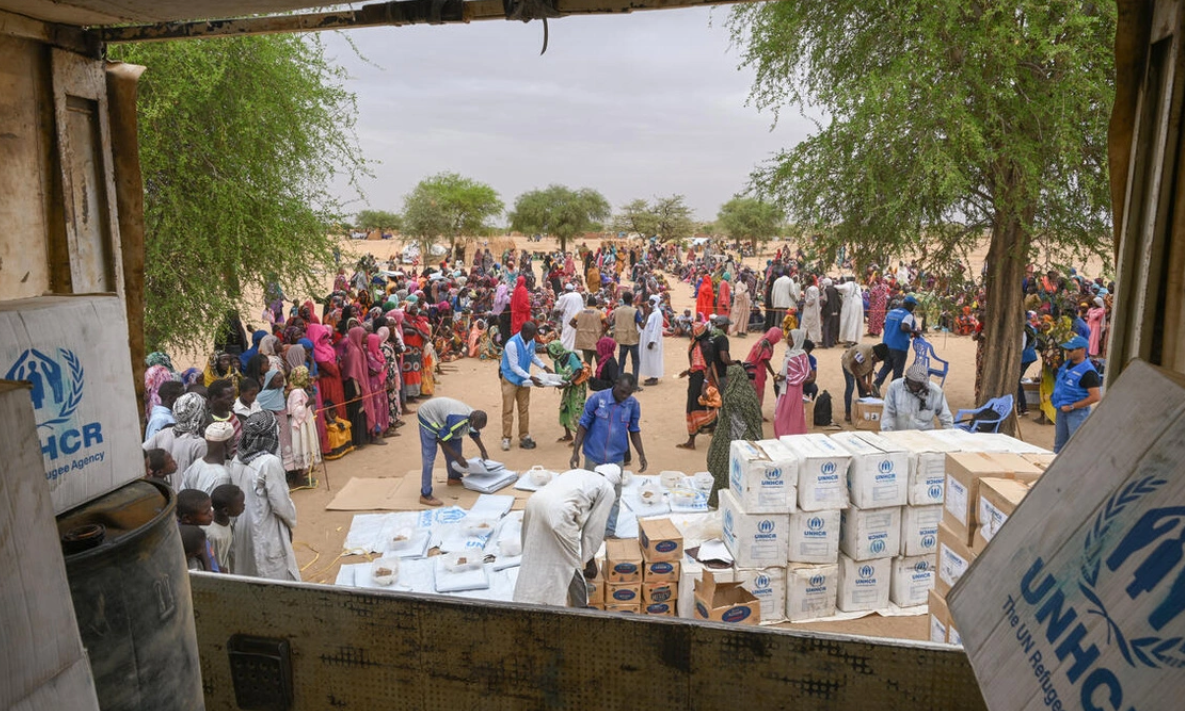
Humanitarian workers should ask themselves whenever they sit down to write a donor report: if funding ended tomorrow, what would remain for the people we have spent years supporting?
This is an uncomfortable question for aid workers because it goes beyond counting people reached, supplies distributed, trainings conducted, or photos and success stories collected for donor reports. It asks whether the humanitarian intervention has made a lasting impact and whether we are prepared to report honestly, even if the truth may not help us secure future funding.
It is no secret that humanitarian funding is shrinking, and it would be dishonest of us to blame donors and other aid agencies. The truth is, governments are changing their priorities, public finances in developed countries are under pressure, and geopolitical interests are increasingly shaping where that money goes.
The Organization for Economic Cooperation and Development (OECD) recently reported that official aid assistance fell by 23.3 percent globally in 2025. This was the largest annual decline on record. The report projected a further fall in 2026. The reductions were concentrated among a handful of donors, and sub-Saharan Africa is among the regions facing further cuts. Thus, the crisis is not simply that donors have stopped giving. They haven’t. This only means that humanitarian organizations – both local and international – must now justify their work because every dollar spent by donor agencies is under scrutiny. This then calls for a serious examination of how we define need, measure impact, and report the milestones.
However, too much of the sector remains wrapped around a troubling incentive: the stronger the picture of need, the stronger the case for funding. NGOs compete to demonstrate the scale of suffering and proposals, therefore, emphasize the severity of the crisis. Reports foreground the most moving stories and the most impressive outputs. The success of the project is often shared through the number of people reached, while the difficult question of what changed in their lives is hardly asked and, when it is, it receives little attention.
Cooperating government agencies, donors and funding partners are often part of this problem. When the most compelling appeal is the one that wins funding, local NGOs learn the pattern of what the system rewards. A proposal describing a community in deep distress may stand a better chance than one explaining how modest support could help them become less dependent on aid. Although nobody instructs these organizations to exaggerate the need for the incentive to influence how they present their work, it comes as a silent rule accepted within the humanitarian circles.
This does not mean that humanitarian needs are invented or that dramatic accounts of suffering are necessarily false. No. Somalia, for example, continues to face conflict, displacement, climatic shocks and food insecurity. These are real emergencies with real people affected. Nonetheless, these people should not have to prove their suffering repeatedly to deserve help. But don’t get me wrong, genuine need does not excuse weak evidence, selective reporting or a reluctance to disclose failure.
Somalia has already seen how damaging failure of accountability can be. A United Nations investigation into aid diversion in 2023 examined allegations that assistance intended for vulnerable people was being diverted after delivery, including through coercion and manipulation involving people controlling access to IDP camps. The findings raised serious questions about protection systems meant to safeguard displaced persons and humanitarian assistance and ensure it reaches the intended people in need.
In January 2026, the US suspended humanitarian aid to the federal government of Somalia after alleging that officials demolished a WFP warehouse in Mogadishu and seized 76 metric tons of food aid. The Somali government disputed the allegation, saying that the supplies were under WFP control. While this remains a contested dispute, it does not prove that all aid in Somalia is compromised. It rather illustrates how quickly questions on accountability can become a threat to the wider humanitarian ecosystem.
The lesson from this is not that aid should be withdrawn from those who need it most, but that the integrity of the system matters as much as the intention behind it. Every diversion of aid, concealed failure or misleading account makes it harder for responsible local humanitarian actors to defend their work.
In contrast, there are examples of organizations choosing a more difficult path. In 2023, the cash transfer organization GiveDirectly publicly disclosed fraud in one of its programs in the DRC. It reported that about $900,000 had been stolen over six months, affecting more than 1,700 people who ought to receive the cash, and explained that it had paused operations while investigating and strengthening its controls. GiveDirectly neither presented this scenario as a success nor did it conceal it. It acknowledged a serious failure on their part and made the information public. This is what accountability should look like. It is not the absence of wrongdoing, but the willingness to disclose what happened and demonstrate what will change.
Meanwhile, the consequences of shrinking funding are already visible. In August this year, WFP and UNHCR warned that funding shortfalls threatened food and nutrition assistance for refugees in South Sudan. WFP said the most vulnerable refugee families were receiving only half of a full food ration. This demonstrates that the funding cuts are not abstract budget cuts. They affect how affected families eat or cope and whether or not they can protect themselves from further hardship if they aren’t supported.
This is precisely why NGOs cannot afford to treat reporting as a fundraising gig. Neither can donors continue to demand evidence of impact while rewarding reports and proposals that present an uncomplicated picture of success. In my view, an honest report needs to explain what worked, what failed, who was missed, what changed after the intervention, and what remains unsolved. Doing so distinguishes activities from outcomes and outcomes from lasting change.
Imagine this hypothesis: a community that has been supported through a multi-year five-year project. If another assessment were to still identify the same households facing the same problems, the solution shouldn’t be another proposal describing the same or similar response. Doing so would be an admission of our failure in implementing the program and would invite a floodgate of questions such as: were the original interventions appropriate? Did the circumstances change? Were the resources sufficient? Were the intended results realistic? What prevented the progress, and what must change?
Sometimes the answer would be that the crisis deepened beyond the scope of the project. Other times, conflict, displacement, and climate or economic shocks would’ve erased hard-won gains. In other cases, the program would not have just delivered what it promised. All these possibilities deserve an honest examination because repeated need is also not proof of failure. Repeated need without a closer and clear explanation is a reason to ask harder questions.
We must also resist the temptation to treat accountability through regular monitoring and evaluation as paperwork. A well-completed monitoring report cannot compensate for a project that has not met the outcomes or improved people’s lives. A photograph cannot simply substitute for evidence, and a list of beneficiaries cannot, on its own, demonstrate meaningful change.
Donors have responsibility here too. Reward credible evidence, transparent reporting, and a partner organization’s willingness to admit mistakes – not simply the most dramatic false description of suffering. They have a responsibility to assess long-term outcomes alongside immediate relief and recognize that some emergencies require sustained support rather than a neat exit story.
As aid workers, we must also be equally honest with ourselves. We cannot keep asking the public to trust our intentions while treating donor reports as a document designed primarily to help secure the next grant or support application to the next call for proposals. The suffering of the people whom we have the honor of serving is not a resource to be repeatedly packaged for another appeal.
We need to acknowledge that funding cuts may be driven largely by decisions made far from the communities that bear the consequences, but how we account for the resources that remain is within our reach and control. At a time when humanitarian work continues to face mounting scrutiny, credibility is not a communications asset to be polished at the end of a project. It must remain as the foundation on which the entire humanitarian enterprise depends. So as we continue to sit with our computers on our laps, typing and deleting for the perfect report, we should pause and question: what can we show for the money already entrusted to us, and what are we willing to admit is the answer falls short?
The author is a communications consultant and humanitarian programmes specialist