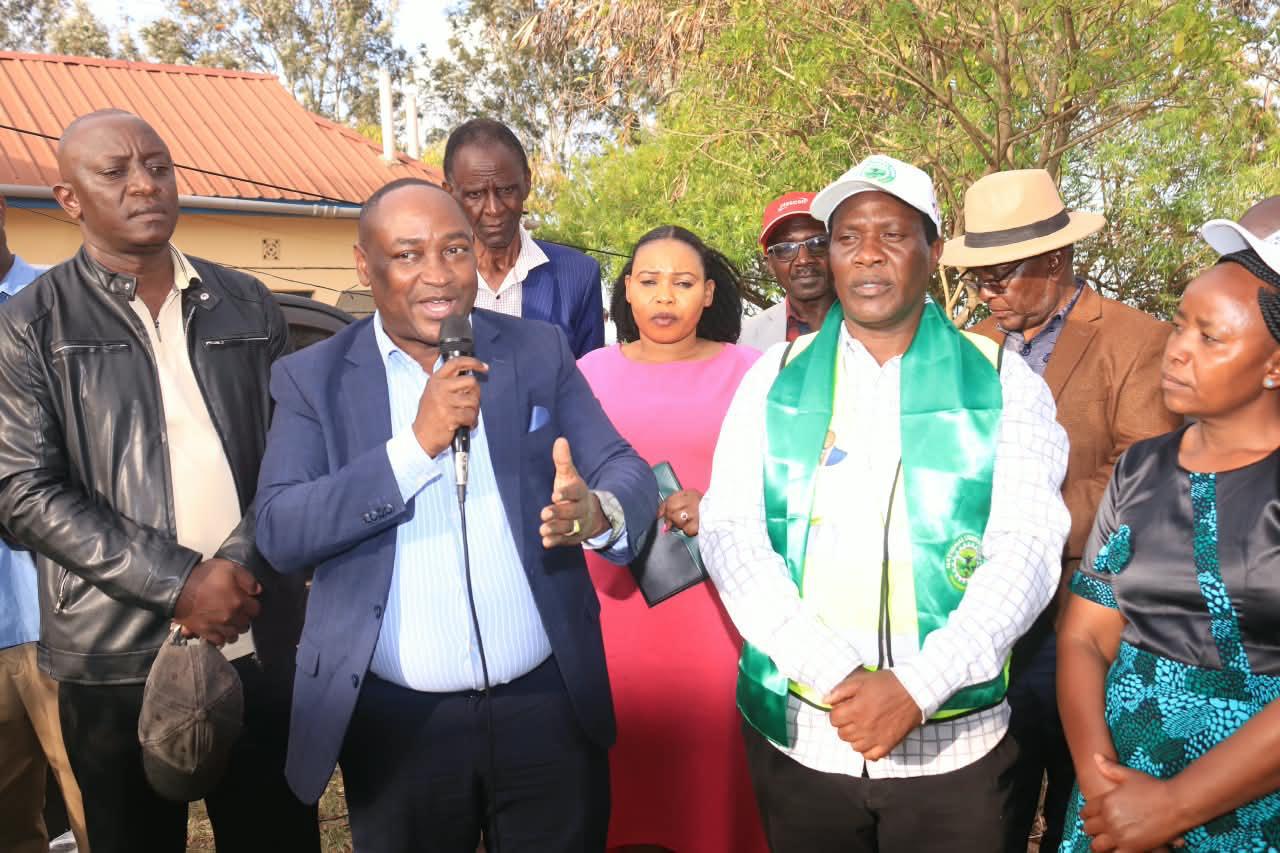

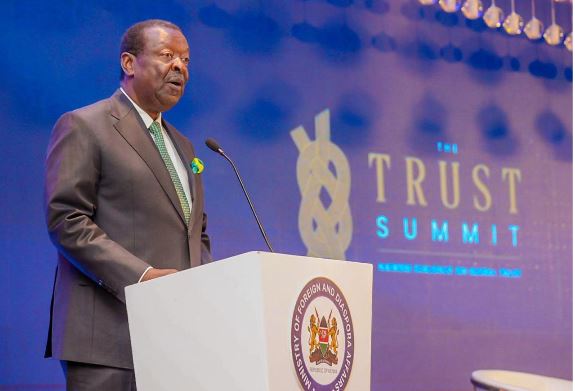
Kenya’s Prime Cabinet Secretary Musalia Mudavadi has called for stronger accountability, inclusive governance and more representative international institutions, warning that public trust cannot be sustained without institutions demonstrating integrity, fairness and tangible results.
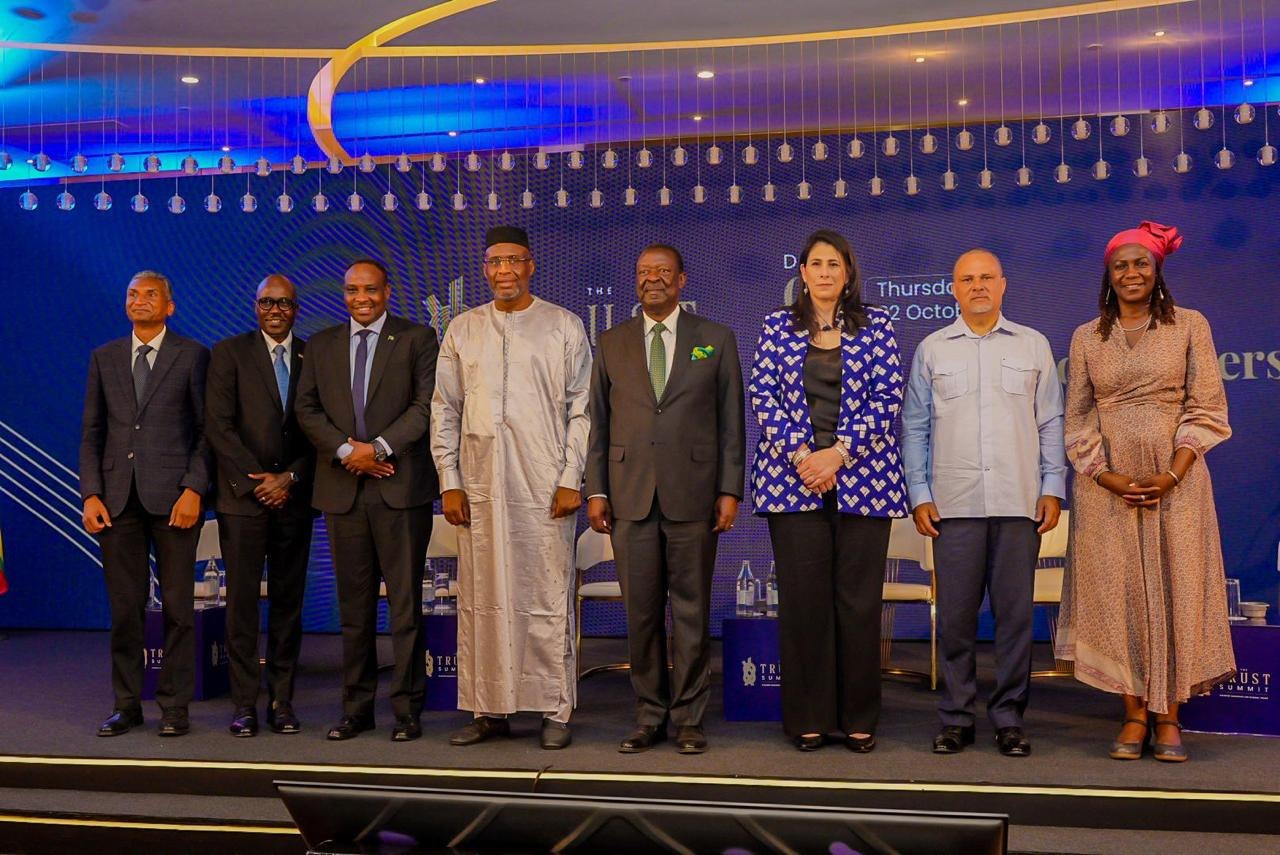
Speaking during the second day of the Global Trust Summit in Nairobi, Mudavadi said the erosion of public confidence threatened the foundations of institutions, economic prosperity and a shared future.
“When a society loses the trust of its people, it risks losing the very foundation upon which its institutions, prosperity and common future depend,” he said.
Mudavadi cautioned against treating public confidence in political leaders as a substitute for accountability, citing an Afrobarometer working paper drawing on survey data from 37 African countries. The study found that greater trust in presidents and ruling parties was associated with weaker public support for accountability mechanisms, including parliamentary oversight, media scrutiny and citizens’ ability to hold governments to account.
He said trust and accountability must reinforce each other, arguing that credible institutions should inspire confidence through their conduct while remaining transparent, answerable and open to scrutiny.
“The strongest institutions are not those that ask people to trust them blindly, but those that inspire confidence through their conduct while remaining transparent, answerable and open to scrutiny,” Mudavadi said.
He also pointed to growing pressure on public confidence in science. Citing the Wellcome Global Monitor 2026, he said the proportion of people who believed that most people in their country benefited from science had fallen from 42 per cent in 2018 to 37 per cent in 2025.
According to Mudavadi, scientific credibility depends not only on rigorous evidence but also on fairness, accessible healthcare, openness about uncertainty and the ability of institutions to demonstrate how scientific advances improve people’s lives.
The Prime Cabinet Secretary further described trust as an economic asset that lowers the barriers to business and cooperation, arguing that contracts and legal safeguards cannot entirely replace integrity and a reputation for keeping one’s word.
“Trust is also economic infrastructure,” he said, adding that societies risk prioritising transactions and profits over ethical conduct when the results matter more than the means through which they are achieved.
Africa’s representation in global institutions
Mudavadi said international institutions must earn public confidence through fairness, representation and delivery, particularly as countries confront challenges that cross borders, including climate change, public health, peace and security, trade and technological change.
He singled out Africa’s lack of a permanent seat on the United Nations Security Council as a question of legitimacy, arguing that the continent should participate directly in decisions affecting its security and future.
An Africa with permanent representation on the Council, consistent with the African Union’s Common African Position, would strengthen confidence in the United Nations among African citizens, he said.
He urged the summit to move beyond declarations and establish a practical framework for rebuilding trust, including a clear call to action, a framework defining commitments, a coalition of actors responsible for implementation and a credible mechanism for tracking delivery.
“It is my wish that Nairobi be remembered not simply as the place where the world discussed trust, but as the place where we strengthened our resolve to become more trustworthy,” Mudavadi said.