

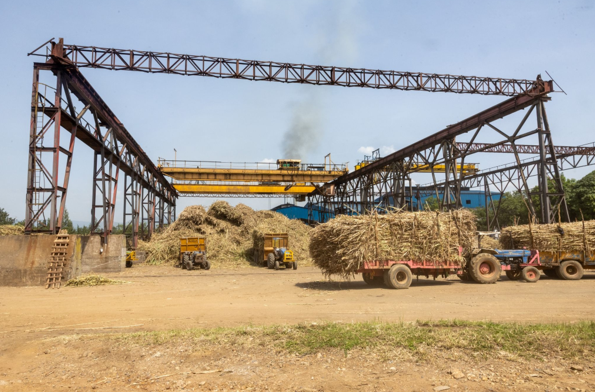
Farmers in Muhoroni have welcomed the revival of Muhoroni Sugar Company saying the factory’s return to full operations under a leasing arrangement has restored hope, improved incomes and revitalized the local economy.
For veteran farmer and former Muhoroni Sugar employee Sylvester Odhiambo, the transformation has been significant. Having witnessed both the highs and lows of the sugar sector, he recalls years when delayed payments left farmers struggling to maintain their cane fields.
“Previously, farmers could wait for months and sometimes over a year before receiving payment for delivered cane,” he said. “Without timely payment, it became impossible to maintain farms because every stage of cane development requires money.”
According to Odhiambo, the delayed payments crippled farming operations and threatened the livelihoods of thousands of residents who depend on the sugar industry. He warned that proposals previously floated to turn Muhoroni into a cane collection centre would have devastated the local economy.
“That would have been the death of the entire community. Muhoroni Sugar is the backbone of this area,” he said.
Since the factory was leased to private investors, farmers say the situation has improved dramatically. Cane deliveries are now paid for within a week, enabling growers to reinvest in their farms and meet household expenses.
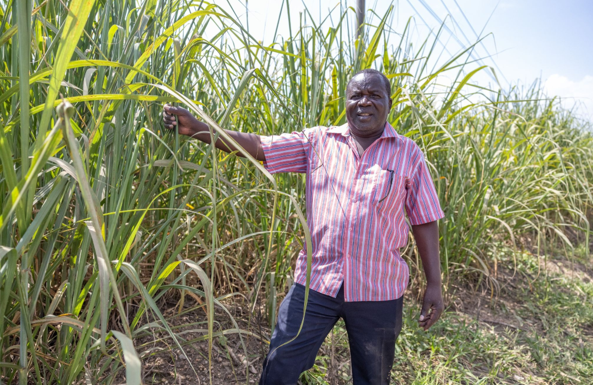
“Today, if I deliver cane, I will receive my payment after one week. This has greatly improved the relationship between farmers and management and has given us confidence to continue farming,” Odhiambo added.
The impact extends beyond farmers. According to local stakeholders, traders, transporters, cane cutters, weeders and other businesses have all benefited from the revival of milling operations.
“When farmers are paid on time, everyone benefits. Shopkeepers, transporters and workers all earn a living from the sugar industry,” Odhiambo noted.
Another farmer and transporter, Odhiambo Ngesa, who has lived in the area since the 1960s, described the government’s decision to lease the mill as a lifeline for the region.
Ngesa said residents had watched with concern as Muhoroni appeared headed down the same path as Miwani Sugar Factory, which shut down more than two decades ago, leaving thousands without a source of income.
“People who were born when Miwani closed are now adults with families, yet the area has never fully recovered economically,” he said. “A similar situation was developing in Muhoroni, but the government’s decision to lease the factory saved us.”
He said a recent temporary shutdown of the mill for maintenance caused anxiety among farmers and transporters, who feared a return to the difficult days of inactivity.
“When the mill stopped briefly, people became worried because we thought we were sliding back to where we had come from. Now that it has resumed, life is returning to normal,” he said.
Ngesa emphasized that Muhoroni’s economy depends heavily on the sugar factory, with tens of thousands of residents relying on it directly and indirectly.
Despite the progress, stakeholders say one major challenge remains: inadequate cane development. Ngesa noted that while the factory is operational, cane availability in the fields remains low due to years of underinvestment.
“The mills are running well, but the cane population in the fields is not sufficient. The government should consider providing affordable financing to farmers so they can expand cane production,” he said.
He argued that increased investment in cane development would help ensure a steady supply of raw material and guarantee the long-term sustainability of the factory.
Both farmers expressed optimism about the future of Muhoroni Sugar Company, saying the continued efficiency of the mill and sustained support for growers would secure livelihoods and drive economic growth across the region.
“The future depends on an efficient mill and good management,” Ngesa said. “If we maintain the progress we are seeing today, Muhoroni can once again become a thriving sugar-producing region.”