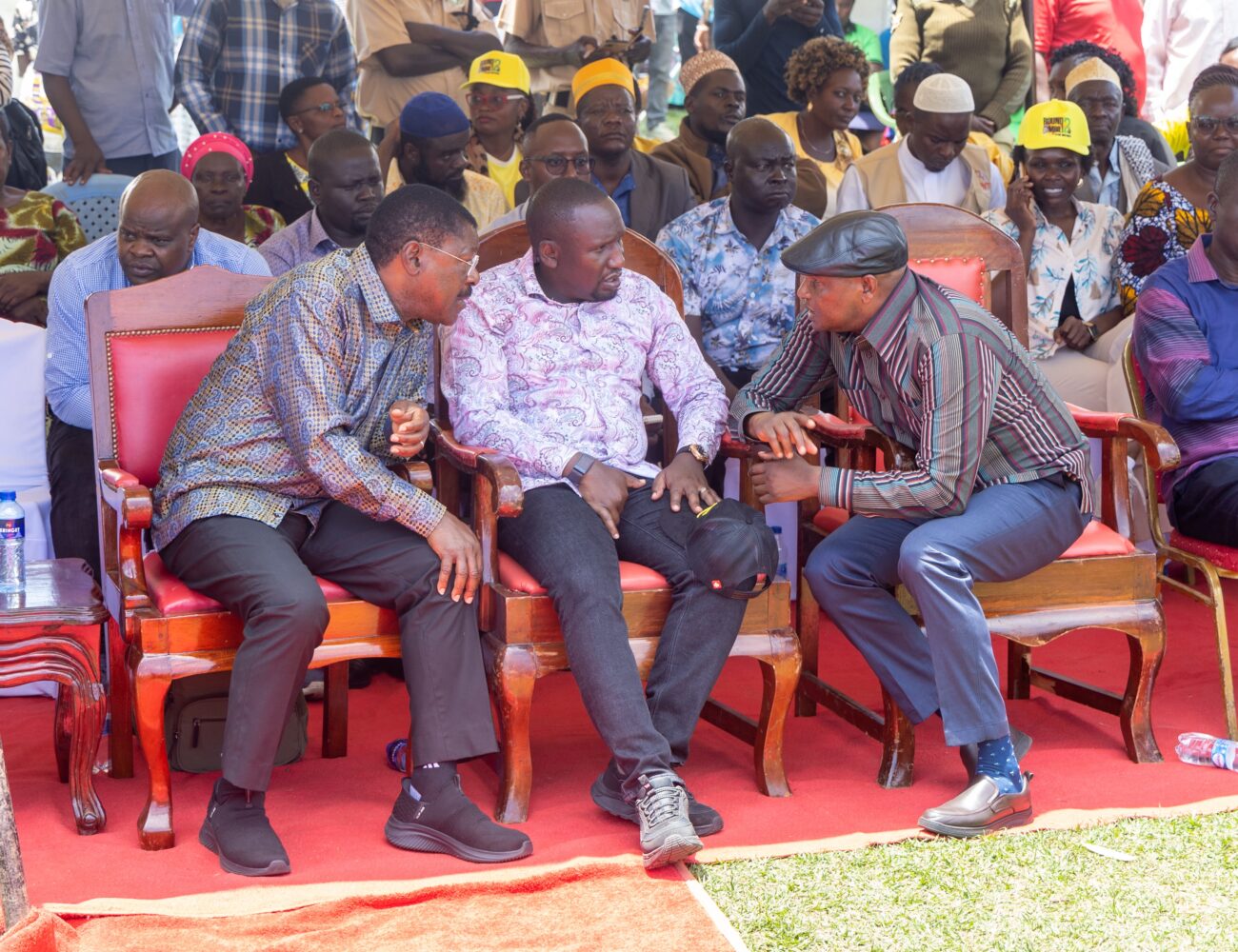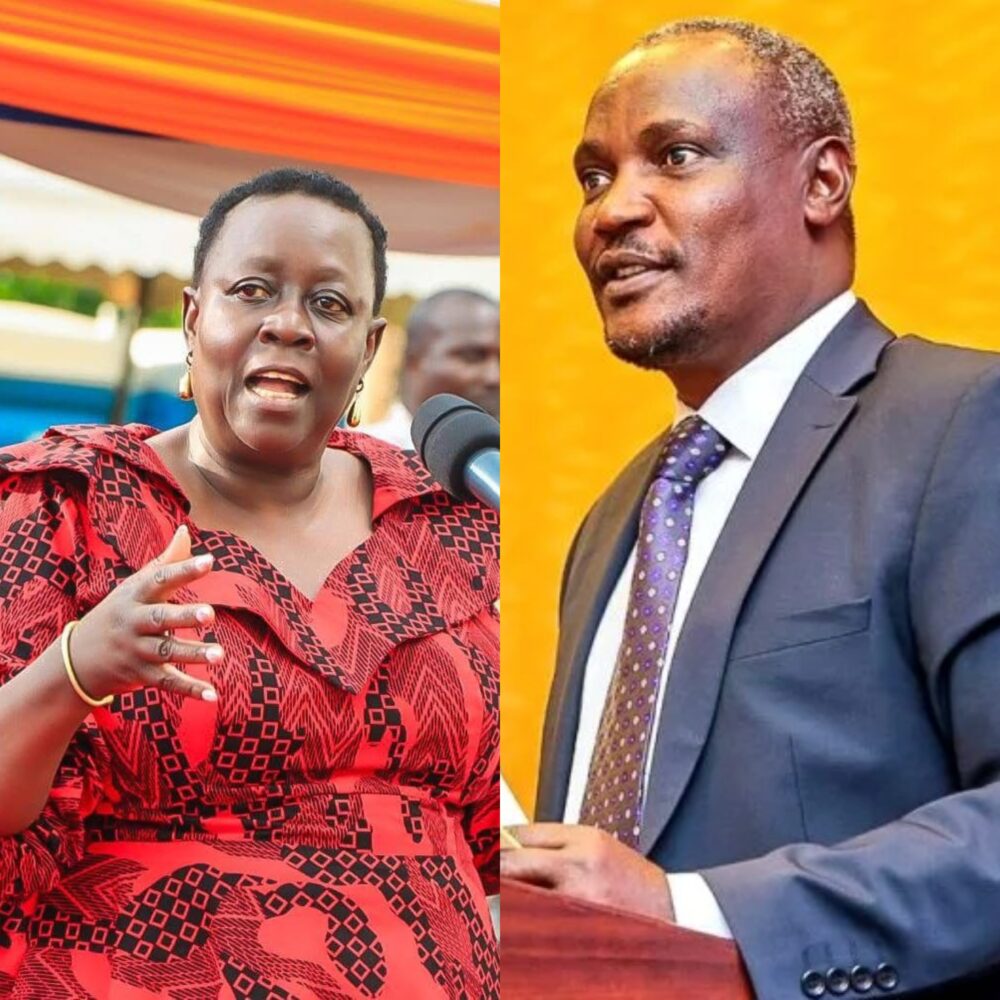
A public clash between Treasury Cabinet Secretary John Mbadi and Kisumu Woman Representative Ruth Odinga over the future direction of the Orange Democratic Movement (ODM) took centre stage this week, underscoring deepening divisions within Kenya’s largest political party.
The confrontation erupted after Mbadi, speaking at a party retreat in Mombasa, aimed at Ruth Odinga’s role in party affairs, accusing her of “pretending to unite both ODM factions” and suggesting she was misrepresenting his earlier remarks.
At the heart of the dispute is how ODM should navigate its identity and future post-Raila Odinga, the party’s late leader whose death last year left a leadership vacuum and triggered intense internal contestation.
“You cannot keep us back,” Mbadi reportedly told party officials. “This party does not belong to one family… you cannot just order us around because you are the sister of a party leader.”
In a YouTube video, the Treasury CS is seen stressing that ODM is a national party, not a family enterprise, and that loyalty to one surname doesn’t confer authority to direct others.
“It does not belong to a family, …if you are Raila’s sister please respect us,” he said, according to social media footage shared shortly after the remarks. “We also fought for Raila. We must now manage the transition. Baba is no more.”
Mbadi is also reported to have said that some party members are “sitting on the fence” and hindering the party’s evolution, a comment many observers interpreted as a rebuke of those trying to bridge the splintered factions within ODM.
Ruth Odinga responded forcefully in her own public statement, describing Mbadi’s outburst as a direct attack on her family’s legacy and dismissing accusations that she was exploiting her late brother’s name for political influence.
“I say this was a personal attack because I looked around and I was the only Odinga in the room,” she wrote, noting that ODM Party Leader Oburu Oginga, her brother, was absent from the retreat.
Ruth also objected to Mbadi’s reported comment that the party does not belong to the Odingas because the assumption, she said, ignored the sacrifices made by the family and the party’s supporters across Kenya.
“It is not the ODM Party that made Raila Odinga,” she countered, “it is the people of Kenya who made him who he was.”
The clashes reflect a broader power struggle within ODM, as leaders debate whether to enter alliances with other political formations or hold firm to a distinctive opposition identity.
Mbadi himself has been associated with party leaders advocating closer cooperation with the current government, while factions loyal to the late Raila Odinga and others argue for retaining an independent posture ahead of the 2027 elections.