
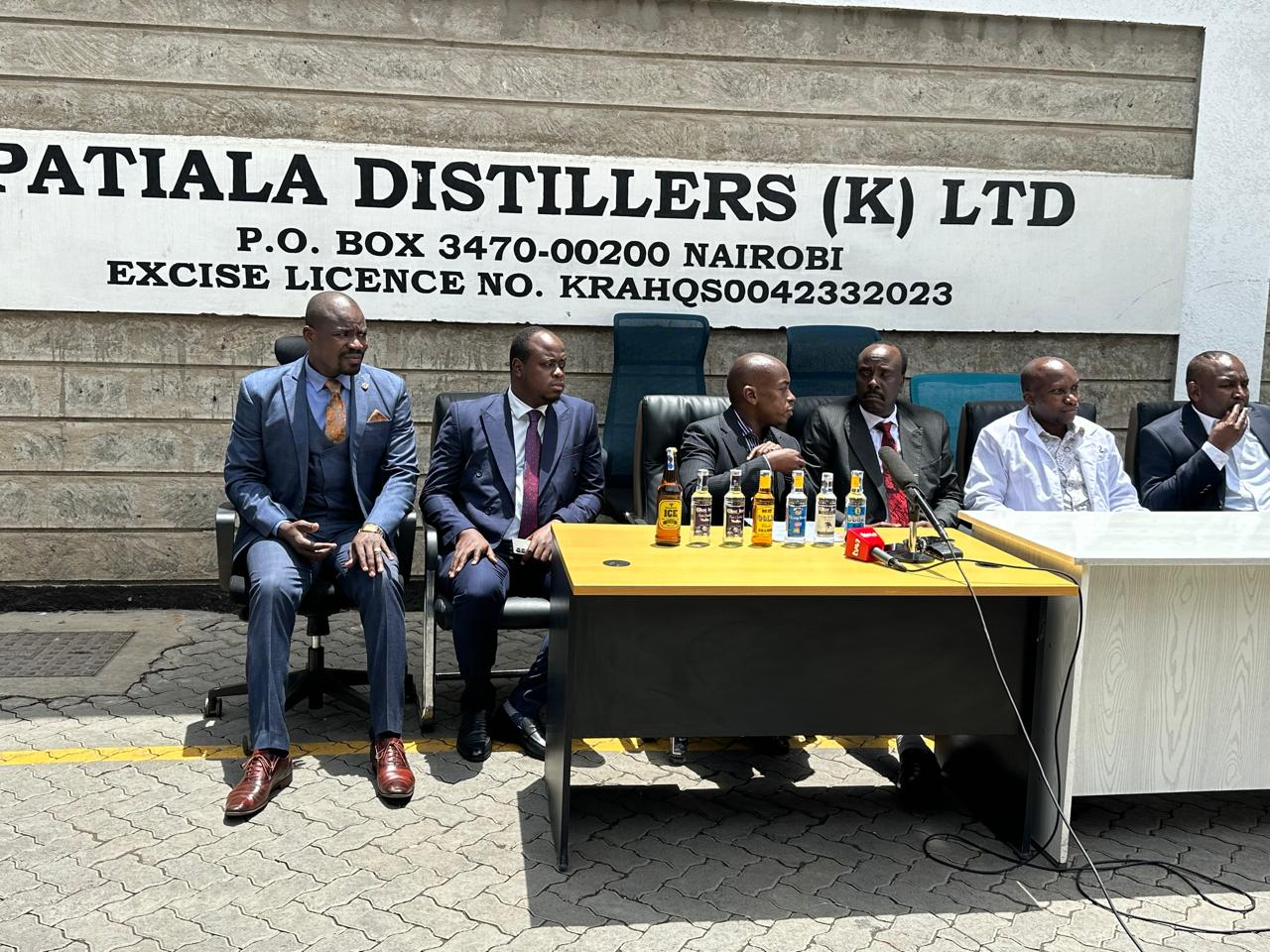
Patiala Distillers K Limited has rejected allegations circulating on social media over the authenticity of its alcoholic products and claims linking the company to Deputy President Kithure Kindiki, as the government orders fresh inspections of all alcohol manufacturers in the country.
The company said the allegations were false and maintained that it is a licensed manufacturer operating in Kenya. Patiala said it does not manufacture or sell counterfeit alcoholic products and that counterfeit goods bearing its brands should not be attributed to the company.
The statement comes as the government intensifies its crackdown on illicit and counterfeit alcohol. Kindiki has directed authorities to re-inspect alcohol manufacturing premises to establish their current compliance with health, quality and other regulatory requirements.
Kindiki said even manufacturers that already hold valid licences would undergo fresh vetting, with those found producing alcoholic drinks harmful to consumers facing closure.
The directive follows renewed concerns over illicit alcohol and the deaths associated with unsafe brews, particularly in parts of the Mt Kenya region.
Patiala, whose brands are sold in the Kenyan market, has found itself at the centre of some of the wider debate over alcoholic products. The company has previously faced regulatory and legal disputes over the seizure of some of its products.
A July 2026 High Court judgment in Nyeri records that Patiala manufactures and supplies brands including Diamond Ice, Flying Horse Gin, Best Classic Gin and Blue Ice Vodka from its premises in Mlolongo, Machakos County. The case arose from the seizure and subsequent destruction of some of the company’s products in Mathira in 2024.
The court record shows that government officials said the seizure formed part of an inter-agency operation targeting illicit alcoholic drinks and that Patiala’s brands were among those they said were heavily counterfeited. Patiala disputed the circumstances surrounding the seizure and sued several government officials.
The High Court ultimately dismissed Patiala’s suit, with the judgment noting that the seizure itself was not the main point of dispute before the court and that the company’s claim centred largely on the subsequent destruction of the seized products.
In its latest statement, Patiala has again sought to distinguish its products from counterfeit goods, urging consumers to report suspicious products and outlets to the company or enforcement agencies.
The company has also denied the claims of an association with the Deputy President. The allegations have circulated publicly, but Patiala’s denial does not by itself establish or disprove the claims, which would require independent verification.
The fresh government inspections are therefore expected to put renewed focus on the operations of alcohol manufacturers across the country, including their compliance with licensing, quality, taxation and consumer-safety requirements.
The government has said the exercise is part of a broader multi-agency campaign against illicit and counterfeit alcoholic drinks and the networks involved in their manufacture and distribution.