Governments are expected to solve problems. The danger begins when they become so eager to be seen as acting that they start inventing solutions for problems that either do not exist or whose real causes they have refused to confront. That is how bad policy is born. Instead of addressing the disease, government treats the symptoms, and often ends up making the patient even sicker.
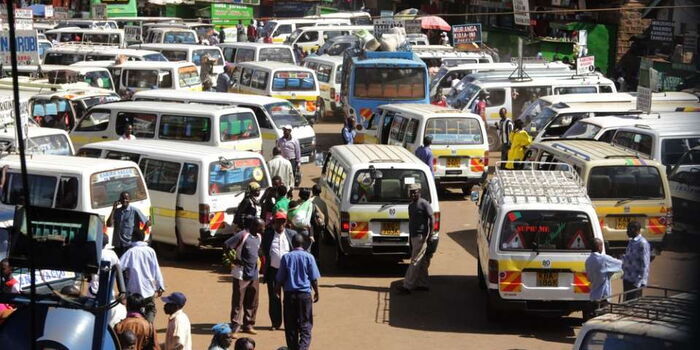
The latest proposal to empower the government to prescribe minimum and maximum fares for matatus and other Public Service Vehicles belongs squarely in that category.
Its objective appears noble. Every Kenyan has experienced the frustration of fare hikes during rain, public holidays, fuel shortages, or peak hours. Protecting passengers from arbitrary exploitation is a legitimate public concern. However, good intentions are not enough to produce good policy. The question is not whether passengers deserve protection. They certainly do. The question is whether fixing transport fares through legislation addresses the real problem. It does not.
The cost of public transport is not determined by greed alone. It is shaped by the economics of operating a transport business. A matatu owner wakes up every morning facing costs that government itself has helped increase. Fuel prices fluctuate constantly. Insurance premiums continue to rise. Spare parts are more expensive because of taxes, exchange rate pressures and import costs. Tyres, lubricants and maintenance have all become significantly costlier. Drivers and conductors must earn wages that reflect the rising cost of living. Loan repayments remain fixed even when business slows. Licensing fees, county charges and numerous government levies continue to accumulate.
None of these costs disappear simply because Parliament passes a law fixing fares. If government dictates what operators may charge while doing nothing about what it costs them to provide the service, it is effectively asking businesses to absorb losses for the sake of public relations. That is neither sustainable nor economically rational.
Markets have a way of responding to bad incentives. If operators cannot recover their costs, they will not continue providing the same level of service indefinitely. Some will reduce the number of vehicles on the road. Others will abandon routes that generate lower returns. Many will postpone maintenance, increasing safety risks for passengers. Some will cut staff or reduce wages. Others may simply exit the industry altogether.
The greatest victims will not necessarily be Nairobi commuters. Rural Kenya, where passenger volumes are lower and operating margins are already thin, could suffer the most. Entire communities could find themselves with fewer transport options because regulated fares no longer make those routes commercially viable. Ironically, a law designed to protect commuters could reduce their access to transport altogether.
History offers many examples of what happens when governments attempt to suppress prices without addressing production costs. Artificial price controls rarely eliminate shortages or high prices. Instead, they create distortions.
When official prices become unrealistic, unofficial markets emerge. Passengers may find themselves paying “extra charges” that never appear on receipts. Conductors may introduce new excuses for collecting additional cash. Some operators may simply ignore the regulations, forcing enforcement agencies into endless confrontations that consume public resources without solving the underlying problem. Price controls often replace transparency with discretion, and discretion frequently creates opportunities for corruption.
The proposal also raises serious practical questions. Who will determine the correct fare? Will government officials review transport costs every week? Every month? Every quarter?
Fuel prices can change several times within a year. Insurance companies adjust premiums independently. Exchange rate movements affect imported vehicle parts almost immediately. Inflation alters operating expenses continuously. Will every one of these variables trigger another government review?
Kenya’s transport system is also remarkably diverse. The economics of a short city route in Nairobi are fundamentally different from those of a long-distance bus travelling to Turkana, Mandera or Lamu. Urban matatus carry high passenger volumes with frequent trips. Rural operators often travel long distances with fewer passengers and irregular demand. Attempting to impose centrally determined fare limits across such different operating environments risks replacing market realities with bureaucratic assumptions.
No government office can calculate, in real time, the true operating cost of every transport route in the country. What makes this proposal particularly frustrating is that it reflects a broader pattern in public policy. Instead of confronting structural economic problems, government increasingly prefers highly visible interventions that create headlines but produce little lasting benefit.
Kenyans are paying more for transport largely because they are paying more for everything else. Fuel taxation remains among the highest contributors to transport costs. The shilling’s weakness has made imported spare parts more expensive. Numerous taxes, fees and regulatory charges imposed by both national and county governments continue to increase the cost of doing business.
None of these realities disappear because Parliament regulates fares. It is rather like placing a lid on a boiling pot while continuing to increase the heat underneath. The pressure does not disappear. It simply builds until something eventually gives way.
Real transport reform requires confronting the actual cost drivers. Government should focus on reducing unnecessary taxes and levies that inflate transport costs. It should improve road infrastructure to reduce vehicle maintenance expenses. It should eliminate cartels that manipulate fuel and spare-parts markets. It should encourage greater competition where monopolistic practices exist. It should require transparent fare displays so passengers know exactly what they are paying and why.
Where extraordinary circumstances arise, such as natural disasters or temporary fuel shocks, the government can design targeted, time-bound interventions rather than permanent price controls that distort the market. That approach protects consumers without destroying the economic viability of transport providers.
Kenya’s matatu industry is not perfect. It requires stronger regulation on safety, service quality, professionalism and accountability. But regulating prices while ignoring production costs mistakes symptoms for causes. Creating solutions for problems that have not been properly diagnosed has become an unfortunate hallmark of governance. It produces legislation that appears decisive but delivers disappointment.
Public transport should indeed be affordable. Yet affordability cannot be achieved by legislation alone. It must be built upon sound economics. When governments attempt to legislate prices without addressing costs, they do not abolish economic reality. They merely postpone it. And when reality finally catches up, it is usually ordinary citizens, the very people such laws claim to protect, who bear the heaviest burden.