
For decades, the world’s visual narrative of Africa has often been shaped by outsiders through images dominated by poverty, conflict and humanitarian crises. While these realities exist, they often overshadow another Africa: one defined by innovation, creativity, resilience and everyday excellence. Today, this narrative is being challenged. Kenya has become the starting point of a global conversation on authentic representation.
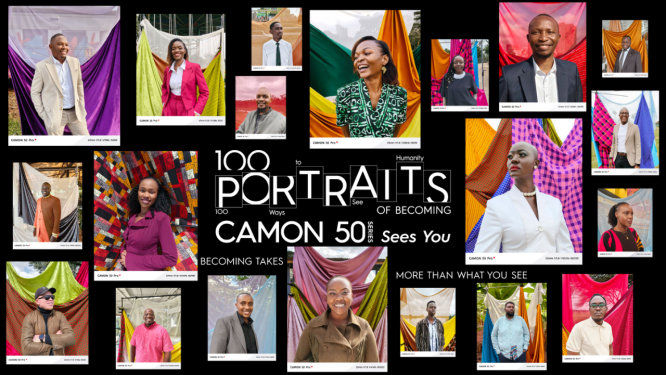
The launch of 100 Portraits of Becoming in Nairobi signals more than the beginning of a photography campaign. It marks a deliberate effort to rethink how Africans are seen and represented in the age of artificial intelligence and smartphone photography.
At the heart of the campaign is a simple but powerful idea: every person deserves to be seen truthfully.
The initiative brings together TECNO and renowned Brazilian visual artist Angélica Dass, whose internationally acclaimed work has challenged conventional ideas about race and skin colour through portraiture. Together, they will document 100 portraits across five countries, beginning in Kenya.
Rather than focusing on celebrities or staged imagery, the campaign shines a spotlight on the people who shape communities every day, floating stories on farmers feeding the nation, entrepreneurs building businesses, artists pushing creative boundaries, dancers preserving culture, creators inspiring online audiences and innovators quietly transforming lives.
Importantly, these are not just portraits. Each image is accompanied by the subject’s own story, allowing individuals to define themselves instead of being defined by assumptions or stereotypes.
The choice of Kenya as the campaign’s launchpad is significant. With one of Africa’s youngest populations, a vibrant technology ecosystem and a thriving creator economy, Kenya continues to position itself as a leader in innovation, digital storytelling and cultural influence. From Nairobi’s bustling creative spaces to rural communities embracing technology, the country reflects an Africa that is confident, forward-looking and increasingly in control of its own narrative.
The campaign also highlights a challenge that has received growing attention in recent years: camera bias. Although smartphone cameras have become increasingly sophisticated, many imaging systems have historically struggled to accurately capture darker skin tones. The result can be photographs that appear overexposed, underexposed or lacking the richness and diversity of natural complexion.
As artificial intelligence becomes more integrated into mobile photography, ensuring fairness in how different skin tones are rendered has become an important conversation—not only for photographers, but also for technology companies developing imaging systems used by millions around the world.
TECNO says its CAMON 50 Ultra, powered by Universal Tone Technology, is designed to address this challenge by improving the accuracy of skin-tone representation across diverse complexions. The technology aims to produce portraits that better reflect how people naturally look, preserving details, warmth and authenticity rather than relying on one-size-fits-all image processing.
Beyond the technology, however, 100 Portraits of Becoming raises broader questions about representation in the digital age.
For Kenya’s growing community of photographers, filmmakers, content creators and digital storytellers, these questions are becoming increasingly relevant. As locally created content reaches global audiences through social media and digital platforms, authentic representation is no longer just a creative aspiration—it is becoming an essential part of cultural identity.
In many ways, the campaign reflects a wider shift taking place across the continent. Africans are increasingly documenting their own experiences, celebrating their own communities and presenting stories that are nuanced, diverse and deeply human.
By placing ordinary people at the centre of the lens, 100 Portraits of Becoming suggests that the future of African storytelling may not lie in changing how the world looks at Africa, but in ensuring Africans are empowered to show the world who they truly are.
As the first portraits emerge from Nairobi, they offer more than compelling images. They represent a broader movement toward visual authenticity, where technology, creativity and personal storytelling come together to ensure every face is seen not through stereotypes, but as it is.