Stephen Mwangi, a 19-year-old form 3 student who was killed by forest guards in Baringo County died of acute respiratory distress syndrome (ARDS), occasioned by multiple soft tissue injuries.
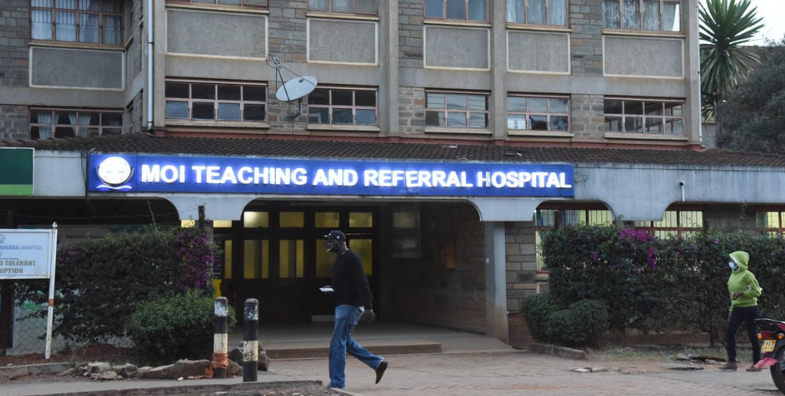
A postmortem conducted on Mwangi’s body at Moi Teaching and Referral Hospital (MTRH) mortuary, Eldoret, revealed that the multiple soft tissue injuries were caused by a blunt object.
Government pathologist Dr Benson Macharia said that from the autopsy report, it appears that the student was severely tortured.
“The injuries were all over his body, from the limbs to the back,” said Macharia. “There were also injuries on the hands which could be indications of defense.”
Mwangi died last week (May 13) while receiving treatment at MTRH’s intensive care unit, where he was rushed to after the assault.
What happened?
On the fateful day (May 8), Mwangi’s mother Mary Wambui went to fetch some firewood at a section of the vast Koibatek Forest.
Shortly thereafter, Wambui was arrested by Kenya Forest Service (KFS) rangers and handcuffed.
Wambui claims that the KFS officers were harassing her when her son, the late Mwangi, intervened to help her mother.
“They (KFS) rangers told me to relieve myself in front of my son aged 11. When I objected, they said I was rude. They harassed me and began to sexually assault me, that is the moment my son, Mwangi arrived,” she said.
“It is evident that my son was tortured badly but I leave everything to God even as we continue with burial plans,” Mwangi’s mother, Mary Wambui, said.
The five KFS officers — Zipporah Chepkurui, Charles Korir, Stanley Njoroge, Simon Mwaura and Francis Lemiso — are currently in police custody.