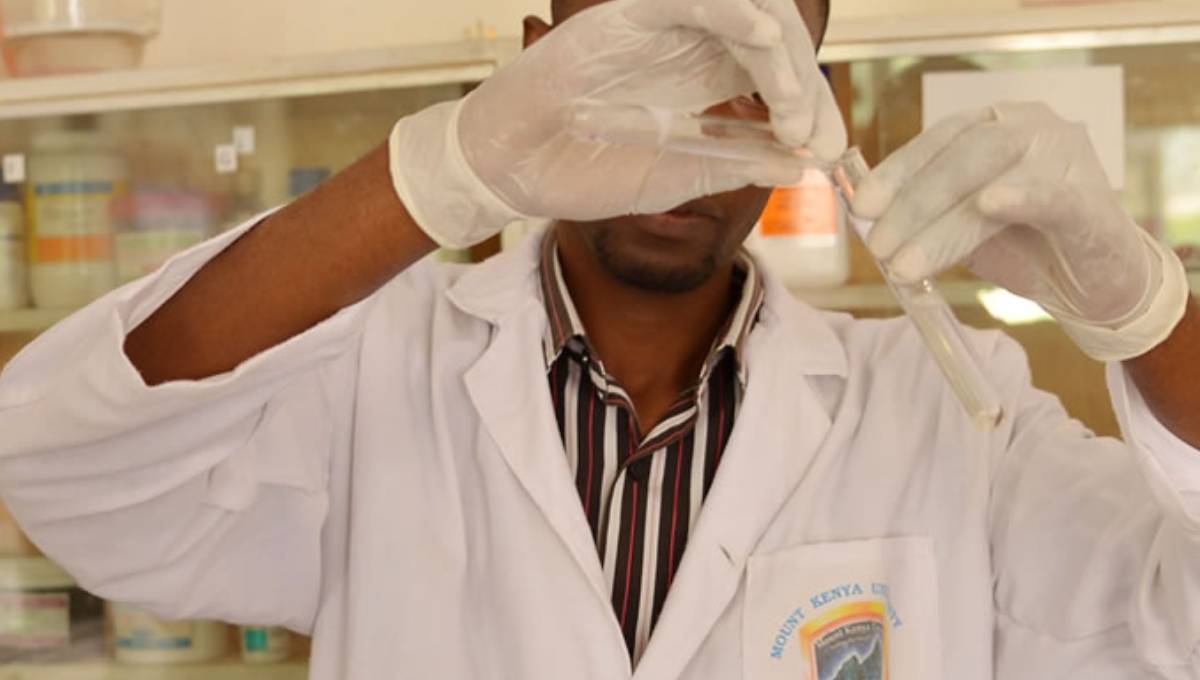
Fresh questions have emerged over the quality of medical training in Kenya following a regional audit that found only three of the country’s 13 medical and dental training institutions fully compliant with East African Community (EAC) standards.
According to the report, The 3rd Joint EAC Inspection of New and Existing Medical and Dental Schools, only three institutions attained full compliance status. Mount Kenya University (MKU) School of Medicine emerged as the highest-ranked institution with 82 points, followed by Maseno University School of Medicine with 81 points and Kisii University School of Health Sciences with 80 points.
The findings paint a worrying picture for several of Kenya’s leading medical schools. The University of Nairobi, the country’s oldest institution offering medical and dental training, scored 58 per cent for its School of Medicine and 68 per cent for its School of Dentistry. Moi University scored 61 per cent in medicine and 54 per cent in dentistry.
The most severe findings were recorded at Uzima University College School of Medicine, which scored 49 per cent and was declared non-compliant. EAC inspectors found that the institution lacked a basic sciences department, relied heavily on part-time lecturers contrary to EAC guidelines, and had enrolled students beyond its training capacity. The inspectors recommended closure of the programme and transfer of students to other accredited medical schools.
Several institutions classified as partially compliant were issued with recommendations, including suspension of admissions until identified deficiencies are addressed.
At Kenya Methodist University (KeMU) School of Medicine, which scored 59 per cent, inspectors cited over-enrolment, poor staff-to-student ratios, infrastructure gaps, inadequate staff development programmes, and insufficient accommodation for clinical students.
The EAC inspection team also recommended suspension of admissions at Kenyatta University School of Medicine, which scored 54 per cent. Similar recommendations were issued for Masinde Muliro University of Science and Technology School of Medicine, Moi University School of Medicine, and Egerton University Faculty of Health Sciences.
Among public institutions, Jomo Kenyatta University of Agriculture and Technology (JKUAT) School of Medicine posted the third-highest score with 66 per cent.
The findings are amid an ongoing dispute between the Kenya Dental Association (KDA) and Mount Kenya University over the university’s Bachelor of Science in Oral Health programme.
While KDA has persistently raised concerns including in a recent press interview, critics argue that recent reports, including the latest EAC inspection, suggest attention may be focused on the wrong institutions as broader challenges continue to affect medical training across the country.
On June 10, the Consumer Federation of Kenya (COFEK) wrote to Education Cabinet Secretary Julius Ogamba, calling for a comprehensive audit of all university health sciences programmes that have not been accredited under existing laws.
In a statement signed by Secretary-General Stephen Mutoro, COFEK said the review should be fair and involve all relevant stakeholders, including professional bodies, students, regulators and public health experts.
COFEK further argued that there is no publicly available evidence showing that the Bachelor of Dental Surgery programmes at the University of Nairobi and Moi University have undergone formal accreditation by the Commission for University Education (CUE) under the legal framework introduced by the Universities (Amendment) Act, 2016.
The inspection exercise was conducted by three regional teams. The first team was led by Prof. Joel Okullo, Chairperson of the Uganda Medical and Dental Council. The second was headed by Prof. David Ngassapa, Chairperson of the Medical, Dental and Allied Health Professionals Council of Tanganyika, Tanzania. The third team was led by Mr. Vuguziga Thadee, Registrar of the Rwanda Medical and Dental Council.