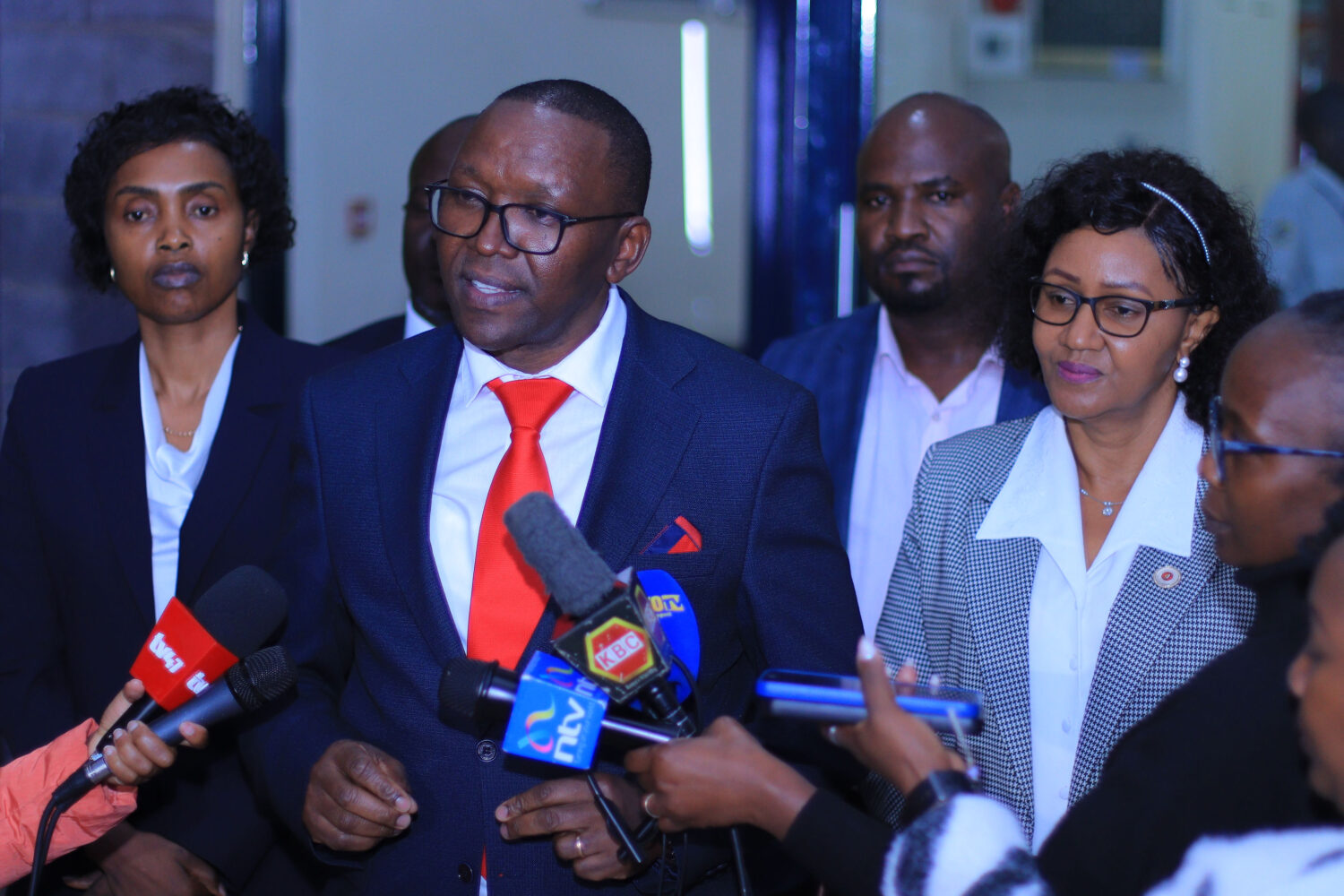
The Institution of Engineers of Kenya (IEK) has called for greater involvement of local engineers, contractors, consultants and manufacturers in major infrastructure projects, warning that excessive reliance on foreign expertise and supplies is denying Kenyans jobs and business opportunities.
Newly installed IEK President Eng. Harrison Keter said Kenya’s infrastructure investments should be designed to build local technical capacity and strengthen domestic businesses rather than simply deliver physical projects.
“We want to see that all infrastructure projects have defined roles to be played by local consultants and local contractors so that we are able to develop capacity internally while working in collaboration with the foreign contractors,” Keter said in Nairobi after the inauguration of the 2026-2028 IEK Council.
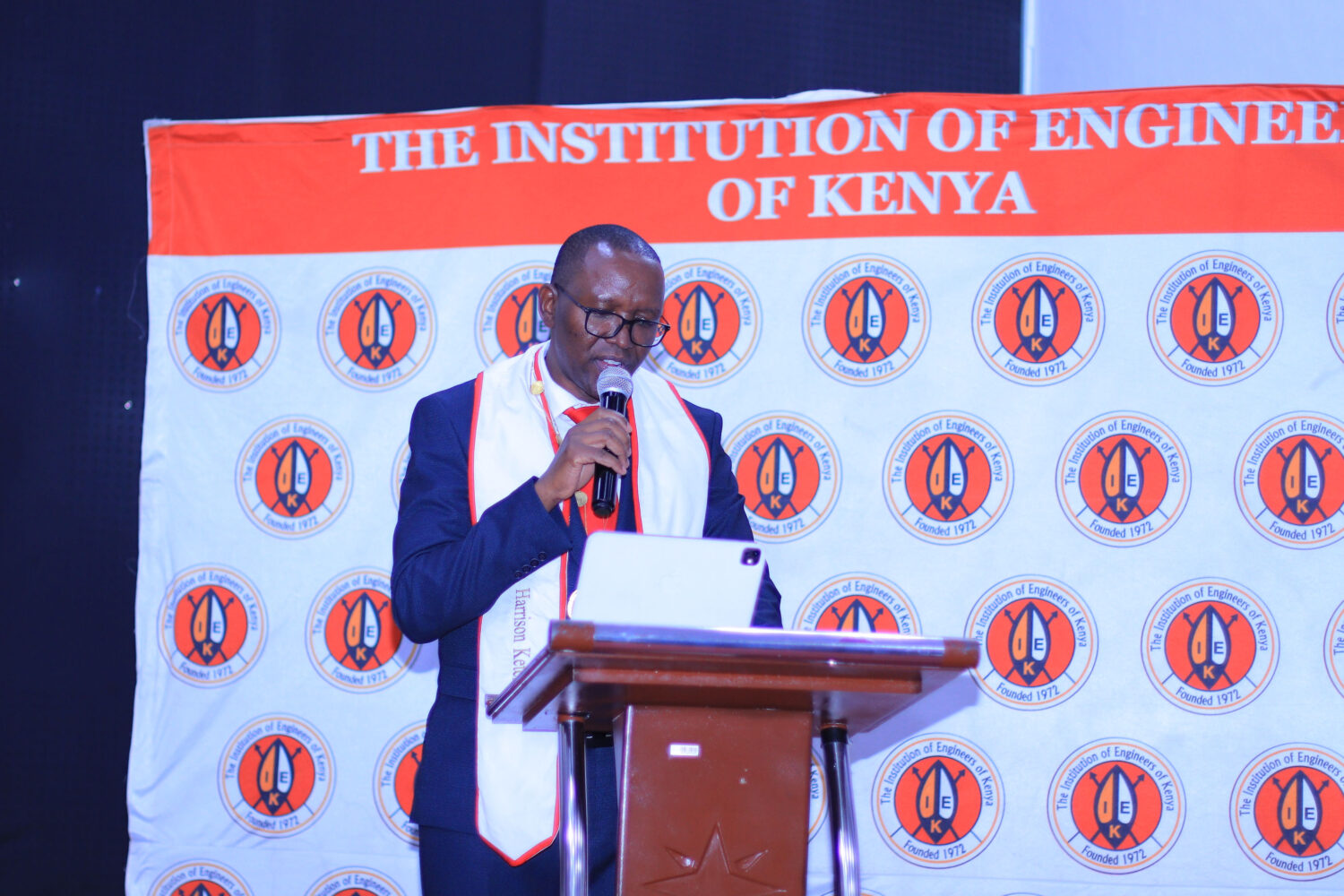
He also called for a dedicated financing mechanism for local engineering firms, saying Kenyan companies often struggle to compete with foreign firms that have access to cheaper and more favourable financing.
Keter proposed that the National Infrastructure Fund allocate resources specifically to support local engineering and consultancy firms.
“Within the National Infrastructure Fund, apart from the funding for the projects, I would want to request and plead that we have specific funds set aside to support local firms, consultants and engineering firms so that we can build local capacity,” he said.
The IEK president also questioned the implementation of Kenya’s local-content requirements, claiming that the benefits of infrastructure spending are not reaching local manufacturers and suppliers at the level intended by law.
“We just don’t talk about 40 percent local content. I know we have that in law, but how is it in practice? And I’ll tell you for free that that is not the case. Probably you’re talking about five percent out of the 40 percent,” he said.
He urged the government to make local-content provisions more specific and enforceable by identifying products and services that should be sourced locally where capacity exists.
“We need to embed in our contracts itemized products that will be bought from Kenya. If not manufactured, assembled in Kenya. That is how we are going to grow our manufacturing,” Keter said.
According to Keter, expanding local manufacturing would create a ripple effect across the economy by generating jobs and opportunities in engineering, transport, finance, hospitality and other sectors.
He further raised concern over unemployment among young engineers, noting that Kenya produces about 3,000 graduate engineers annually but many struggle to secure structured opportunities to gain practical experience.
Keter called for a government-supported internship programme lasting about three years to help graduates transition into professional practice.
“It’s our prayer and request that the government provides a structured platform where all engineers are absorbed in a structured internship program for about three years. The same way doctors are actually absorbed in an internship program and paid for by government,” he said.
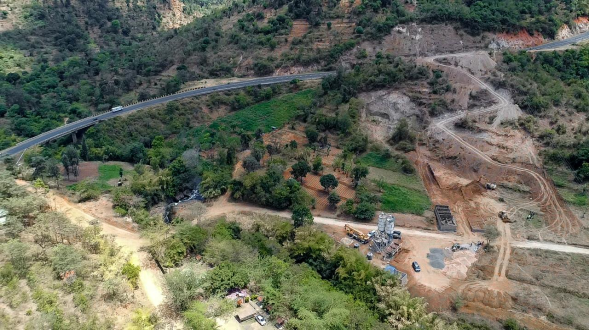
The IEK president also called for engineers to be involved throughout the infrastructure project cycle, from planning and design to implementation, commissioning, operations and maintenance.
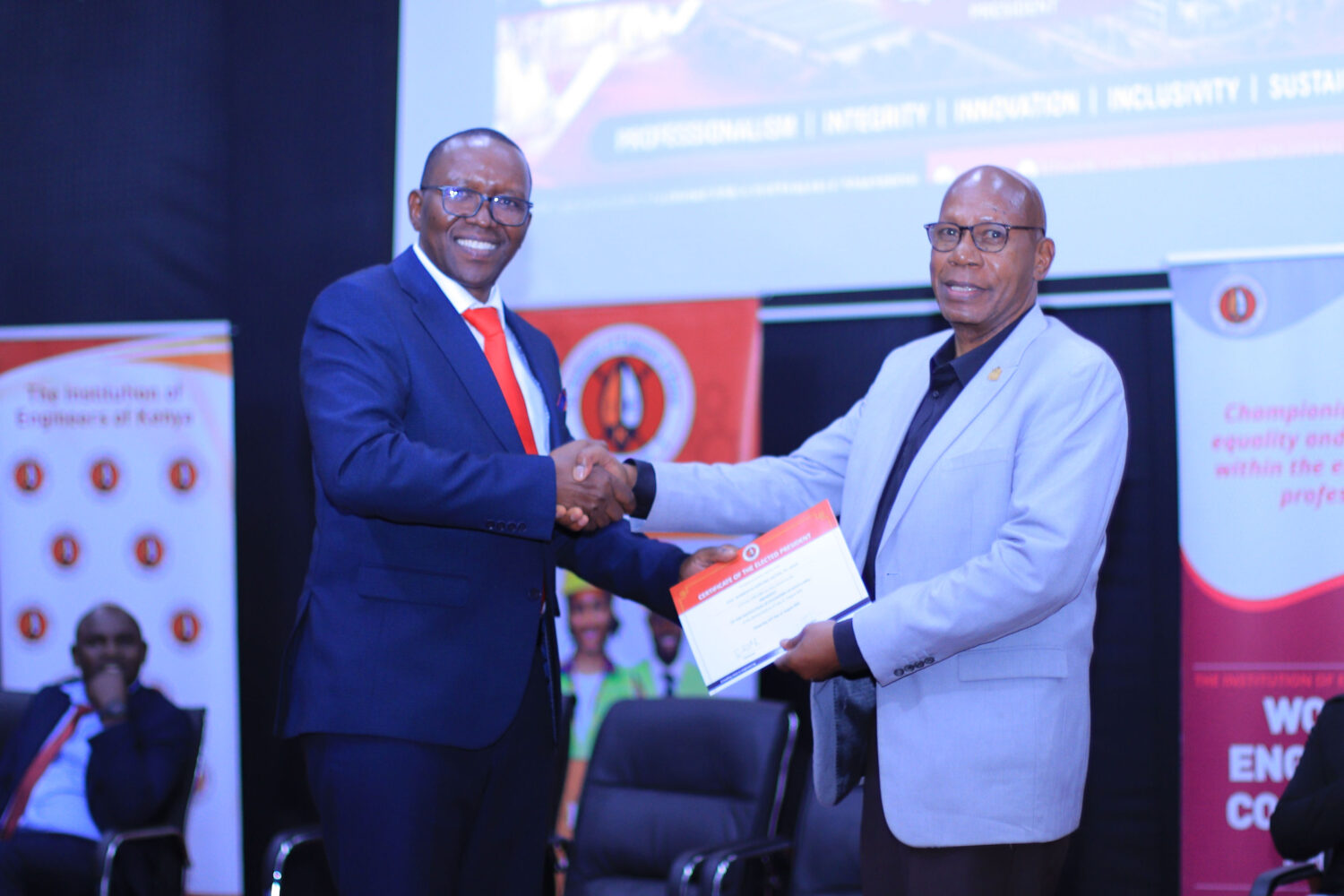
He warned that without proper maintenance, expensive infrastructure investments could quickly lose their value, stressing the need for continuous professional oversight of public assets such as roads.
Keter also raised concerns over professional accountability in the construction sector, alleging that some engineers’ credentials are used to secure projects while the professionals are later excluded from implementation.
He called for stronger enforcement of professional standards and proposed the use of technology to prevent the unauthorised use of engineers’ licences and credentials.
“We need stronger enforcement from planning, designing, implementation, up to commissioning and handling of projects, so that people doing the construction can actually take responsibility for their works,” he said.
The new IEK leadership will also focus on capacity building, professional integrity, emerging technologies and artificial intelligence as it seeks to modernise the profession.
Keter urged Kenyans undertaking construction projects to engage qualified professionals, saying stronger professional involvement would improve the quality and long-term value of infrastructure.
“We want to provide expertise. And we want to manage these infrastructure projects in a manner that value is going to be realised by Kenyans, value for the investments in the long term, and in terms of the quality of life for Kenyans,” he said.