- Investment at a record KSh99.5 billion (US$771 million) in social impact and sustainability initiatives in 2025.
- Over KSh26 billion was deployed in sustainable finance, recorded more than 47,000 climate-related transactions, distributed 75,855 clean-energy products, and planted 9.1 million trees.
- The Group disbursed US$3.11 billion to MSMEs, trained 962,924 entrepreneurs, supported 60,009 scholarships and facilitated 9,772 paid internships.
- Under the health pillar, Equity Afya operated 150 medical centers, recording over 4.6 million cumulative patient visits.
- Social protection programmes reached 5.94 million people, with KSh173.5 billion disbursed through cash transfers.
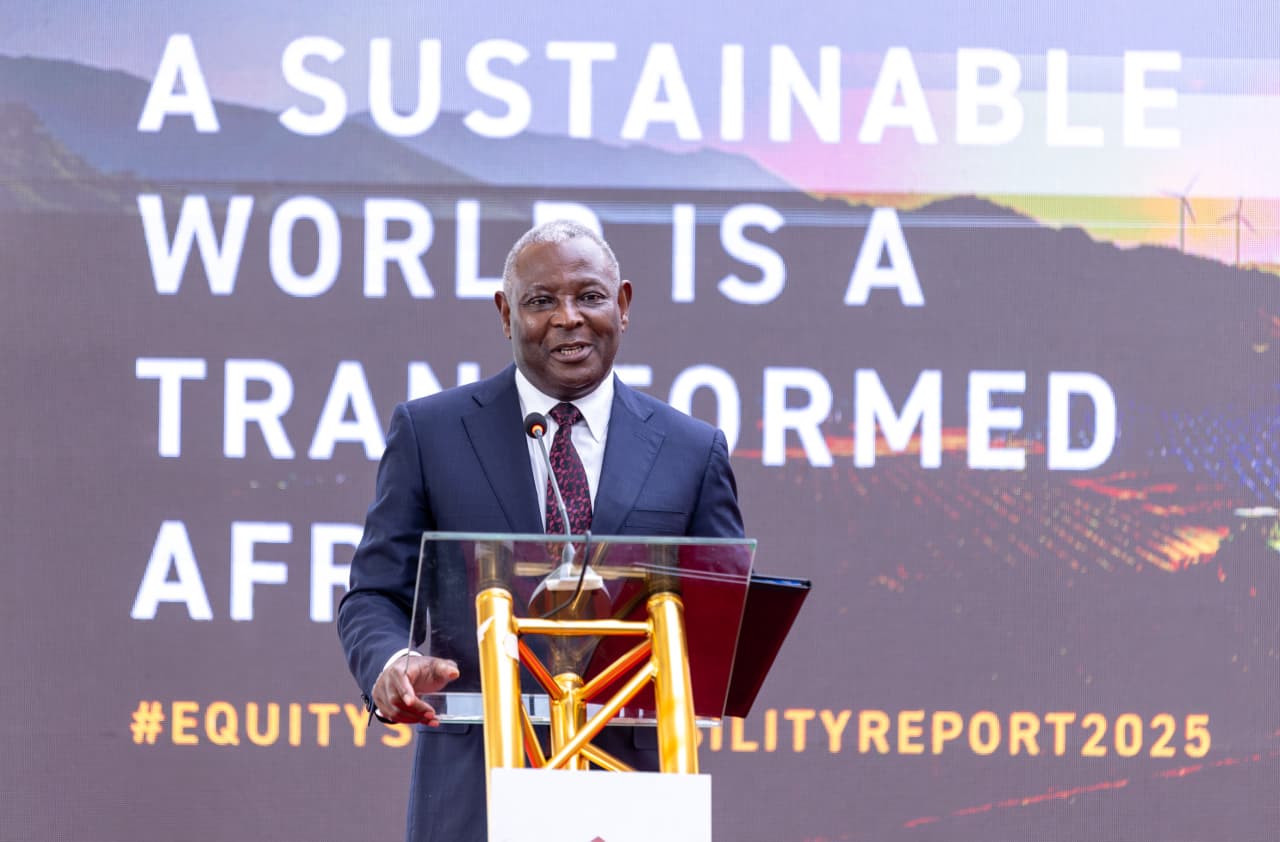
Nairobi, 5th November 2026 – Equity Group Holdings Plc has unveiled its 2025 Sustainability Report, detailing a record KSh99.5 billion (US$771 million) invested in social impact and sustainability initiatives across its regional footprint during the year.
The report, themed “A Sustainable World is a Transformed Africa,” outlines the Group’s progress in enterprise development, education, healthcare, financial inclusion, climate action and responsible business practices.
The report demonstrated how Equity continues to integrate sustainability into its business strategy, governance, risk management and operations through its Tri-Engine Model, bringing together economic performance, social impact and sustainability to support long-term value creation.
A key highlight of the Report is the Group’s deepened intervention under the Social Protection pillar, particularly in extending financial assistance and economic opportunities to vulnerable populations, including refugees.
Through access to finance, cash transfers, and capacity-building initiatives, the Group seeks to strengthen household resilience and support economic participation among underserved communities.
Dr. James Mwangi, Equity Group Managing Director and Chief Executive Officer, said the Group’s performance reflected the deliberate relationship between commercial success and sustainable development.
“Our 2025 performance demonstrates that commercial success and sustainable development are not competing priorities, but mutually reinforcing drivers of long-term prosperity. The stronger our business becomes, the greater our capacity to invest in people, enterprises and communities, while building resilience across the markets we serve. Through our investments, partnerships and innovation, we are translating our purpose of transforming lives, giving dignity and expanding opportunities for wealth creation across Africa into measurable, enduring impact,” said Dr Mwangi.
Dr Mwangi added: “Our responsibility is to continue to turn potential into productive opportunity while protecting the natural systems that make prosperity possible. That means directing finance towards resilience, creating value within our economies, and ensuring that people and nature are not treated as afterthoughts in development. That is the promise of the theme we share today.”
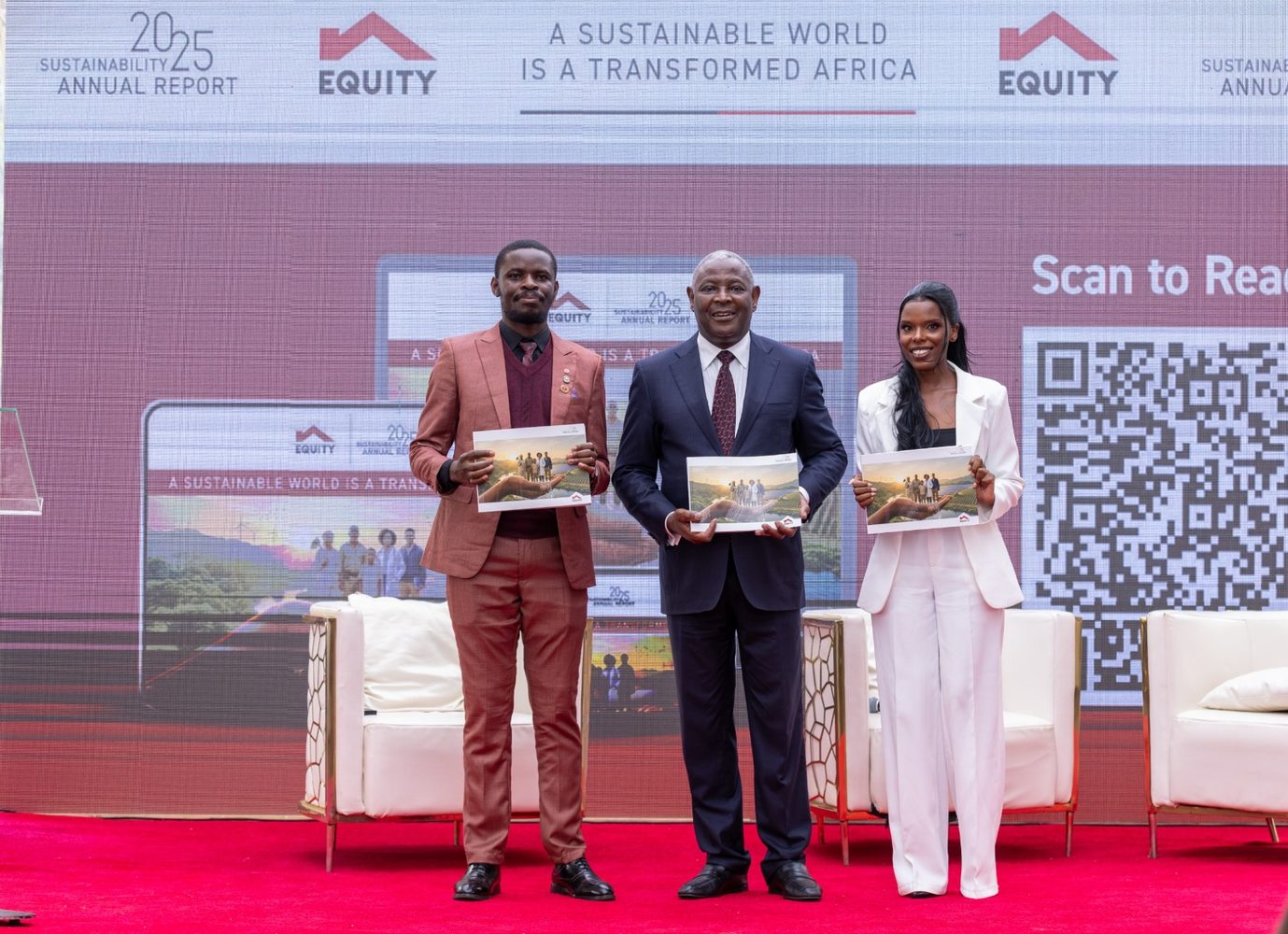
Sebastian Groth, the German Ambassador to Kenya, said that strong partnerships between governments, the private sector and development institutions are essential to achieving sustainable development at scale.
“Achieving sustainable development at scale requires strong partnerships between governments, the private sector and development institutions. The days of traditional aid are behind us, and we are moving from a relationship of giving to one of investing in a shared future on equal footing. By focusing on renewable energy, local value addition, and catalytic climate finance, Equity Group is demonstrating that sustainability is not a luxury for the few, but the very engine of transformation for the many. Our goal in development cooperation is to use public funds to mobilize private capital. In simpler terms, we provide the spark, but the private sector provides the scale and keeps the fire burning,” Groth said.
Nasra Nanda, Built Environment Lead at the Executive Office of the President, congratulated Equity Group on its sustainability journey, highlighting the financial sector’s role in advancing sustainable construction, supporting SMEs in the built environment and integrating nature-based resilience into investment decisions.
“Sustainability is not only necessary but deeply practical: a home is only truly affordable if a family can afford to live in it over time, and an investment is stronger when the asset can withstand the conditions it will face throughout its life. If nature is central to life, it must be central to how we plan, build, and invest, and financial institutions have a decisive role to play in making resilient, sustainable construction accessible and inclusive for ordinary borrowers. Financial institutions have a powerful role to play in making sustainable construction accessible. This can be done by financing the enterprises and skills that will drive the transition and integrating nature and resilience into investment decisions from the outset. We must measure success through safer, more resilient and healthier ecosystems, with the built environment at the forefront,” she said.
In 2025, the Group’s social protection programmes reached 5.94 million people, with KSh173.5 billion disbursed through cash transfers. The report also records 115 refugees financed through KSh57.9 million in loans, while 772 refugees received training.
These interventions demonstrate how social protection can extend beyond immediate assistance to include access to credit and skills that support livelihoods and economic resilience.
The Group continued to support enterprise growth and financial inclusion through access to finance, business training, and financial education. Under its Enterprise Development and Financial Inclusion programme, Kshs404bn (US$3.11) billion was disbursed to micro, small and medium-sized enterprises (MSMEs). Local suppliers accounted for 90% of the Group’s procurement spending in 2025, amounting to KSh47.59 billion.
Through the Equity Group Foundation (EGF), the Group has cumulatively trained 962,924 MSMEs in entrepreneurship and 2,490,471 women and young people in financial education.
These programmes support business development, financial resilience, and access to opportunities for individuals and enterprises across the Group’s markets.
Reinforcing agriculture as Africa’s primary engine for inclusive growth, the Group scaled its support for smallholder farmers and agri-enterprises through climate-smart agricultural financing, capacity building, and value chain integration, reaching 622,525 small and medium-sized farmers.
These interventions enhanced food security, increased on-farm productivity, and de-risked agricultural production across regional breadbaskets.Education and skills development remained key areas of the Group’s social investment.
The report records 60,009 scholarships, including 29,515 university scholars, 4,039 technical and vocational education and training (TVET) scholars and 1,115 global scholars. The Group has also facilitated 9,772 paid internships, supporting the transition from education to employment.
EGF continued to expand partnerships with IamtheCODE Foundation, Huawei ICT Academy, WorldQuant University, Amazon Web Services and Moringa School to advance technology and digital skills development.
Through the Equity Leaders Programme, 415 innovators secured employment following a 12-month Tech Apprenticeship Programme, providing a pathway into the digital workforce.
Equity Afya, the Group’s medical franchise network, expanded its footprint to 150 outpatient medical centres across Kenya and the DRC, recording over 4.62 million cumulative patient visits. The franchise model continues to decentralize healthcare, offering high-quality, standardized, and affordable primary health services to underserved and urban-fringe communities.
The Group deployed more than KSh26 billion in sustainable and climate-aligned finance during 2025, supporting climate-related solutions across its markets. More than 47,000 climate-related transactions were recorded under the IFC Climate Adaptation Finance Initiative.
Environmental initiatives included the distribution of 75,855 clean energy products and the planting of 9.1 million trees during the year. These activities brought the Group’s cumulative tree-planting total to 44.6 million, exceeding its target of 35 million.
The report also tracks the Group’s greenhouse gas emissions, energy and water consumption, and environmental impact. In addition, the Group published its inaugural Sustainable Development Impact Disclosure Report, described in the report as Africa’s second, as part of its work to strengthen sustainability measurement and reporting.
Governance and risk management
The Group continued to integrate environmental, social, governance, climate and nature-related considerations into credit decisions, operations and risk management. Its frameworks include environmental and social risk screening, enhanced due diligence for high-risk sectors, climate scenario analysis, and stress testing.
The Group is also strengthening disclosure controls and its readiness to implement IFRS S1 and IFRS S2 sustainability disclosure standards. These remain areas for continued development as it works to improve the quality and consistency of non-financial reporting.
People and Workplace InclusionThe Group’s workforce grew to 13,370 employees in 2025. Total employee training reached 989,152 hours, with average training hours per employee rising to 74 from 45 in 2024.
The number of employees with disabilities increased to 67 from 54 in 2024, while net employment turnover declined to 10.6% from 11.1% in the previous year.
The report identifies employee development, inclusion, wellbeing, ethics, information security and digital skills as areas of continued focus in building workforce capacity.
Sustainability across markets
Equity Group’s sustainability strategy is implemented across its banking, insurance, technology and foundation operations in Kenya, Uganda, Tanzania, Rwanda, South Sudan and the Democratic Republic of Congo, alongside its representative office in Ethiopia.
The 2025 Sustainability Report sets out the Group’s performance across these areas and the continued integration of economic, social and environmental considerations into its business and operations.
Sustainable Development Impact DisclosureAlongside the Sustainability Report, Equity Bank (Kenya) Limited, the Group’s Kenyan subsidiary and the source of the majority of Group revenue, has published its inaugural Sustainable Development Impact Disclosure (SDID), described in the Sustainability Report as Africa’s second.
Prepared in line with the Impact Disclosure Guidance published by the Impact Disclosure Taskforce in October 2024, the SDID sets out seven impact intentions aligned to the UN Sustainable Development Goals, benchmarks each against Kenya’s development gaps relative to peer countries and commits the Bank to annual monitoring and reporting on its progress, including disclosure of both positive and negative impacts.
Its 2030 targets include raising the share of the loan book allocated to food and agriculture to 30%, to MSMEs to 65% and to manufacturing to 15%, and doubling the Equity Afya clinic network to 300 clinics.
In 2025, MSMEs accounted for 56.6% of the Bank’s loan book, up from 50.1% in 2023, while the share of lending to women rose to 23.9% from 18.0% over the same period.