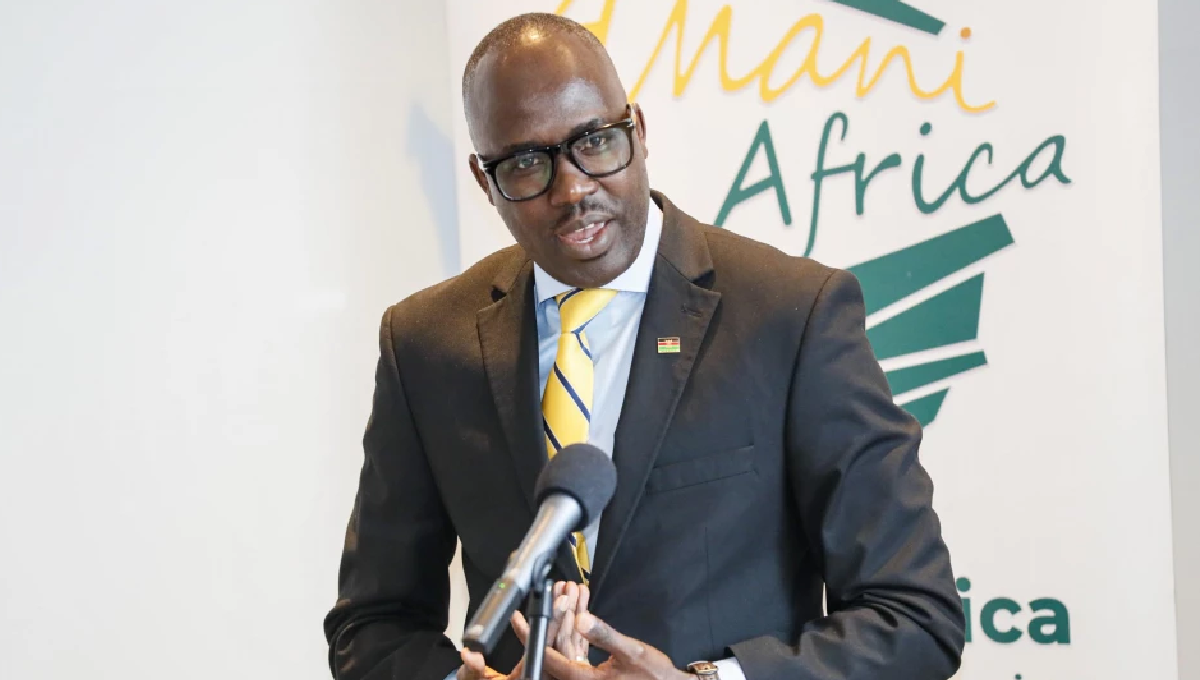
Engineer Harrison Keter has been elected President-elect of the Institution of Engineers of Kenya (IEK), promising to unite the profession and give young engineers a stronger voice in Kenya’s development agenda.
Keter emerged victorious after a historic electronic election that recorded the highest voter turnout in IEK’s history, bringing to an end more than six months of delays linked to court cases.
Speaking after provisional results were released on Monday evening, Keter described the election as a turning point for the engineering profession, saying the outcome reflected the collective voice of members.
“Today is a historic day. The engineers of Kenya have spoken, and they have spoken with one very loud voice,” Keter said.
The election closed at 6pm, with provisional results generated just 20 seconds later through IEK’s electronic voting platform.
According to Chairperson of the Scrutineers Committee, Engineer Stephen Auma, 2,181 of IEK’s 2,883 registered voters participated in the election, translating to a turnout of more than 75 per cent—the highest ever recorded by the institution.
Auma said the electronic system enabled members, including those outside the country, to vote and access the provisional results almost immediately.

“We are happy to report that all members of IEK who were in the register of voters and turned up to vote were able to vote. That is unprecedented in the management of elections in our institution,” he said.
The successful election comes after a prolonged electoral process that had been repeatedly interrupted by court proceedings, raising concerns over divisions within the professional body.
Keter said his immediate task would be to rebuild trust and unity among members while strengthening the institution’s focus on engineering education, mentorship and workforce development.
“Our immediate priorities are to restore unity and strengthen engagement across our membership while strengthening engineering education, mentorship and workforce development, especially for our young engineers,” he said.

He also called for engineers to play a greater role in shaping Kenya’s national development policies, arguing that professionals should not only be involved in implementing projects but also in determining the country’s long-term development priorities.
“The time has come for us to occupy our rightful space as engineers—not through entitlement, but through excellence, innovation, professionalism and integrity,” Keter said.
Keter further pledged to push for greater opportunities for Kenyan engineers as the country invests in infrastructure, energy, manufacturing and technology.
He said major public and private projects should deliberately create opportunities for local professionals while strengthening Kenya’s capacity to design, manage and deliver its own development projects.
The President-elect also promised to promote collaboration across the engineering sector by bringing together consulting and professional engineers, technicians, artisans and students.
The move, he said, would help create a more connected profession while giving young engineers better opportunities for mentorship, skills development and career growth.
The electronic election has also been hailed as a major step in modernising IEK’s governance. Auma said members largely praised the system for its transparency, efficiency and accessibility.
The Scrutineers Committee will prepare its final report before the official declaration of the results at the IEK Annual General Meeting scheduled for August 19 at the Daystar Auditorium.
Keter and the newly elected IEK Council will serve for the 2026–2028 term, with the next elections expected in 2028.