
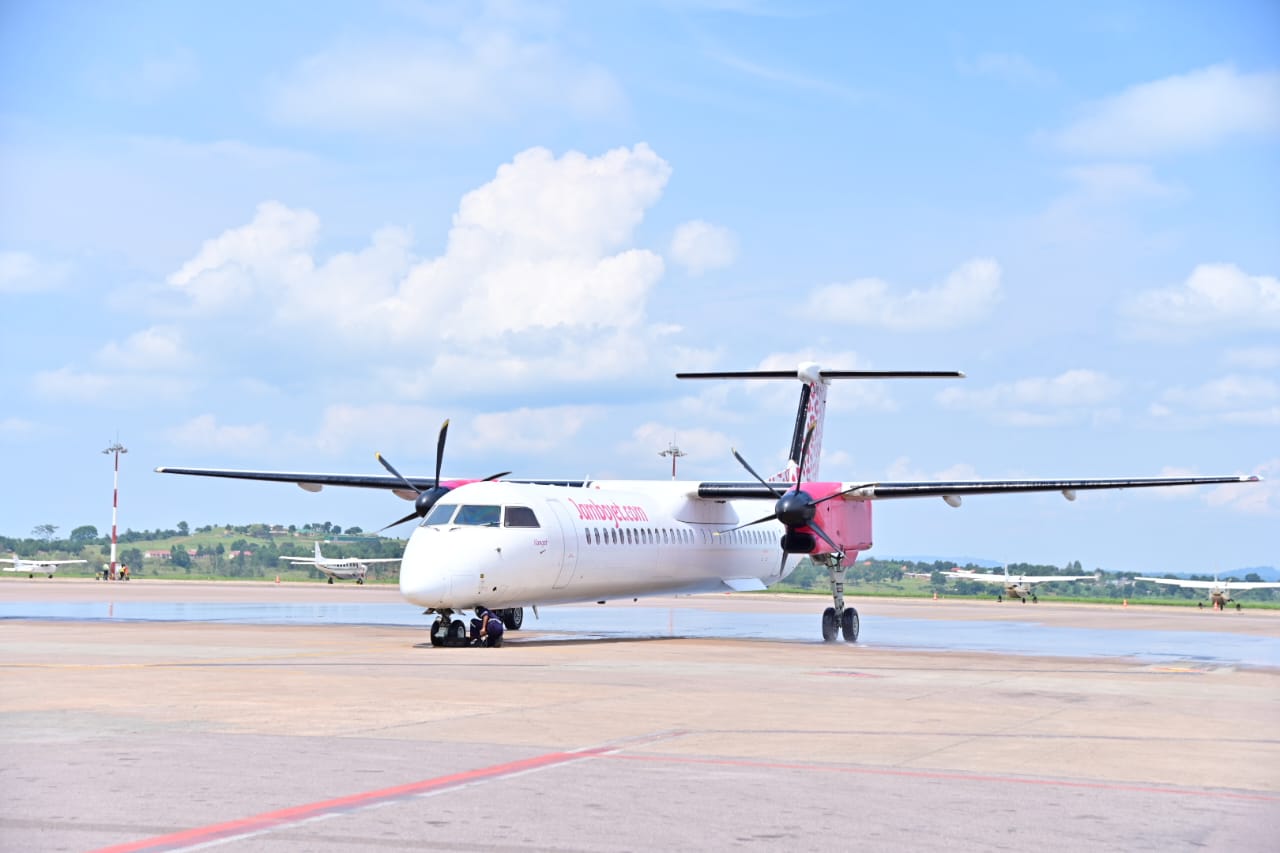
Flights, and the tourism they bring, are worth about USD 3.3 billion (KSh425 Billion) to Kenya’s economy. That’s 3.1 percent of GDP and around 460,000 jobs, according to International Air Transport Association (IATA) 2023 estimates. It’s one reason the government keeps backing new routes, like Jambojet’s return to Nairobi-Entebbe this week. But more flights also mean more pollution, and nobody has fully solved that yet.
Not mainly from airlines. About 21,100 people work directly in aviation, adding USD 1.2 billion, or 1.1 percent of GDP. Most of the rest comes from what planes carry: tourists, traders and cargo. Think hotel staff, tour guides, drivers and small business owners.
International arrivals rose 9 percent to 2.7 million in 2025, up from 2.47 million the year before, and tourism earned about KSh 500 billion, up from KSh 452.2 billion in 2024. The newest numbers are bigger still. The 2025/26 financial year brought 2.76 million arrivals and record earnings of KSh 564 billion, up 18.7 percent. A lot of those visitors come from nearby. Africa supplies 47 percent of Kenya’s international arrivals, which makes a direct Nairobi-Entebbe link worth having.
Uganda is Kenya’s biggest regional customer
Kenya’s exports to Uganda reached $896 million by 2023, making Uganda its largest regional trading partner. Some airlines like Jambojet expect more than 300,000 people to travel between the two countries in 2026. It’s pitching its cargo and parcel service at small traders, who can check stock, close a deal and fly home the same day. It’s also aiming at new flyers. About 44 percent of its customers are first-timers, and by July it held an estimated 57 percent of Kenya’s domestic market.

More flights mean more fuel burned. Aviation produces roughly 2.5 percent of global CO₂ emissions. In 2024 alone, Kenya Airways produced 1.42 million tonnes of carbon emissions, with jet fuel making up over 99 percent of its energy use.
The industry’s big hope is sustainable aviation fuel (SAF), made from waste like used cooking oil. It can cut greenhouse gas emissions by up to 85 percent, but it’s currently less than one percent of jet fuel worldwide. For now, Kenya has a lot of plans and not much supply. It makes no SAF at commercial scale, and SAF still costs more than regular jet fuel.
Kenya Airways and Rubis Energy Kenya have signed a deal to develop a SAF refinery near JKIA, but that’s still only a plan. Critics also say some early SAF claims are a paper reduction. Under mass-balance accounting, the plane may still burn regular kerosene while the carbon credit is applied to its flight.
What does the government say?
Aviation PS Teresia Mbaika sees this as a gateway for business, investment and tourism, part of Kenya’s goal of becoming a regional aviation hub.
In June 2026, aviation bodies warned that the proposed Finance Bill 2026, including 16 percent VAT on aircraft leasing and maintenance, could raise operating costs and weaken the sector.
Kenya gets jobs, tourism money and trade from flying, and the planet pays for the emissions. The real test is whether airlines can grow while cutting their carbon footprint.