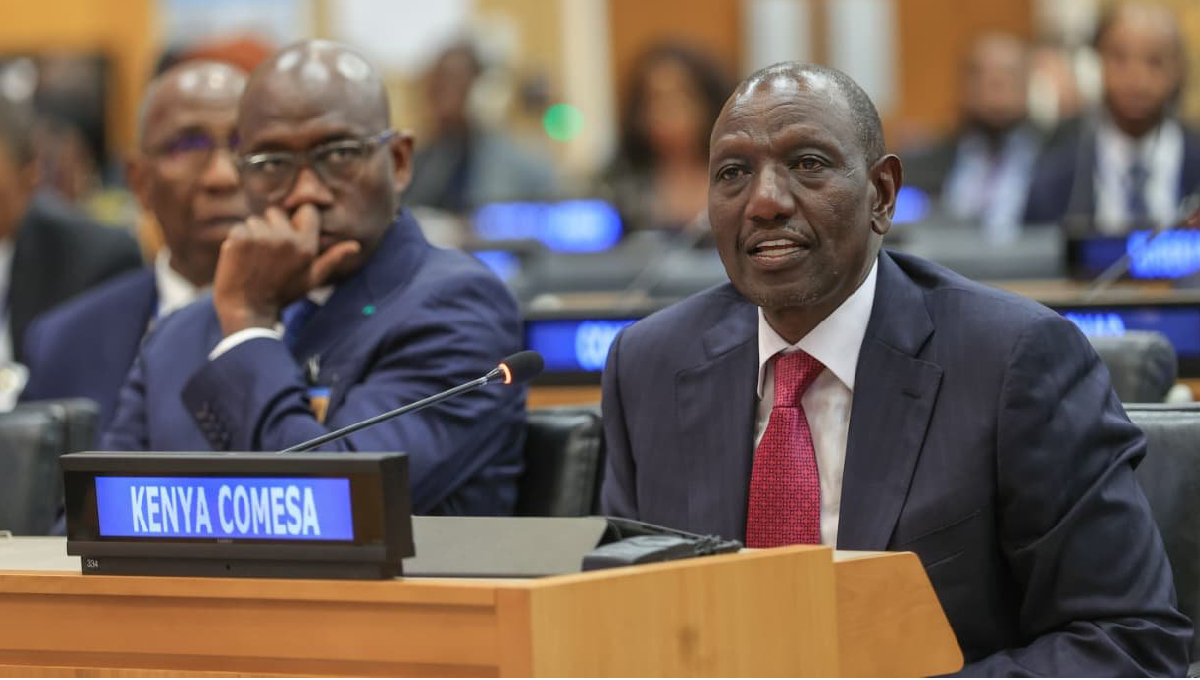

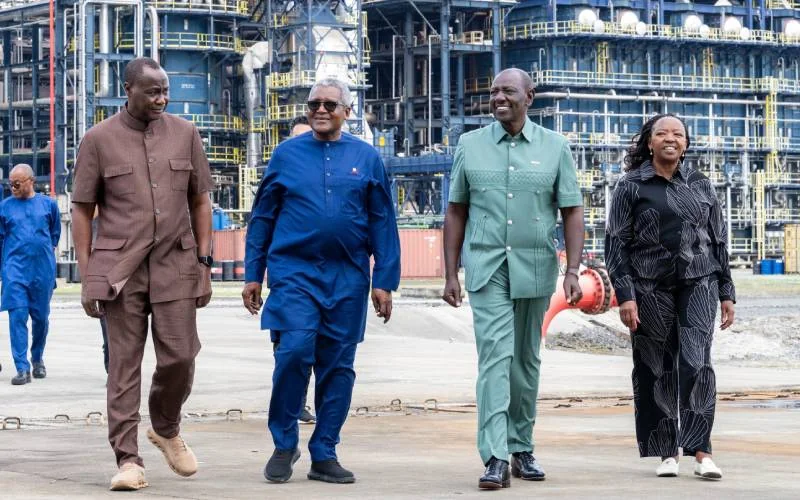
Wednesday’s groundbreaking is the day Lamu moves from a promise on paper to machinery on the ground. Nigerian industrialist Aliko Dangote, President William Ruto and, according to reports, a line-up of visiting heads of state are due at the ceremony for the East African Oil Refinery, a plant designed to process 700,000 barrels of crude a day.
That is a big sentence. Here is why it matters, in the order the numbers arrive.
Sh2.2 trillion lands on the coast
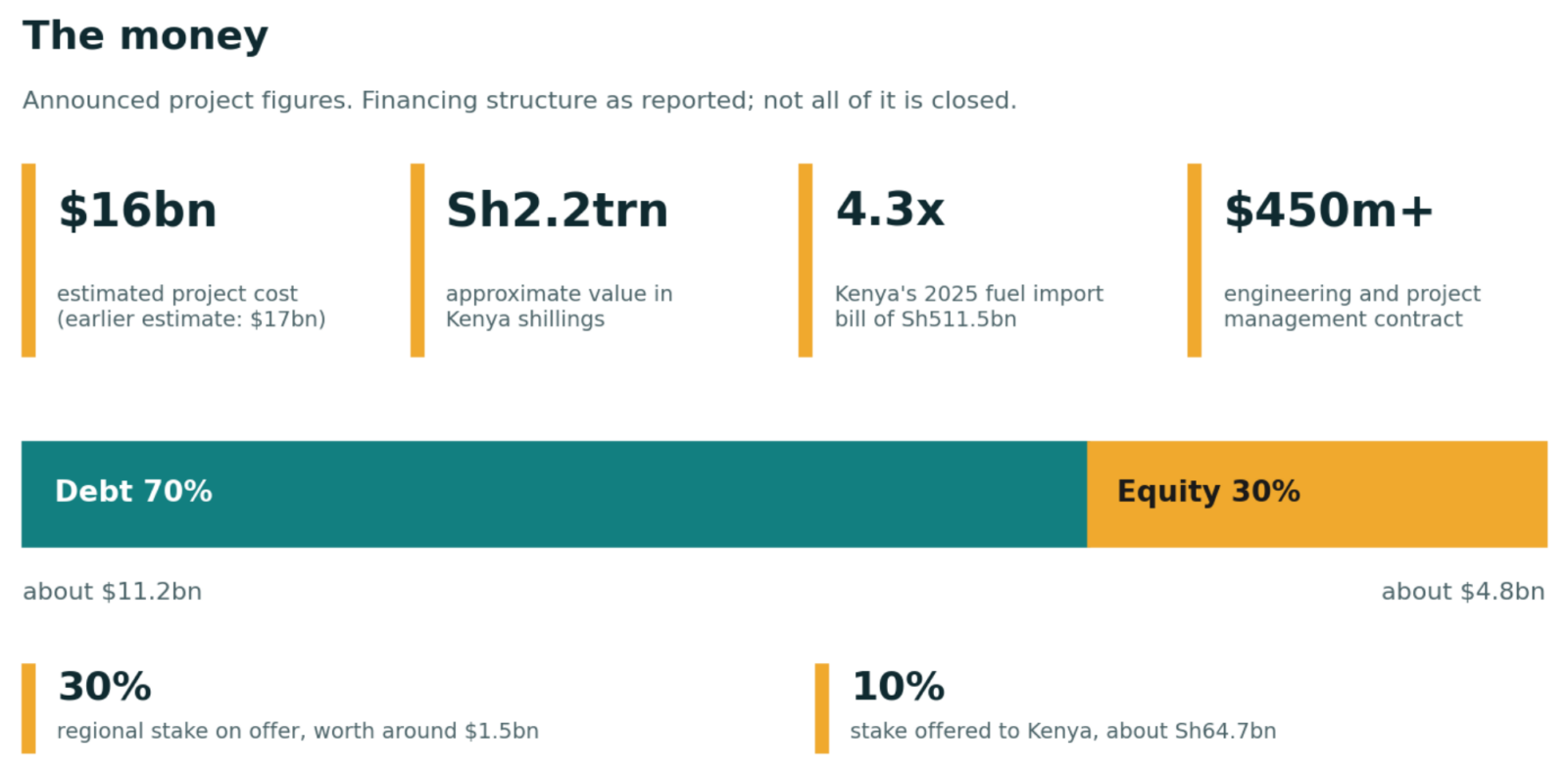
The project is priced at about $16 billion, roughly Sh2.1 to 2.2 trillion, after Dangote trimmed the estimate down from $17 billion. That makes it one of the biggest private investments ever proposed in Kenya. The plan is a 70/30 split between debt and equity, with development finance institutions and the Africa Finance Corporation in the picture, and East African governments invited to take up to 30% of the equity.
Set it beside a number Kenyans know well. Kenya spent about Sh511.5 billion on imported petroleum products in 2025. This one project is more than four times that bill.
A scale Kenya has never had
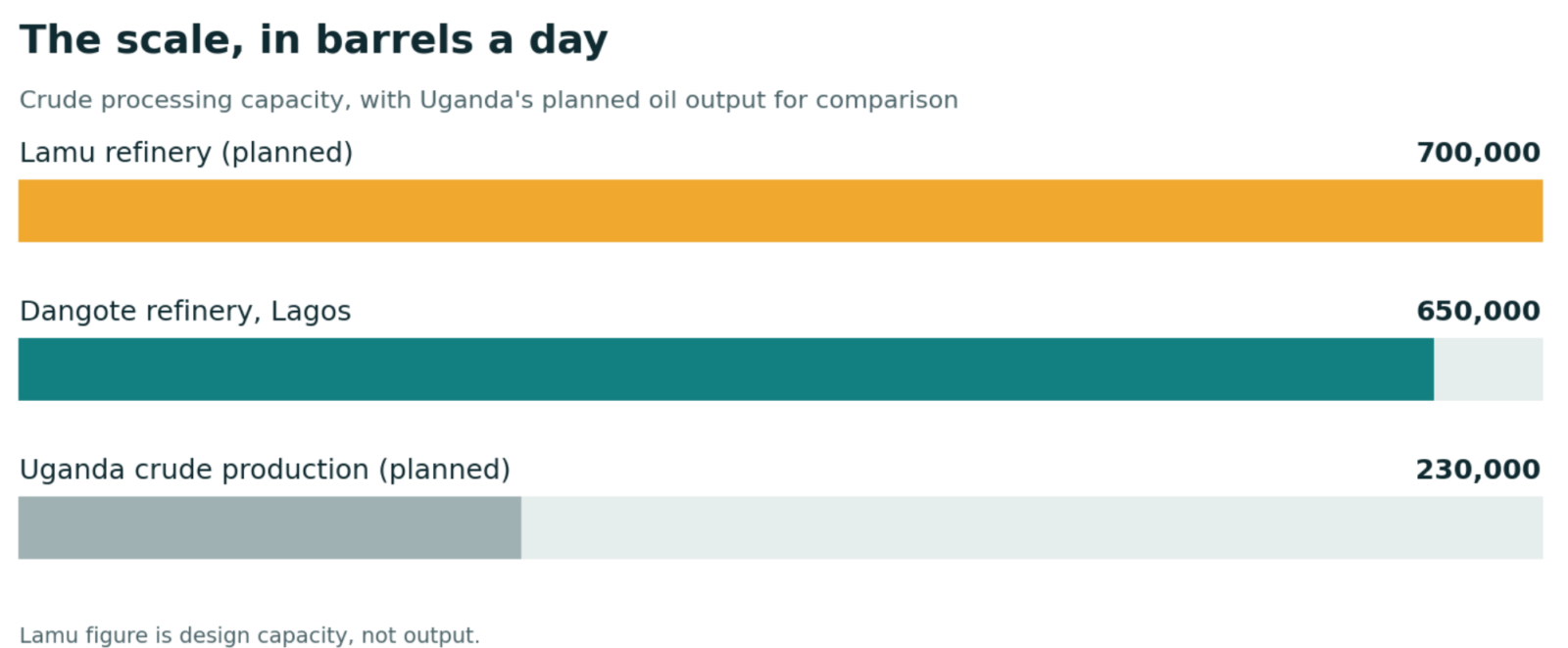
At 700,000 barrels a day, Lamu would be the largest refinery in East Africa and the second largest on the continent, matching the size of the Lagos plant that Dangote built. Run at full tilt, that is 255.5 million barrels of crude a year.
It is designed as more than a fuel plant. The plan is an integrated refinery and petrochemical complex, with a power plant of around 1,000 megawatts, of which Dangote has said 500 megawatts could be offered to Kenya. Storage, logistics and manufacturing are meant to grow up around it inside the LAPSSET special economic zone.
Kenya has been here before, at a much smaller scale. The old Changamwe refinery in Mombasa shut in 2013. Lamu is the comeback, many times over.
50,000 to 60,000 job opportunities
Deputy President Kithure Kindiki puts the expected job creation at 50,000. President Ruto has cited 60,000. These are projected direct and indirect jobs across construction and operations, which is how a project this size normally counts. Construction alone means welders, riggers, drivers, surveyors, safety officers, caterers and site clerks in numbers the coast has rarely seen at one time.
The prize for Lamu residents will be how many of those roles go to people who live there. That is where training programmes, and the terms local leaders negotiate, will count.
The Port of Lamu: the front door is already open
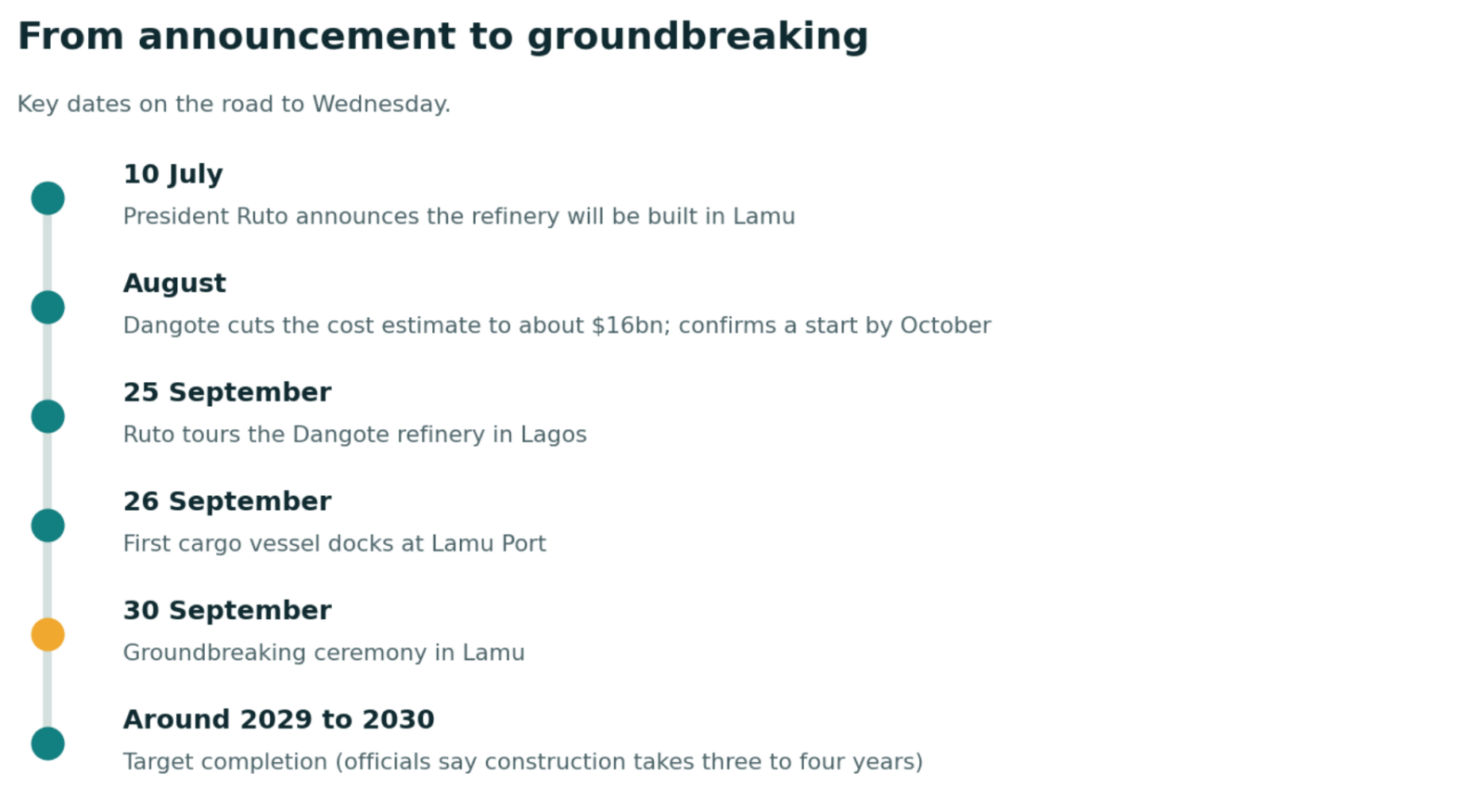
A refinery is only as good as its port. Lamu Port at Kililana is the anchor of the LAPSSET corridor, and it now has its first refinery cargo. On 26 September, the vessel MV Da Yang Bai He docked with almost 2,930 tonnes of project equipment.
The corridor is planned to grow into a highway, a railway, a pipeline, fibre optics and logistics hubs linking the coast to South Sudan and Ethiopia. Ships in the deep-water port, a refinery on the shore and a corridor pointing inland is the picture that lets Lamu pitch itself as the gateway for East Africa.
How the world descended on Lamu
Look at who is in the story. A Nigerian conglomerate. The Africa Finance Corporation. An Indian state-owned engineering firm. Cargo from China at Kenya’s own port. Rwanda’s president confirming early talks on taking a stake, and Ethiopia reportedly interested. President Ruto flew to Lagos on 25 September to walk through the plant this one is modelled on.
For a sleepy stretch of coast better known for dhows and a UNESCO World Heritage old town, that is a lot of attention arriving at once.
Cottage industry: the second economy
The refinery gets the headlines. The cottage industry is where the ordinary money moves. Dangote’s own argument is that a refinery anchors a wider cluster of businesses that do better when essential infrastructure is close by.
Picture what a site with thousands of workers needs every day: meals, transport, laundry, lodging, fabrication and repair shops, uniforms, hardware, security, printing, mobile money agents. Picture the suppliers of cement, steel, pipe fittings and packaging that follow a petrochemical complex. None of it has been contracted, and much of it will depend on how local firms are included, but this is the layer of the economy where a coastal town feels a project like this first.
“A refinery is one building. The economy around it is a whole town’s worth of livelihoods.“
Transformation
Put it together. Kenya spends heavily on imported fuel, and East Africa refines only a small fraction of what it burns. A refinery at Lamu is aimed at that gap, with the government also naming Uganda, South Sudan, Tanzania, Rwanda, Burundi, Ethiopia and the Democratic Republic of Congo as customers the plant could serve.
If it delivers, Lamu will no longer be a stop on a corridor. It will be a destination, where the fuel for a region is made, the ships call, and the young people of the coast find work close to home.
Wednesday is the start of that story.