

The orange suit arrived without ceremony.
No runway, no campaign, no established fashion house behind it. Just a young designer, a client willing to take a chance, and an order that would quietly change everything.
When Jojo finished the suit, she did not know it would mark a turning point. But more women soon began approaching her for well-fitting, made-to-measure pieces. What seemed like individual requests revealed a much bigger opportunity.
Today, at 25, Jojo is the founder of Jojo Fashion House, a growing Kenyan custom tailoring brand serving women locally and internationally.
At its heart is a principle born from Jojo’s own experience: clothes should fit the woman, not the other way around.
A Problem She Understood Personally
Jojo’s relationship with fashion began in Home Science class at Ngara Girls High School, where she first learned to sew. She later studied Fashion and Design at the Buruburu Institute of Fine Arts and began earning from her craft through crochet.
But one of the strongest influences on the business she would eventually build came from a personal frustration: finding clothes that actually fit.
“If something fit my waist, it was too short. If the length was right, then something else didn’t fit.”
She knew she was not alone. For many women, shopping meant compromising between size, length, comfort and shape.
That experience eventually became a business philosophy. Rather than expecting women to conform to standardized sizing, Jojo wanted to create clothing around the individual.
That principle still guides the brand. Each client brings different measurements, preferences and expectations, and the goal is to create an outfit that feels as though it was always meant for her.
Creating Her Own Opportunity
After completing her training, Jojo discovered how difficult it could be for a young designer to establish herself in the industry.
Many of the available opportunities were internships, often followed by uncertainty about what would come next.
By then, she was already selling crochet pieces and using Instagram to showcase her work. Instead of waiting for an established fashion house to determine her future, she decided to invest more seriously in what she was building herself.
“I didn’t start Jojo Fashion House because I had everything figured out,” she says. “I started because I believed I could build a future that didn’t depend on waiting for the next internship or the next chance.”
The orange suit confirmed that instinct.
After completing it for one of her early clients, more women began approaching her for suits and professional wear. There was clearly demand for clothing that combined a polished appearance with a genuinely good fit.
Jojo Fashion House began to take shape.
Turning Craft Into a Professional Operation
As demand grew, Jojo realized that creativity alone could not build the kind of fashion house she envisioned.
Consistency mattered just as much.
The company began investing in modern computerized production equipment to improve precision and has developed multiple quality-control checks before garments reach clients. Technology also supports its website, order management and customer communication.
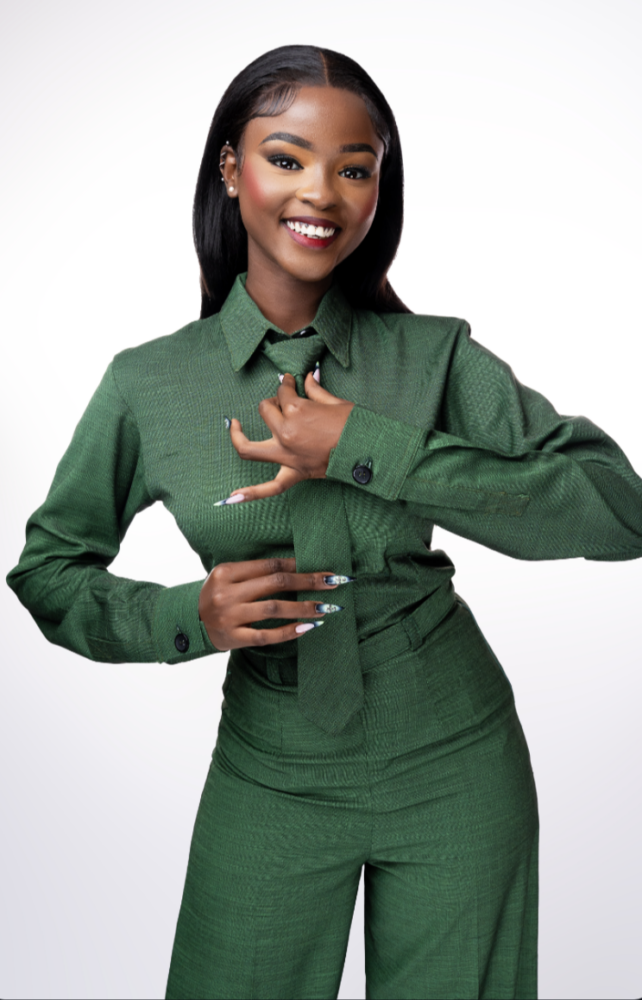
But Jojo considers the team even more important than the machinery.
“One of the biggest challenges was building a team that shared the same vision for quality and genuinely cared about our clients,” she says.
Technical skill can be taught and improved. Genuine responsibility for a client’s order is harder to find.
For Jojo, every garment represents someone’s money, expectations and trust. Building a team that understands that responsibility has been central to the company’s growth.
The business has consequently evolved from a young designer producing clothes into an increasingly structured operation built around shared standards.
What “Premium” Means at Jojo Fashion House
For Jojo, premium fashion is not defined by price, expensive fabric or presentation alone.
It is defined by the experience surrounding the product.
Measurements must be accurate. Finishing must be consistent. Deadlines should be respected. Communication should be clear. And when something goes wrong, the business must take responsibility.
That philosophy is perhaps best demonstrated by the company’s approach to dissatisfied clients.
If a customer genuinely does not like an outfit, Jojo Fashion House is prepared to remake it or provide a refund.
For a made-to-measure business, where labour and materials have already been committed to an individual garment, that can be costly.
Jojo considers the alternative more expensive.
“We’d rather lose money on one outfit than lose someone’s confidence in our brand.”
The relationship also continues after delivery through follow-ups and customer feedback.
That approach has helped turn first-time buyers into returning clients and referrals something Jojo considers one of the clearest measures of whether the business is doing its job well.
Clothing Is the Product. Confidence Is the Outcome.
Ask Jojo which moments make the journey worthwhile and her answer is rarely about the size of an order.
It is the client who puts on an outfit and feels confident in it.
The customer who returns years later.
The woman who recommends Jojo Fashion House to a friend.
Or the international client willing to discover a Kenyan company online, place an order from another country and trust that what arrives will match what was promised.
Those moments have reinforced one of Jojo’s most important lessons:
“Trust is something you earn one order at a time.”
For a business operating increasingly through digital channels, that trust has become one of its most valuable assets.
Protecting the Name Behind the Clothes
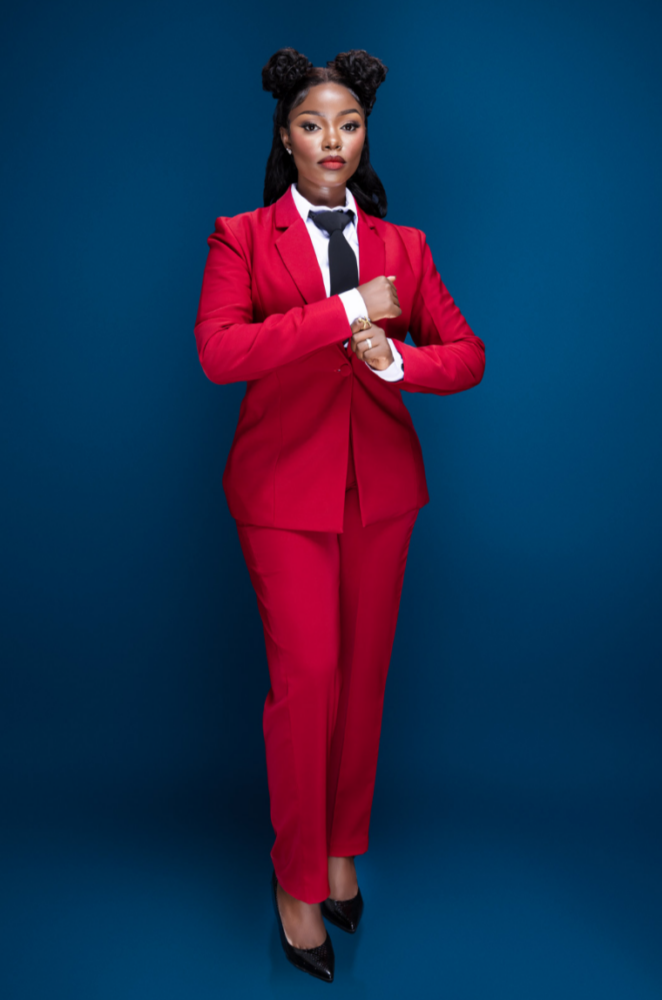
Growing visibility has also brought an unexpected challenge: scammers impersonating Jojo Fashion House online.
Jojo recalls how painful it was to receive calls from customers who believed they had paid the company, only to discover they had sent money to fraudsters operating fake pages.
The customer suffers the financial loss, while the legitimate business faces damage to a reputation it spent years building.
The company has responded by making verification and customer education a priority.
Its official website serves as a central source of verified information and contact details. Its Instagram and Facebook pages are verified, while TikTok verification is being pursued. Customers are also regularly reminded to confirm that they are dealing with official Jojo Fashion House channels before sending money.
As the company grows digitally, protecting its identity has become part of protecting the customer.
What Sets Jojo Fashion House Apart
Jojo avoids making sweeping comparisons with other fashion businesses.
“I haven’t worked with or interacted with most fashion houses, so I can’t really compare us to them,” she says.
Instead, her focus is on the standard Jojo Fashion House sets for itself.
Its proposition combines the personal nature of traditional made-to-measure tailoring with the structure expected of a modern premium business: individualized fit, modern production equipment, quality control, digital ordering systems, after-sales follow-up and accountability when expectations are not met.
It is a model designed not simply to produce beautiful garments, but to make the entire customer experience dependable.
And underneath it is the same problem that inspired Jojo in the first place: women should not have to settle for clothes that almost fit.
From Her Parents’ Home to an African Ambition
Before 2023, Jojo was working from her parents’ home, crocheting and trying to find her place in fashion.
There was no established company and no certainty that the business would become what it is today.
She started with the skills she had, Instagram and a willingness to keep going.
That experience now shapes her advice to other young entrepreneurs.
“Don’t wait until everything is perfect. Start with what you have. Stay committed to your vision, keep improving your craft and be consistent even when no one is watching.”
For Jojo, consistency is more than persistence. It means maintaining quality as demand increases, building the right team, learning from mistakes and investing in systems that allow the company to grow without compromising its standards.
She is also quick to acknowledge that the journey is no longer hers alone.
While the vision began with her, Jojo Fashion House has grown through a team of people who believed in it and continue to bring it to life.
The Next Chapter
Jojo wants Jojo Fashion House to become one of Africa’s most respected fashion houses, known for exceptional tailoring, uncompromising quality, innovation and integrity.
But the ambition extends beyond fashion.
She wants the company to demonstrate that a world-class brand can be built from Kenya through discipline, professionalism and consistency.
For the young designer learning to sew in a classroom, working from a bedroom or posting her first creation online, Jojo’s journey offers a simple lesson: the beginning does not have to look impressive to become significant.
The crochet work gave her a start.
The orange suit revealed the opportunity.
Everything since has depended on something harder to photograph: the discipline to improve, the professionalism to stand behind the product, and the patience to earn trust one client at a time.