
President William Ruto has announced a raft of measures, he says, will ensure Kenyans enjoy the benefits of the progress and transformations the country has made with regards to economy.
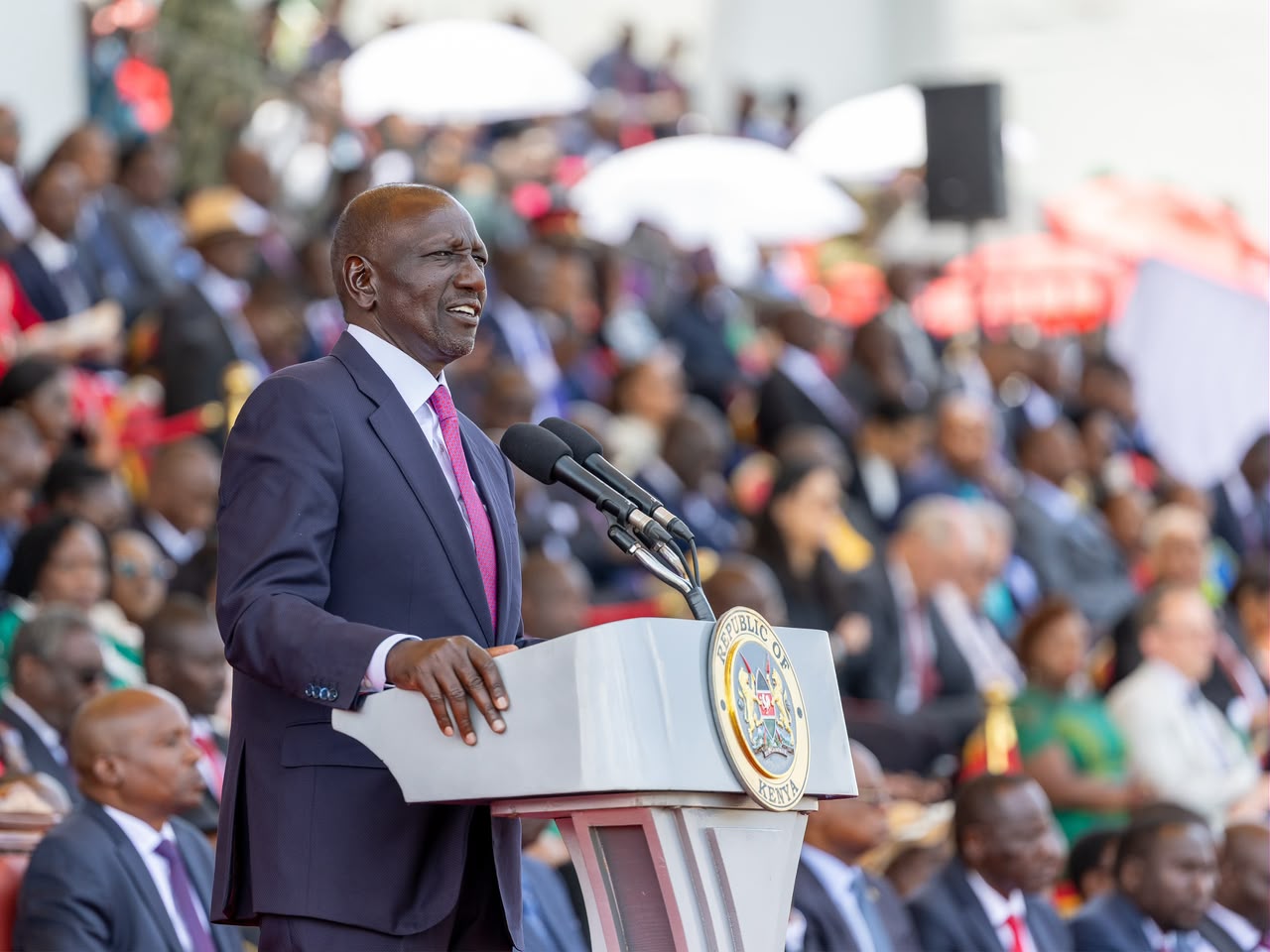
Unveiling the measures during Mashujaa Day celebrations at Kipchoge Keino Stadium in Eldoret City, President Ruto emphasised that the nation’s progress must be balanced and its benefits felt across all sectors of the society.
“The stability we have achieved in our economy now affords us an opportunity to ease the burden on sections of our population and ensure that more Kenyans share in the benefits of our progress,” he said. “That is why, on this Mashujaa Day, I wish to announce four further measures to put more money into the pockets of hardworking Kenyans, make property ownership more affordable, expand access to the digital economy and open new pathways to employment for our young people.”
According to the Head of State, his administration has prepared proposals to exempt Kenyans earning KSh32,333 per month or less from Pay As You Earn (PAYE) income tax.
This proposal, the President said, will enable workers on modest incomes to earn more money to meet their families’ needs, including food, transport, and other essentials. These proposals will be presented to Parliament beginning next week.
Likewise, President Ruto also revealed that the National Treasury had developed proposals to exempt land transactions valued at KSh1 million or less from stamp duty and to introduce progressive rates for higher-value transactions.
“These measures will help reduce the cost of acquiring and transferring land, strengthen security of land ownership and make property ownership more accessible to ordinary Kenyans,” President Ruto noted.
Ultimately, President Ruto said that his administration will propose to remove the 25 per cent import duty on mobile phones. He argued that a mobile phone is no longer a luxury, as it is a classroom, a marketplace, a bank, an office and, for many young Kenyans, a gateway to employment. “Making phones more affordable will bring the opportunities of the digital economy within reach of more citizens.”
Lastly, the head of state said that his government will propose from 1 January 2027 to expand the national internship programme to accommodate 50,000 young Kenyans, each receiving a monthly stipend.
Placements, President Ruto said, will be made through a transparent, digital and merit-based system, alongside incentives to encourage private employers to provide meaningful work experience.
“Too many young people cannot secure employment without experience, yet cannot gain experience without employment. This programme is intended to break that cycle by providing a pathway from education to practical and productive workplace experience and, ultimately, meaningful employment,” he highlighted.
President Ruto hopes that the aforementioned measures will address four barriers that Kenyans confront every day: the burden of taxation on modest incomes, the cost of acquiring property, the expense of accessing digital opportunities and the difficulty of entering the labour market.
The necessary legislative, fiscal and administrative processes will follow, with attention to sustainable financing, transparency, and effective implementation.