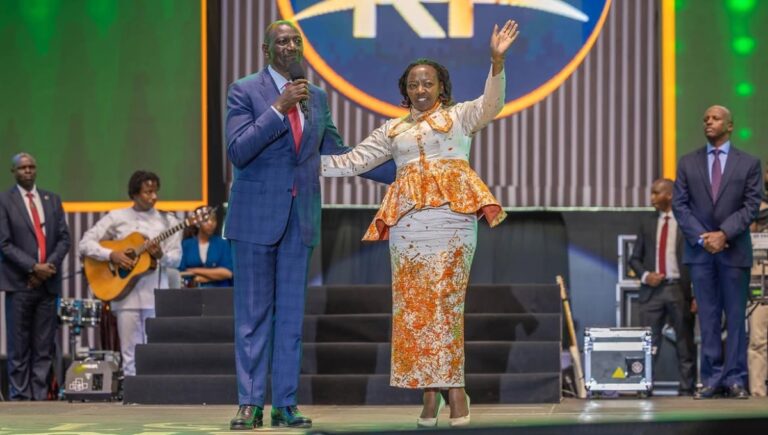
For a man accustomed to standing behind a presidential lectern, William Samoei Ruto appeared equally at home before a different congregation on the evening of Friday, September 4, 2026.
At Uhuru Park, amidst thousands of worshippers, gospel music, and prayer, the President and First Lady Rachel Ruto joined Christians for the final day of the five-day Rhema Feast, which ran from August 31 to September 4 under the theme, “Come, Let Us Rebuild.” Ruto’s presence at the non-denominational Christian gathering offered another glimpse into a dimension of his public life that has remained consistent throughout his political rise. He has openly expressed an attachment to evangelical Christianity and a desire to eventually transition from politics to evangelism.
On a night when the President attended as a member of the congregation rather than a speaker, prominent African Pentecostal leaders addressed his decision to attend. Nigerian preacher Apostle Joshua Selman, a headline minister at the gathering, singled out President Ruto and his wife for special recognition.
“I truly want to honor the presence of His Excellency and his wife at a prophetic program like this; I consider it truly prophetic.”
Selman noted that it is unusual for leaders at the highest levels of government to deliberately attend a religious gathering to listen, learn, and participate.
“I have had the honor of meeting many presidents. It is not common to find leaders at the highest level sit, listen, and learn.”
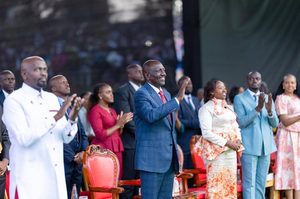
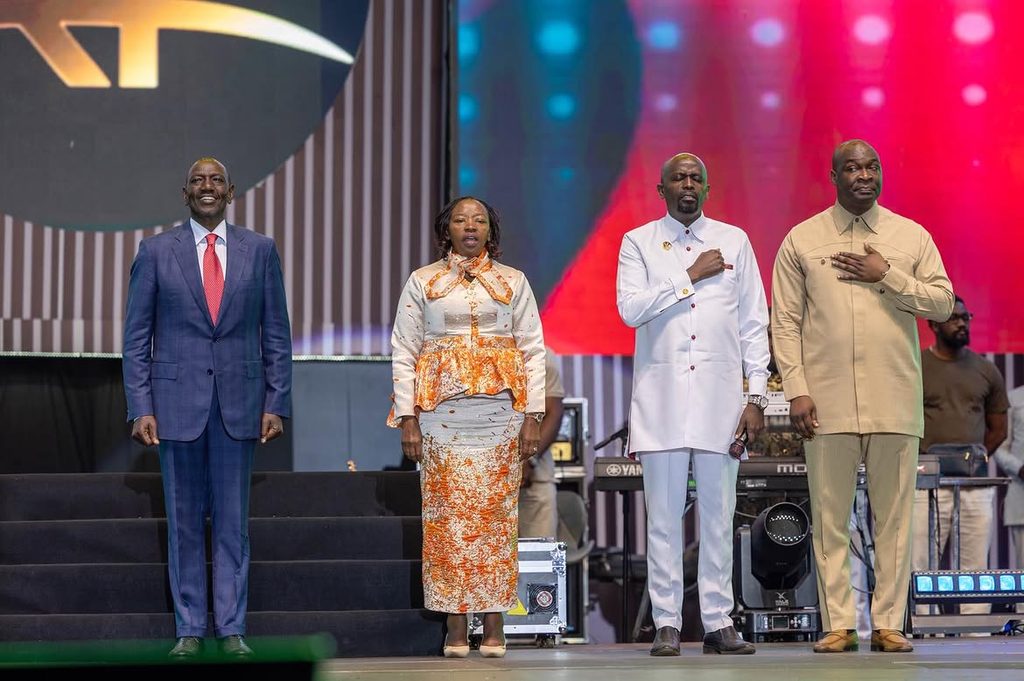
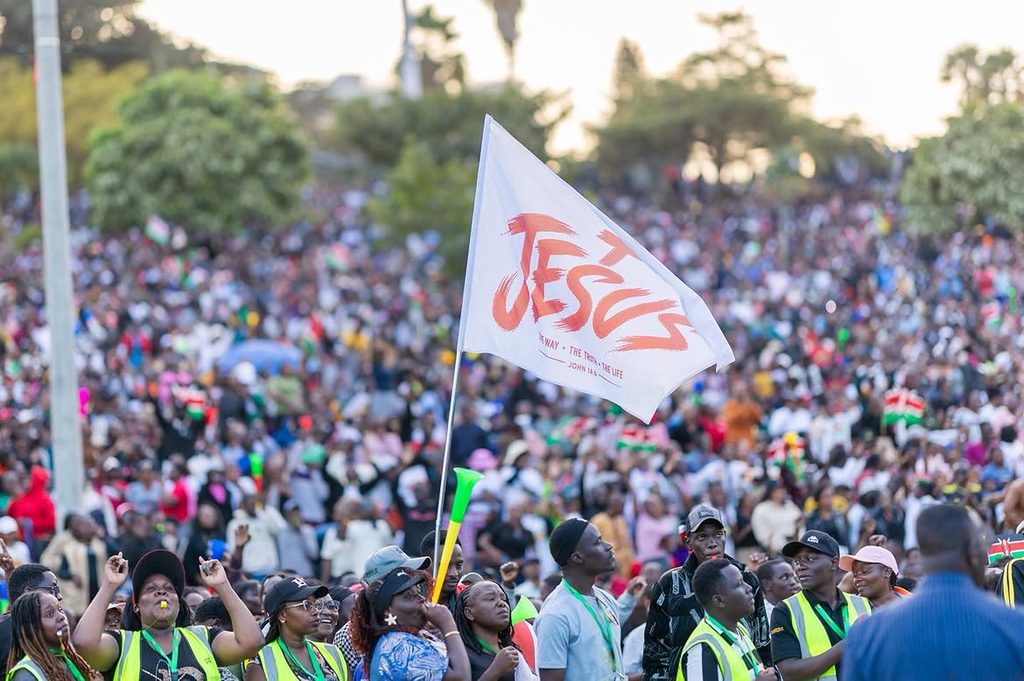
On Friday night, Selman encouraged the worshippers to accord the President proper honour, questioning whether the crowd’s reaction befitted the Head of State. However, the significance of Ruto’s appearance extends beyond the applause.
For years, Ruto has spoken of a future beyond the presidency, envisioning himself behind a pulpit. In February 2026, during a church service in Nairobi, he made his clearest declaration:
“Nikimaliza kazi ya kuwa Rais, mimi nitakuwa Evangelist.” This was not the first time he had made such a statement.
On September 1, 2024, during a church service in Bungoma, President Ruto described evangelism as his “original calling,” stating he intends to return to it after his presidential term. Having made similar remarks previously, he suggests this is a long-standing personal aspiration rather than a recent political invention.
This explains why Ruto appears unusually comfortable in religious settings; he does not merely attend services. He has frequently taken the microphone to quote Scripture, lead congregations in hymns, and speak about faith in deeply personal terms. At times, his singing has become as memorable as his sermons.
Just a month earlier, he surprised worshippers at State House by leading a Quaker congregation in a hymn. The performance quickly spread online, with Kenyans noting his familiarity with the song and his ease in leading the congregation.
For a president whose political speeches are closely analyzed for policy and electoral meaning, these musical moments reveal something less strategic and more human. The same President who can spend hours discussing taxes, agriculture, technology, or foreign policy can also appear visibly relaxed while singing a hymn.
That religious identity is not confined to Ruto alone. Rachel Ruto has cultivated a prominent public profile centered on prayer, Christian gatherings, and faith-based initiatives, and the couple frequently appears together at major religious events. Their joint attendance at Friday’s Rhema Feast reinforced the image of a presidential household comfortable expressing its Christian convictions, a presence highlighted by both event organizers and national media. The intersection of religion and the presidency is more complex than the applause at a Christian gathering might suggest.Ruto’s strong ties to evangelical and Pentecostal circles have drawn both admiration and criticism, particularly given his position as head of state. Scholars and observers have noted the unusually prominent role these networks play within his administration and political identity.
However, this relationship is not necessarily one-directional, nor does it imply that every Christian leader supports every government decision. Just days before the Rhema Feast, prominent Kenyan evangelist Teresia Wairimu, whose ministry is associated with the President and First Lady, publicly criticized the Kenya Kwanza administration, stating that voters demand performance rather than political rhetoric.
At the Rhema Feast, Ruto appeared less focused on politics than on what he described as a remarkable spiritual awakening. Addressing the congregation, he remarked on the youth in attendance, noting that their faith instilled confidence in Kenya’s future.
“There is hope in Kenya. I am overwhelmed by what I see in the young people of our nation,” he stated.
Ruto recounted being told of an “invasion” at the Office of the President, only to discover that the “invaders” were, in fact, “prayer warriors.” “The streets of Nairobi have never witnessed prayer as they have this week,” he said.
For Ruto, this appeared to be the evening’s central theme, not the politics surrounding the presidency, but a Kenya he believes can find confidence and direction through faith.
“We are privileged to be in a great nation, and I have immense confidence and faith in its future.”
He concluded by extending greetings from himself and Rachel.
“From me and my wife, Rachel… God bless our great nation, Kenya.”
Perhaps that is the most compelling aspect of Ruto’s religious narrative. Regardless of one’s political stance, his frequent references to evangelism, participation in worship, public singing, and appearances alongside Rachel at Christian gatherings make faith an unmistakable component of the persona he presents to Kenyans.
The presidency will eventually end. Ruto has stated his intention to return to the pulpit as an evangelist.