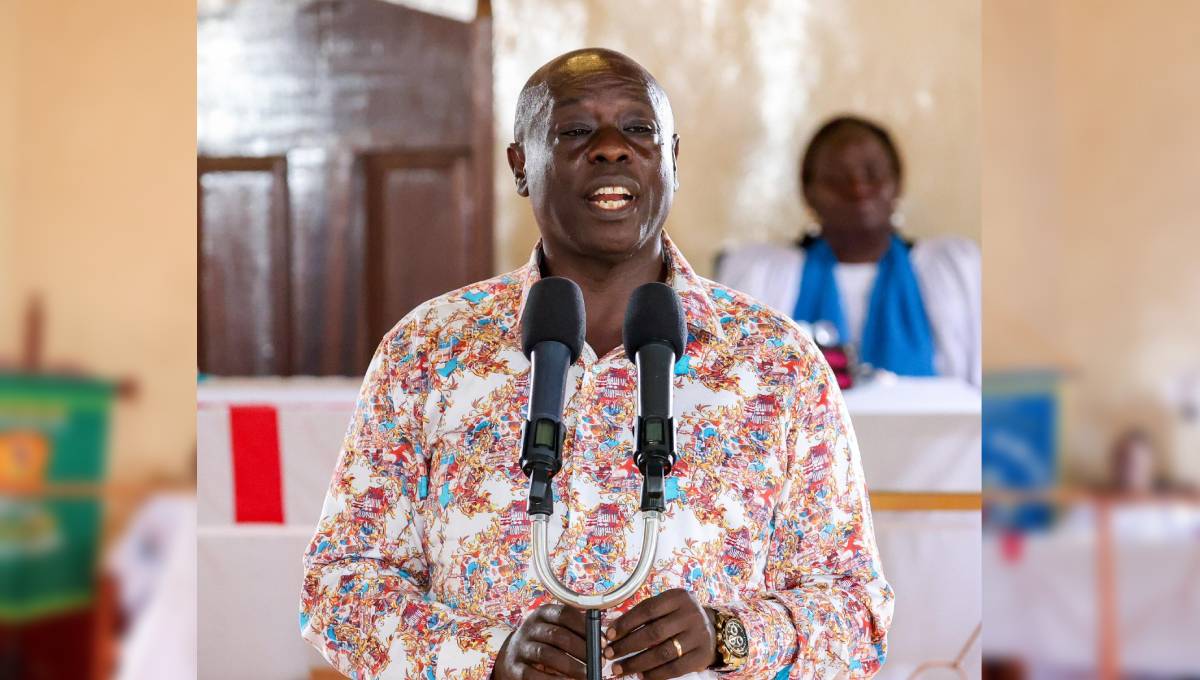
DCP Party Leader Rigathi Gachagua has claimed that the Social Health Authority (SHA) is on the verge of collapse, warning that the scheme could fail within the next five months if urgent action is not taken.
Speaking during a church service at in Murang’a on Sunday the 19th of April 2026, Gachagua alleged that the health scheme is financially unstable, citing liabilities of up to KSh98 billion.
“SHA will collapse in the next five months, and when it does, it will be one of the biggest corporate losses in Kenya’s history,” he said.
He further described the scheme as being in critical condition, stating that it was “in the ICU last year” and is now “a walking zombie,” raising concerns about its sustainability and ability to deliver services to Kenyans.
Gachagua urged key groups, including teachers and police officers, to reconsider their participation in the scheme. He claimed that some workers were compelled to join and advised them to seek alternative medical cover. He specifically called on teachers to push their union leaders to facilitate an exit from SHA, while urging police officers to consider returning to their previous cover under APA.

In addition, he criticized Aden Duale, calling on him to focus on addressing challenges within SHA instead of defending the government. He also took aim at President William Ruto, accusing the administration of failing to address the struggles faced by ordinary Kenyans.
The former Deputy President further alleged that patients at Kenyatta National Hospital are facing shortages of food and medication, urging the government to prioritize healthcare delivery if it is genuinely committed to supporting the sick.
The Social Health Authority is part of the government’s broader healthcare reform agenda aimed at expanding access to medical services. However, the transition has faced criticism from sections of the public and leaders, with concerns raised over implementation challenges, funding, and service delivery.
Gachagua’s remarks add to the growing debate around the future of SHA, with questions now emerging over whether the scheme can sustain itself and meet the expectations of millions of Kenyans.