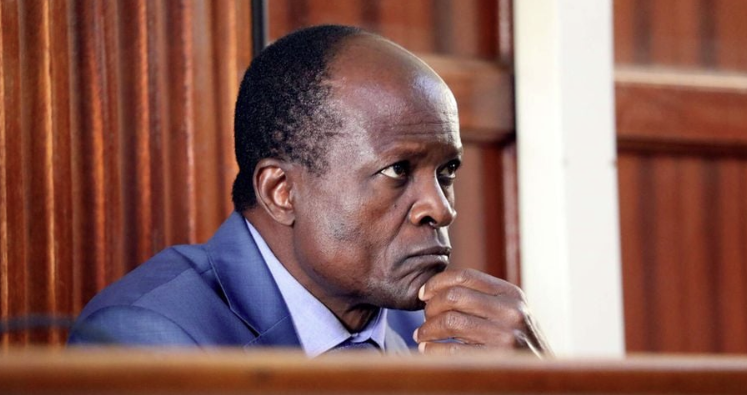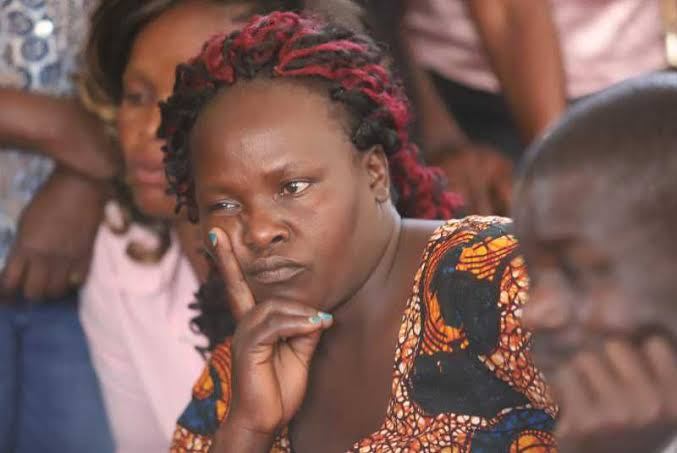
The mother of slain university student Sharon Otieno has pleaded with the High Court in Nairobi to spare former Migori Governor Okoth Obado a prison or death sentence, saying his imprisonment would amount to another death in her life.
Melida Auma made the emotional appeal on Wednesday while addressing Justice Cecilia Githua during the mitigation and sentencing hearing following Obado’s conviction for Sharon’s murder.
“Don’t crucify Governor Obado. If he goes for death or life sentencing, I’ll see another death in my life. Do me a favour, just don’t take him to jail,” Auma told the court.
Auma said the family had forgiven Obado, citing what she described as his remorse at the time of Sharon’s death and throughout the court proceedings.
“Since the first accused (Obado) has been remorseful at the time of death and during court proceedings, and asking for forgiveness, we said as a family we have forgiven the first accused,” she said.
Through their lawyer, Sharon’s parents asked the court to consider a non-custodial sentence for Obado, saying their relationship with the former governor had remained cordial even after their daughter’s death.
The lawyer told the court that the family wished to maintain that relationship, urging the judge to take into account the emotional and psychological needs of the victims when determining the sentence.
“Restorative justice requires, in passing sentence on convicted persons, that the court should not only place focus on legal procedures at the expense of victims’ emotional and psychological needs,” the lawyer submitted.
The family’s lawyer further argued that victims should not be overlooked during the sentencing process, saying their views formed an integral part of the proceedings.
The plea came as the prosecution urged the court to impose a sentence that reflects the seriousness of the offence, serves as a deterrent and protects the interests of the public.
State counsel Gikui Gichuhi submitted that although Sharon’s parents were entitled to express their views before the court, the final decision on the appropriate sentence rested with the judge.
“We don’t question the right of parents to speak their minds before this court. Their views are relevant; however, they don’t get to determine the sentence,” Gichuhi submitted.
She said the offence before the court was against the State and the wider community, arguing that the sentence should serve as a deterrent and promote public confidence in the administration of justice.
Gichuhi further submitted that sentencing was a judicial function and that the court remained the ultimate decision-maker in exercising its discretion.
She said that discretion had to be guided by the Constitution and established legal precedent.
The prosecution also drew the court’s attention to mitigating circumstances that could be considered as part of its duty to act fairly and in the public interest.
These included the circumstances surrounding the offence, whether an accused was a first offender, their previous character, whether they had pleaded guilty or accepted responsibility, their mental and physical condition, and their prospects of rehabilitation.
Other factors cited included remorse, reconciliation efforts, personal and family circumstances, and time spent in custody.
The court had earlier briefly adjourned the hearing to allow the Judiciary to secure a Luo interpreter after Sharon’s parents indicated that they wished to address the court.
Sharon, 26, was seven months pregnant when she was killed in September 2018. She was a second-year student at Rongo University, where she was pursuing a diploma in Medical Records.
Her body was found in a thicket near Kodera Forest in Homa Bay County after she was allegedly abducted alongside journalist Barrack Oduor, who escaped by jumping from a moving vehicle.
Obado, his former personal assistant Michael Juma Oyamo and former Migori County official Caspal Ajwang Obiero were convicted after the court found that the prosecution had established an unbroken chain of circumstantial evidence linking them to Sharon’s killing.
The court is expected to consider the mitigation submissions, victim impact statement and pre-sentence reports before determining the sentences.