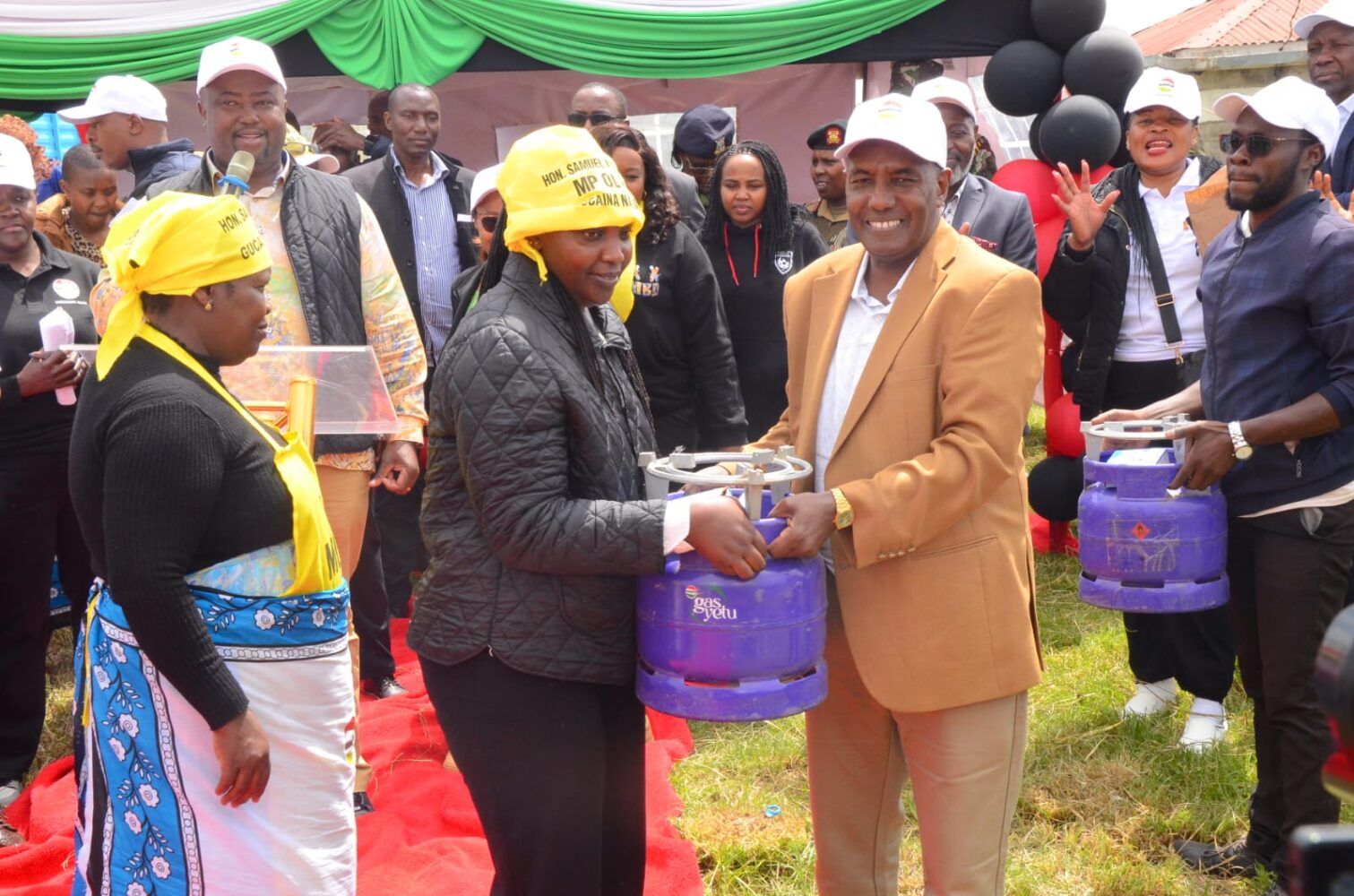
More than 20,000 families in Ol Kalou Constituency, Nyandarua County, have benefited from the government’s clean cooking programme following the distribution of 20,000 subsidized Liquefied Petroleum Gas (LPG) cylinders to expand access to affordable and environmentally friendly energy.
Speaking during the launch of the initiative, Petroleum Principal Secretary Kello Harsama said the programme is part of the government’s broader strategy to reduce dependence on firewood, charcoal and other traditional cooking fuels, while promoting environmental conservation, improving air quality and lowering the incidence of respiratory illnesses, particularly among children and women.
“We have launched this project today here in Ol Kalou to make Liquefied Petroleum Gas more accessible and affordable, especially for low-income households,” Harsama said.
The Principal Secretary noted that each beneficiary will receive a subsidized LPG starter kit comprising a pre-filled gas cylinder, a burner and a grill, describing the programme as a major milestone in accelerating the country’s transition to clean cooking energy.
“This is a significant step in accelerating the adoption of clean cooking solutions across the country,” he added, revealing that similar programmes have already been rolled out in other six 5 counties Nyandarua being the sixth as the government scales up access to clean energy.
On his Energy Principal Secretary Alex Wachira, who accompanied Harsama during the launch, assured residents that both the LPG distribution programme and the ongoing Last Mile electricity connectivity projects will continue beyond the upcoming Ol Kalou parliamentary by-election.
Wachira dismissed claims by some Democracy for the Citizens Party (DCP) leaders that the projects were politically motivated or would end after the by-election, maintaining that they are part of the government’s long-term plan to expand electricity access and promote clean energy across the country.
The initiative forms part of the government’s wider efforts to increase access to clean cooking solutions, combat climate change, protect forests from degradation and improve the quality of life for households by providing safer and more affordable sources of energy.