Audit reports expose missing title deeds, land grabs, weak planning and billions in public assets at risk as National Land Commission launches new land management guide.
Public institutions across Kenya are sitting on land they cannot fully account for, cannot legally prove they own, or have failed to plan for, a governance gap that Auditor-General Nancy Gathungu says is costing taxpayers money, fuelling disputes and undermining development.
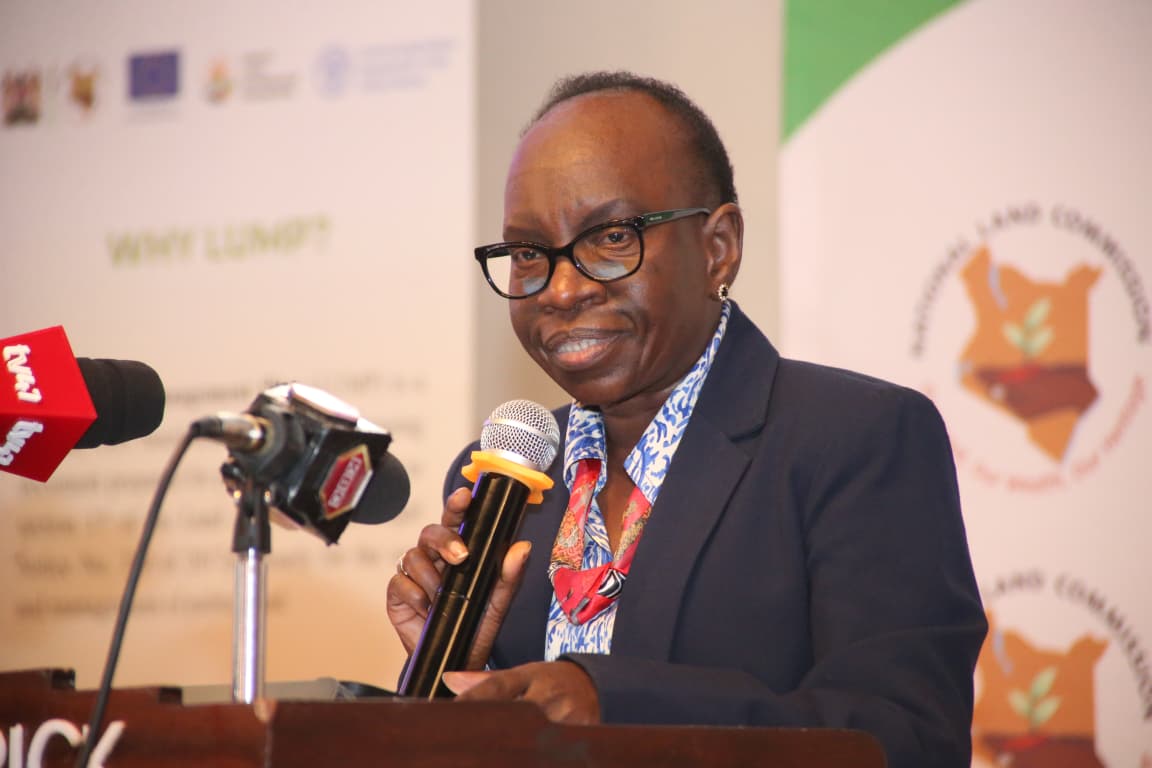
Speaking during the launch of the National Land Commission’s Guide for the Preparation of Land Use and Management Plans (LUMPs), Gathungu painted a sobering picture of public land management, revealing that recurring audit reports continue to expose widespread failures ranging from missing ownership documents to encroachment, poor record-keeping and conflicts between national and county governments over who owns what.
“Land remains one of Kenya’s most valuable public resources and a critical enabler of sustainable development,” Gathungu said. “How we plan, utilize and safeguard our land resource directly affects the efficiency, effectiveness and quality of services delivered to citizens.”
The Auditor-General disclosed that during the 2024/25 financial year, 11 county governments were unable to produce ownership documents for land they occupy, including parcels hosting Early Childhood Development centres, hospitals and Technical and Vocational Education and Training (TVET) institutions.
In some cases, counties purchased land but never completed the transfer process to obtain title deeds. Others drilled boreholes on land for which they had no legal ownership documents.
According to the audit findings, 11 Ministries, Departments and Agencies (MDAs) and three constitutional commissions were also found occupying land without ownership documents, while several state corporations similarly lacked title deeds or transfer records for land on which public buildings already stand.
Gathungu warned that weak documentation has left public institutions vulnerable to illegal occupation and expensive legal disputes.
“We have noted instances where land has been encroached upon or taken over by private developers,” she said, citing rehabilitation centres, children’s rescue homes, national assessment centres and even public universities that have lost land earmarked for future expansion.
The Auditor-General also pointed to environmental consequences.

A performance audit by the Kenya Water Towers Agency found that the country’s 17 major water towers have not been fully surveyed or mapped, contributing to continued encroachment that threatens water security and climate resilience.
Perhaps equally worrying, many institutions do not even know the full extent of land they own.
“Most public entities do not keep track of the number and acreage of land they hold through land asset registers,” Gathungu said, noting that some county governments have still not updated asset registers inherited from the defunct local authorities more than a decade after devolution.
She challenged institutions to move beyond vague estimates.
“We must not talk in percentages. We must talk in acreage,” she said after the event. “Every institution should be able to say the land we hold is 20 acres, 30 acres, and this is the plan that we have for it.”
The Auditor-General also criticised poor coordination between the national government, county governments and state corporations, saying overlapping projects and competing claims over land continue to waste public resources.
“We are fragmented,” she said. “We are sometimes implementing ad hoc projects that do not necessarily benefit citizens, especially when they become white elephants dotted across the country.”
She warned that such conflicts slow economic growth, waste public funds and erode public confidence in government.
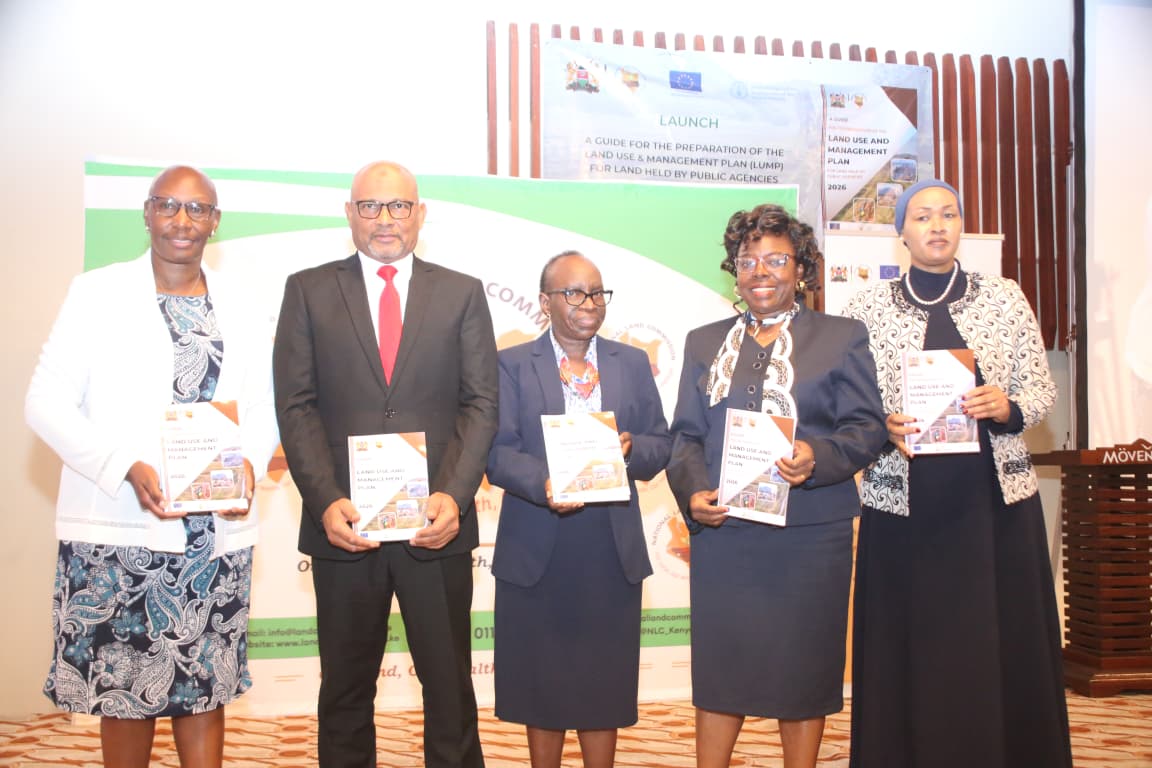
The launch of the new Land Use and Management Plans guide is intended to reverse that trend by requiring every public institution to prepare detailed plans showing how land under its custody will be used, protected and monitored.
National Land Commission Chairperson Dr. Abdillahi Saggaf Alawy said institutions will now be expected to account for every parcel under their control.
“In the next one year, we expect to have visited all the institutions that hold land and advise them on the way forward,” he said.
He issued perhaps the strongest warning of the day for agencies sitting on idle public land.
“If an institution has not planned and has not shown indication of how they need to use the land, then they must surrender that land back to the government for another institution to use the same land.”
The Commission says the inspections will lay the foundation for monitoring compliance over the next five years, ensuring that land reserved for public use delivers value to citizens instead of becoming a source of conflict or speculation.
Gathungu said the guide would immediately become part of future audits, meaning institutions without approved land use plans should expect greater scrutiny.
“It becomes an immediate measurement criterion and focus area for the Office of the Auditor-General,” she said, urging public agencies to begin self-audits of all land under their custody.
Despite the legal requirement for counties to prepare County Spatial Plans, progress remains slow.
Only 22 of Kenya’s 47 counties have approved the plans, leaving more than half operating without the statutory framework needed to guide land use, infrastructure investment and public spending.
For the Auditor-General, the solution is ultimately about planning before spending.
“Planning reduces uncertainty. Planning minimizes conflicts. Planning safeguards investments. Planning protects the environment,” she said.
As the guide was officially launched, both the National Land Commission and the Auditor-General signalled that the era of undocumented, idle or poorly managed public land is coming under sharper scrutiny, with institutions now expected not just to own land, but to prove it, account for it and demonstrate how it serves the public.